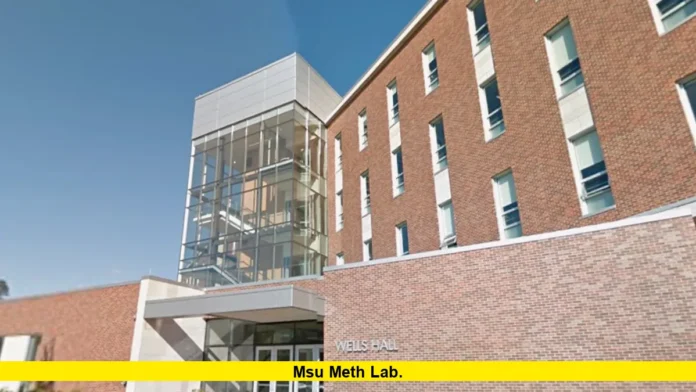

A shocking criminal case has emerged involving an alleged MSU meth lab inside one of the largest academic buildings at Michigan State University. Authorities say a man has been arrested after investigators uncovered evidence of illegal drug activity inside Wells Hall, raising serious concerns about campus safety and security.
What Happened Inside Wells Hall
According to campus police, a 31-year-old suspect was taken into custody after being accused of operating a methamphetamine lab inside Wells Hall, a major classroom building located in East Lansing.
The case began earlier in the week when officials responded to reports of property damage inside the building, which investigators later linked to suspected criminal activity.
Police identified the suspect and made contact with him inside the building before building a case that led to felony charges.
Charges Filed Against the Suspect
Authorities confirmed that the man is facing multiple serious felony charges, including:
- Operating or maintaining a methamphetamine lab
- Malicious destruction of property exceeding $20,000
He was formally arraigned and is currently being held in the Ingham County Jail on a $500,000 bond.
Prosecutors say the case remains under investigation, and additional details may emerge as evidence is processed.
Chemicals Found Inside the Building
Investigators reported discovering a variety of chemicals commonly associated with meth production. These substances are legally available but can be misused when combined improperly.
Among the materials identified:
- Sodium hydroxide pellets
- Hydrochloric acid
- Methanol
- Isopropyl alcohol
- Acetone
- Butane
Officials emphasized that while these chemicals can be purchased legally, their presence together raised significant red flags during the investigation.
Why Wells Hall Was Evacuated
The incident first came to public attention when Wells Hall was suddenly evacuated after reports of an “unidentified chemical” inside the building.
University officials acted quickly, clearing students and staff out of the facility as a precautionary safety measure.
At the time, authorities did not confirm the cause, but the evacuation was later linked to the ongoing meth lab investigation.
Building Closure and Safety Measures
Following the discovery, Wells Hall was closed for several days to allow for:
- Environmental testing
- Evidence collection
- Cleanup and remediation
- Structural and safety inspections
Officials later stated that tests showed no ongoing threat to the campus community, reassuring students and staff that the environment was safe.
However, the building remained closed through the end of the week to ensure full clearance and restoration.
Impact on Students and Campus Operations
The closure of Wells Hall had a significant impact on campus life, especially because the incident occurred during a critical academic period.
Wells Hall is one of the busiest buildings at Michigan State University, hosting:
- Large lecture halls
- Language and humanities departments
- High student foot traffic
Students were forced to adjust schedules, relocate classes, and navigate disruptions during an already demanding time in the academic calendar.
Police Investigation and Timeline
Authorities revealed a clearer timeline of events:
- Reports of damage inside the building triggered the investigation
- Police identified the suspect during the course of inquiries
- Officers made contact with the suspect inside Wells Hall
- Evidence of chemical substances was discovered
- Prosecutors approved felony charges
- Arrest and arraignment followed shortly after
Law enforcement continues to review evidence and assess the full scope of the alleged operation.
Broader Concerns About Campus Safety
This case has sparked wider discussions about:
- Security inside large university buildings
- Monitoring of suspicious activities
- Access control in academic facilities
- Awareness of chemical misuse
University officials have reiterated that there was no known threat to the broader campus, and the situation was handled swiftly to protect students and staff.
Ongoing Investigation and What Comes Next
The case remains active, and authorities are expected to:
- Continue forensic analysis of materials
- Determine how long the alleged lab was operating
- Evaluate whether additional individuals were involved
Legal proceedings will move forward in the coming weeks as prosecutors present their case.
Conclusion
The MSU meth lab case inside Wells Hall has become one of the most unusual and concerning campus incidents in recent memory. While officials have reassured the public that there is no ongoing danger, the discovery of a suspected drug operation inside a major academic building highlights the importance of vigilance and rapid response.
As the investigation unfolds, both law enforcement and university officials are expected to review procedures and strengthen safeguards to prevent similar incidents in the future.