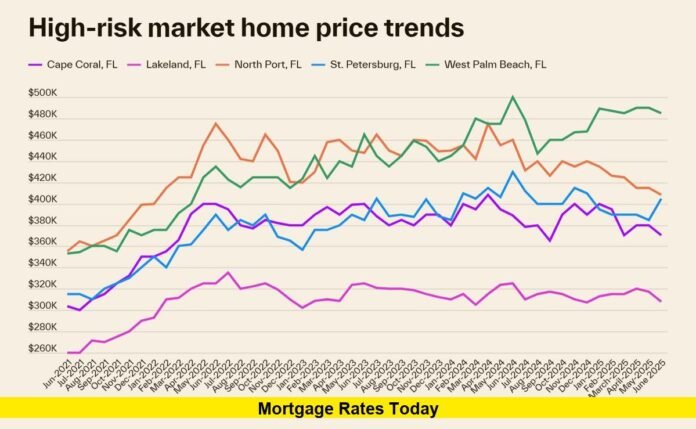

Mortgage rates today are experiencing notable fluctuations, with the 30-year fixed rate averaging 6.67% as of August 11, 2025, marking a decrease of 7 basis points from previous levels. Recent inflation data has created additional pressure on lending rates, with experts warning that rates could follow inflation’s upward trajectory.
Homebuyers and refinancing candidates are closely monitoring these developments as they navigate an increasingly complex lending landscape. The current rate environment reflects broader economic uncertainties that continue to shape the mortgage market.
Current Rate Breakdown by Loan Type
Today’s mortgage landscape shows varied rates across different loan products. The 15-year fixed mortgage rate stands at 5.51%, while FHA mortgages average 5.84%. Jumbo mortgages are commanding higher rates at 6.72%, reflecting the premium lenders charge for larger loan amounts.
These rates represent significant changes from last year’s levels. Borrowers with excellent credit and substantial down payments continue to secure the most favorable terms.
Federal Reserve Influence on Mortgage Market
Federal Reserve officials are signaling potential policy shifts, with some voting members advocating for rate cuts despite recent decisions to hold rates steady. This internal debate at the Fed creates uncertainty for mortgage markets.
The central bank’s decisions don’t directly set mortgage rates, but they heavily influence the direction of lending costs. Current Fed policy discussions suggest continued volatility ahead for borrowers.
Weekly Rate Movements and Trends
Recent weeks have shown gradual rate declines across all loan categories, with refinance rates also easing amid expectations of Fed rate cuts. However, this downward trend faced interruption as inflation concerns resurged.
Market analysts note that rates have been particularly sensitive to economic data releases. Each inflation report and employment figure can trigger immediate rate adjustments.
Impact on Homebuyers and Refinancing
The current rate environment presents both challenges and opportunities for different types of borrowers. First-time homebuyers face affordability pressures, while existing homeowners evaluate refinancing options.
Purchase activity remains constrained by elevated rates compared to the ultra-low levels seen in previous years. Refinancing applications have decreased significantly as fewer borrowers benefit from rate-and-term refinances.
Regional Variations and Lender Competition
Mortgage rates can vary substantially between regions and lenders. Local market conditions, state regulations, and lender-specific factors all contribute to rate variations.
Borrowers benefit from shopping multiple lenders, as rate differences of 0.25% or more are common between institutions. Online lenders often compete aggressively on rates, while traditional banks may offer relationship pricing.
Economic Factors Driving Rate Changes
Inflation remains a primary driver of mortgage rate movements, with recent data showing heating inflation that could push rates higher. Bond market investors closely watch economic indicators for clues about future rate direction.
Employment data, GDP growth, and consumer spending all influence investor sentiment toward mortgage-backed securities. These factors create the day-to-day volatility borrowers experience in rate quotes.
Looking Ahead: Rate Predictions and Market Outlook
Mortgage rates have maintained a tight range in 2025, with experts divided on whether August will bring downward pressure or continued elevation. Market predictions vary widely based on different economic scenarios.
Some analysts expect gradual rate declines if inflation moderates, while others warn of potential increases if economic growth accelerates. The uncertainty makes timing decisions particularly challenging for borrowers.
Strategies for Today’s Rate Environment
Borrowers should focus on factors within their control rather than attempting to time the market perfectly. Improving credit scores, increasing down payments, and shopping multiple lenders remain effective strategies.
Lock-in periods become crucial in volatile markets. Borrowers who find acceptable rates should consider securing them quickly, as daily fluctuations can significantly impact monthly payments.
Current market conditions require careful analysis of individual financial situations. Each borrower’s optimal strategy depends on their timeline, credit profile, and long-term housing plans.
The mortgage market continues evolving rapidly, making it essential for potential borrowers to stay informed about current trends while working with experienced lending professionals who can navigate today’s complex rate environment.