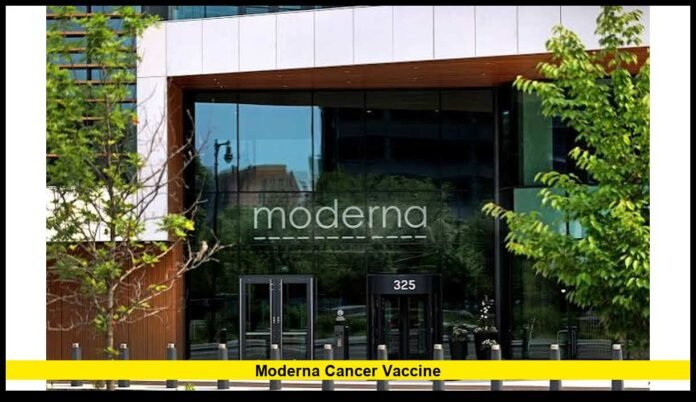

The moderna cancer vaccine program has reached a major milestone after Moderna and Merck reported positive Phase 3 results for their personalized mRNA treatment in high-risk melanoma.
The investigational treatment, called intismeran autogene and formerly known as mRNA-4157 or V940, was tested with Merck’s KEYTRUDA in patients whose melanoma had been completely removed through surgery. The Phase 3 INTerpath-001 trial met its primary endpoint of recurrence-free survival and its secondary endpoint of distant metastasis-free survival.
The companies announced the results on August 19, 2026. They also said they plan to present detailed findings at an upcoming international medical meeting and engage with regulators about potential filing submissions.
The development is significant because it represents the first positive Phase 3 result for an individualized neoantigen therapy based on mRNA technology.
What the New Phase 3 Result Means
INTerpath-001 enrolled 1,137 people with completely resected stage IIB through stage IV melanoma.
Patients were randomly assigned to receive either intismeran autogene plus KEYTRUDA or placebo plus KEYTRUDA. The study was designed to determine whether adding the personalized treatment could reduce the chance of melanoma returning or spreading.
The results met both major efficacy goals announced by the companies.
The primary endpoint was recurrence-free survival. This measures how long patients remain alive without their cancer returning.
The secondary endpoint was distant metastasis-free survival. This measures how long patients remain free from cancer spreading to distant parts of the body.
Both endpoints showed statistically significant and clinically meaningful improvements with the combination treatment.
The companies have not yet released the complete numerical Phase 3 efficacy dataset. More detailed information is expected when the results are presented at a medical meeting.
That distinction is important. The current announcement confirms that the trial met its major goals, but it does not yet provide the full set of numerical results needed to assess every aspect of the treatment.
How the Personalized Treatment Is Designed
Intismeran autogene uses a personalized approach to cancer treatment.
Rather than giving every patient an identical vaccine, the treatment is designed using information from an individual’s tumor.
Cancer cells can contain mutations that are different from those found in healthy cells. Some mutations can produce abnormal targets known as neoantigens.
Researchers identify selected mutations from a patient’s tumor and use that information to create an individualized mRNA treatment.
The mRNA provides instructions that are intended to stimulate an immune response against those tumor-specific targets.
The objective is to train the immune system to recognize cancer cells carrying the selected neoantigens.
This approach is different from conventional vaccines designed to prevent infections.
It is also different from treatments that directly attack cancer cells with chemotherapy or radiation.
Instead, the strategy attempts to use the patient’s own immune system as a targeted weapon against residual cancer cells.
Why Melanoma Is the First Major Test
Melanoma has become an important area for immunotherapy research because the disease can contain a relatively large number of mutations.
Some of those mutations may generate neoantigens that the immune system can recognize.
For patients with high-risk melanoma, surgery can remove visible disease, but microscopic cancer cells may remain.
Those cells can eventually lead to recurrence or metastatic disease.
Adjuvant treatment is intended to reduce that risk after surgery.
The Moderna-Merck strategy adds a personalized immune-training component to an established checkpoint inhibitor.
The Phase 3 trial therefore tested whether the combination could outperform KEYTRUDA alone in preventing recurrence and distant spread.
The positive result provides evidence that the individualized approach can add clinical benefit in this setting.
The Role of KEYTRUDA in the Treatment
KEYTRUDA contains pembrolizumab, an immune checkpoint inhibitor that targets the PD-1 pathway.
Cancer can exploit immune checkpoint mechanisms to avoid being attacked effectively by T cells.
Pembrolizumab blocks PD-1 signaling and can help the immune system maintain activity against cancer.
Intismeran autogene is designed to work differently.
It provides selected tumor-specific targets that can help direct an immune response toward cancer cells.
The combination therefore uses two complementary strategies.
KEYTRUDA helps activate or sustain immune activity, while the personalized mRNA treatment is designed to focus that response on mutations associated with the patient’s tumor.
The Phase 3 trial was specifically designed to determine whether this combination could provide more protection than KEYTRUDA alone.
Earlier Results Supported the Phase 3 Program
The new Phase 3 announcement follows encouraging findings from an earlier randomized Phase 2b study.
The KEYNOTE-942 study evaluated the combination in patients with high-risk melanoma after complete surgical removal.
Five-year follow-up results reported earlier in 2026 showed a sustained benefit from adding intismeran autogene to pembrolizumab.
The combination reduced the risk of recurrence or death by 49% compared with pembrolizumab alone.
It also reduced the risk of distant metastasis or death by 59%.
At five years, recurrence-free survival was 68.8% among patients who received the combination, compared with 49.1% for those receiving pembrolizumab alone.
Those findings came from the smaller Phase 2b study and should not be confused with the newly announced Phase 3 results.
The Phase 3 trial enrolled substantially more patients and provides a larger test of the treatment strategy.
Why Recurrence-Free Survival Matters
Recurrence-free survival is particularly important after surgery for high-risk melanoma.
A patient may have no detectable cancer after surgery, yet microscopic disease can remain.
If those cells survive, the cancer can return months or years later.
Reducing recurrence is therefore a major goal of adjuvant treatment.
A treatment that extends the period without recurrence can potentially reduce the likelihood that patients will later require treatment for advanced disease.
The Phase 3 result indicates that the personalized treatment plus KEYTRUDA improved recurrence-free survival compared with KEYTRUDA alone.
The companies also reported an improvement in distant metastasis-free survival.
That second finding is important because distant spread can significantly change the treatment situation for a melanoma patient.
What Is Known About Safety
Safety is another key part of the latest announcement.
Moderna and Merck reported that no new safety concerns emerged from the Phase 3 trial.
However, detailed Phase 3 safety data have not yet been released.
Earlier studies provide additional information about the treatment’s safety profile.
In the five-year Phase 2b follow-up, the combination’s safety findings remained consistent with previous reports.
Common adverse events associated with the personalized treatment included fatigue, injection-site pain and chills.
The earlier study also reported Grade 3 fatigue as an adverse event attributed to the treatment.
The absence of new safety concerns in the Phase 3 announcement is encouraging, but a complete assessment will require the full dataset.
Patients should not interpret the trial result as evidence that the treatment is risk-free.
All cancer treatments can have potential adverse effects, and the risks and benefits must be evaluated using the complete clinical evidence.
The Treatment Is Not Yet FDA Approved
The latest result does not mean that patients in the United States can currently receive intismeran autogene as an approved cancer treatment.
The therapy remains investigational.
Moderna and Merck said they intend to engage with regulators about filing submissions.
That process must occur before the treatment could potentially become commercially available for the indication studied in the trial.
FDA review involves an assessment of the complete evidence submitted by the companies.
The agency considers efficacy, safety, manufacturing and other regulatory requirements.
Therefore, the positive Phase 3 announcement is a major development, but it is not the same as an FDA approval.
The companies have not yet announced an approved U.S. launch date for the treatment.
How a Personalized mRNA Treatment Differs From a Standard Vaccine
The word vaccine can be misleading when used in cancer research.
Traditional vaccines are generally designed to prepare the immune system before a person encounters a particular infectious disease.
A therapeutic cancer vaccine has a different purpose.
It is intended to stimulate an immune response against cancer-related targets in people who already have cancer or who have undergone treatment for cancer.
Intismeran autogene falls into this therapeutic category.
Its design also differs from a standardized vaccine because the treatment is individualized.
The genetic information used to create the treatment comes from the patient’s tumor.
The result is intended to be a treatment tailored to the mutation profile of that particular cancer.
The Personalized Manufacturing Process
Personalization creates both scientific opportunities and practical challenges.
The process begins with tumor material obtained during cancer care.
Researchers analyze the tumor’s genetic information to identify mutations that could produce useful neoantigen targets.
Selected targets are then incorporated into the patient’s individualized mRNA treatment.
The resulting product is intended to stimulate the immune system against the specific cancer-associated targets.
The companies have emphasized that the treatment does not require collecting and modifying the patient’s own immune cells.
That feature distinguishes the approach from certain personalized cell therapies.
Manufacturing remains an important consideration, however.
A personalized treatment must be produced for individual patients rather than manufactured as one identical product for an entire population.
The ability to perform that process consistently and efficiently will become increasingly important if regulatory approval is eventually granted.
The Program Extends Beyond Melanoma
The positive melanoma result is only one part of the wider development program.
Moderna and Merck are studying intismeran autogene across several cancer types.
Their clinical program includes research involving non-small cell lung cancer, bladder cancer and renal cell carcinoma.
The companies have multiple Phase 2 and Phase 3 studies underway.
The goal is to determine whether the personalized neoantigen strategy can produce similar benefits in other cancers.
Each cancer type presents different biological challenges.
Therefore, success in melanoma does not establish that the treatment will work equally well in lung, bladder or kidney cancer.
Those programs must produce their own clinical evidence.
Lung Cancer Studies Are Another Major Focus
Non-small cell lung cancer is one of the major areas of investigation.
Clinical studies are examining the treatment in different disease stages and treatment settings.
Some programs focus on patients who have undergone surgery.
Others examine treatment combinations in earlier stages of disease.
The rationale is similar to the melanoma strategy.
If surgery removes the visible tumor, microscopic cancer cells may still remain.
A personalized immune treatment could potentially help the immune system identify and attack those remaining cells.
However, the lung cancer studies remain separate clinical questions.
Their eventual outcomes will determine whether the approach can demonstrate a meaningful benefit in that setting.
What the Latest Result Does Not Prove
Several conclusions would be premature based on the August 2026 announcement.
The Phase 3 result does not establish that every melanoma patient will benefit.
It does not mean the treatment has been approved by the FDA.
It does not establish effectiveness against every form of cancer.
It also does not provide enough information to determine the treatment’s final cost or availability.
The companies have announced positive topline findings, while detailed clinical data remain forthcoming.
That means the medical community still needs to examine the full results.
The complete dataset should provide more information about the magnitude of benefit, safety, quality of life and other outcomes.
Why the Phase 3 Success Is Significant
The importance of the announcement extends beyond one clinical trial.
It provides late-stage evidence for a personalized mRNA approach to cancer treatment.
The development of individualized neoantigen therapies has been closely watched because cancer mutations differ from patient to patient.
A successful treatment strategy could potentially move oncology further toward personalized immunotherapy.
The Phase 3 success also gives the program a clearer path toward regulatory discussions.
Moderna and Merck have said they plan to work with regulators on potential submissions.
The eventual outcome will depend on the complete clinical and regulatory review.
What Patients and Families Should Know
Patients with melanoma should not assume that the investigational treatment is already available through routine cancer care.
Current treatment decisions should remain based on approved therapies and individualized medical advice.
People interested in experimental treatments can discuss clinical trials with their oncology team.
Eligibility depends on the specific study.
Factors can include cancer stage, previous treatment, surgery, tumor characteristics and other medical considerations.
A clinical trial is also not a guarantee that a patient will receive the experimental treatment.
Some trials include comparison groups, while others have different enrollment requirements.
What Comes Next for the Moderna Program
The next major development will be the presentation of detailed Phase 3 results.
The companies have said they intend to present the findings at an upcoming international medical meeting.
Regulatory discussions are also expected to follow.
Those steps will help determine how quickly the program could move toward potential U.S. regulatory submissions.
Meanwhile, studies in other cancers will continue.
The melanoma result gives the broader program an important boost, but additional trials remain necessary.
Researchers will be watching closely to see whether the same personalized strategy can produce meaningful improvements in other tumor types.
The Bigger Picture for Personalized Cancer Treatment
The latest development represents an important shift in the way researchers are approaching cancer immunotherapy.
Instead of treating every tumor as biologically identical, personalized neoantigen therapy attempts to identify the mutations that make each patient’s cancer unique.
mRNA technology provides a way to encode those selected targets into an individualized treatment.
The melanoma Phase 3 outcome offers the strongest clinical evidence so far for this particular approach from Moderna and Merck.
It does not end the research process.
Instead, it opens the next stage of development, involving detailed clinical analysis, regulatory review and continued testing in other cancers.
For patients, the potential significance lies in the possibility of making immune treatment more precisely matched to the biology of an individual tumor.
For researchers, the results provide important evidence that an individualized mRNA strategy can move successfully through late-stage clinical testing.
For now, intismeran autogene remains an investigational therapy rather than an FDA-approved treatment.
The August 19, 2026 announcement nevertheless marks a major moment for personalized cancer research, with Moderna and Merck preparing for the next steps toward regulatory review.
What do you think about this latest development in personalized cancer treatment? Share your thoughts and stay informed as new clinical and regulatory updates emerge.