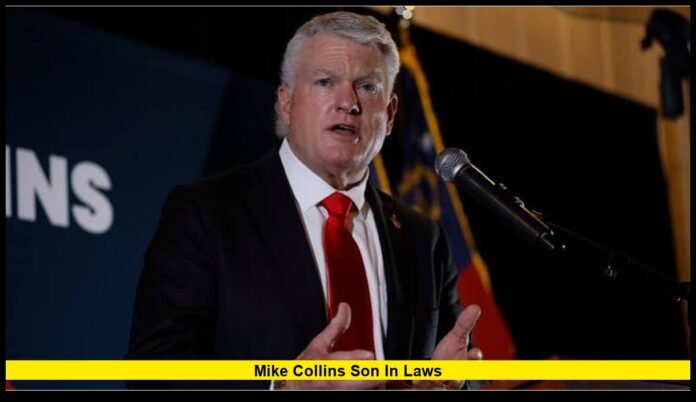

The relationship between Mike Collins and his son-in-law, David Alan Scheer II, has become a major subject of political discussion as the Georgia congressman campaigns for the U.S. Senate. Reports about Scheer’s social media activity, questions about his professional connections to Collins, and a recent criminal case involving alleged threats have brought renewed attention to the family.
Who Is David Alan Scheer II?
David Alan Scheer II is married to Summer Collins, the daughter of Republican Rep. Mike Collins of Georgia. Scheer has developed an online following through content related to fitness, Christianity, lifestyle, and political commentary.
His public profile became a national news subject in July 2026, when investigations into his social media accounts identified posts described as promoting white nationalist ideas, antisemitic conspiracy theories, and Nazi imagery.
The reports attracted attention because Collins is a prominent Republican politician seeking election to the U.S. Senate. His family connections have consequently become part of the broader discussion surrounding his candidacy.
Scheer’s online activity has raised questions about the distinction between his personal views and those of his father-in-law. Collins has publicly rejected racism, antisemitism, and hate, while critics have sought more detailed explanations about the relationship between the two men.
The controversy remains relevant as Georgia voters prepare to decide the state’s Senate race in November 2026.
How the Social Media Controversy Developed
The controversy became prominent in mid-July 2026, when published investigations examined Scheer’s online statements and shared material.
The reports described content involving antisemitic conspiracy theories, racial nationalism, and imagery associated with Nazi propaganda. Some posts reportedly promoted ideas about racial homogeneity and repeated claims that Jewish people secretly influence American institutions.
Such material has generated criticism because it reflects conspiracy theories and extremist ideologies with documented histories of discrimination and violence.
Scheer’s audience on social media has also contributed to the public interest. His content has reached a substantial following, extending his influence beyond the political circles surrounding Collins.
The reporting prompted questions about whether Collins had discussed the posts with his son-in-law and whether Scheer had any professional responsibilities connected to the congressman’s businesses or political campaign.
Those questions are separate from the underlying social media allegations. Public reporting about Scheer does not automatically establish that Collins shares his views or directed his online activity.
Collins has maintained that he does not support racism or antisemitism. However, his critics have continued to request greater clarity about his personal and professional relationship with Scheer.
Mike Collins Responds to Questions About His Family
Collins has faced questions about Scheer at public appearances and campaign events. During a healthcare-related event in Georgia in July, reporters repeatedly asked about the reported posts and whether Scheer had performed work for Collins.
Collins said the matter had already been addressed and shifted the discussion toward disagreements with Democratic Sen. Jon Ossoff.
The response did not end the scrutiny. Political opponents continued asking whether Scheer had worked for Collins’ trucking business, participated in campaign activities, or received compensation for professional services.
In August, Collins issued a statement addressing the controversy. He said Scheer had no role in his campaign and that he did not believe or support Scheer’s reported views. Collins also reiterated that he has consistently condemned racism and antisemitism.
That statement clarified Collins’ position on campaign involvement, although questions about possible business arrangements have remained a subject of public discussion.
The distinction is important. A relative’s social media activity does not, on its own, establish the beliefs of an elected official. Similarly, questions about a possible business relationship should not be treated as proof of wrongdoing without supporting evidence.
For Collins, the issue has created a continuing challenge as he seeks to present his policy priorities while responding to questions about people in his personal circle.
Questions About Business and Campaign Connections
Another part of the controversy concerns Scheer’s possible professional relationship with Collins’ family business.
Published reporting indicated that Scheer appeared to have narrated promotional videos associated with Collins’ trucking company. The reporting led to questions about whether he worked as a contractor, employee, or independent service provider.
The available public information has not fully resolved the details of any compensation, employment arrangement, or professional responsibilities.
These distinctions matter because business relationships can differ substantially from campaign roles. Work performed for a private company does not necessarily establish participation in a political campaign, and an appearance at a campaign event does not by itself demonstrate employment.
Collins has stated that Scheer has no role in his Senate campaign. That statement addresses campaign involvement, but it does not independently answer every question about possible work connected to the family business.
Democratic officials have called for greater transparency. Collins and his campaign have faced pressure to clarify the extent of any professional dealings and to address the broader concerns raised by the reporting.
The issue has become part of a larger debate about political accountability, family relationships, and the information voters should receive when evaluating candidates for public office.
October Senate Debate Brings the Issue Back Into Focus
The controversy returned to the center of the campaign during the October 8, 2026, debate between Collins and Ossoff.
The candidates discussed economic concerns, healthcare, immigration, and other national issues. Their exchange also included questions about controversial associations and the reported online activity connected to Collins’ family.
Ossoff challenged Collins over the reports involving Scheer and raised concerns about the congressman’s associations. Collins responded by reiterating that he condemns racism, antisemitism, and hate.
The exchange demonstrated that the controversy remains a campaign issue months after the initial reporting.
For Ossoff, questions about Collins’ associations provide an opportunity to challenge his opponent’s judgment and transparency. Collins, meanwhile, has sought to emphasize policy disagreements and his opposition to hateful ideologies.
The debate did not settle every outstanding question about Scheer’s professional connections or the extent of his relationship with Collins’ political operation.
The candidates are competing for Georgia’s U.S. Senate seat in the November 3, 2026, general election. The contest has attracted national attention because the balance of power in the Senate is a major consideration for both parties.
Latest Update: Man Arrested Over Alleged Threats
A separate development in early October brought Collins and Scheer into the headlines for another reason.
Authorities announced the arrest of Anthony Lantrell Bennett, a New York man accused of threatening to kill Collins and his son-in-law.
According to investigators, the alleged threat was communicated through a social media direct message. Law enforcement agencies from Georgia and New York worked together to identify and arrest the suspect in the Buffalo area.
Bennett faces two counts of terroristic threats in Georgia. Authorities have said the alleged message threatened both Collins and Scheer.
The arrest followed an investigation involving local law enforcement and federal assistance. Officials have not publicly disclosed every detail of the investigation or all the circumstances surrounding the alleged message.
Collins thanked law enforcement for responding to the threat and protecting his family. He also criticized political rhetoric that he believes can contribute to hostility toward public officials and their relatives.
Ossoff condemned threats of violence as well.
The case remains separate from the controversy over Scheer’s social media posts. The criminal allegations concern an alleged threat, and the charges against Bennett should not be treated as a conviction.
The development has added a public-safety dimension to the ongoing political discussion. It also highlights the importance of distinguishing legitimate criticism of public figures from threats of physical harm.
Why the Story Matters in Georgia Politics
Interest in mike collins son in law reflects the way personal relationships can become part of a high-profile election campaign.
Collins represents Georgia’s 10th Congressional District and is seeking to defeat Ossoff, who won his Senate seat in 2020. The 2026 contest has drawn attention from national political organizations because Georgia remains an important state in the battle for congressional control.
Collins has campaigned on conservative priorities and his support for President Donald Trump. Ossoff has challenged Collins on policy and questioned his associations.
The controversy involving Scheer raises several distinct issues for voters to consider: the content attributed to Scheer, Collins’ stated response, questions about professional relationships, and the candidates’ competing arguments during the campaign.
These issues should be evaluated separately rather than treated as interchangeable. Allegations about an individual’s online activity are different from evidence of a financial relationship, and neither automatically establishes another person’s beliefs.
As the election approaches, further public statements or documentation could clarify unresolved questions. Until then, the most accurate assessment depends on distinguishing established information from political accusations and unconfirmed claims.
Conclusion
David Alan Scheer II has become a prominent subject of political discussion because of his marriage to Summer Collins, his reported social media activity, and questions about his connections to Mike Collins.
The controversy has continued through the 2026 Senate campaign, resurfacing during the October debate between Collins and Ossoff. Collins has stated that he rejects racism, antisemitism, and hate, while questions about possible business relationships have continued to attract attention.
The arrest of a man accused of threatening Collins and Scheer has introduced a separate criminal investigation into the story. As Georgia approaches Election Day, the family controversy remains one element of a wider campaign shaped by policy disagreements, political affiliations, and questions about public accountability.