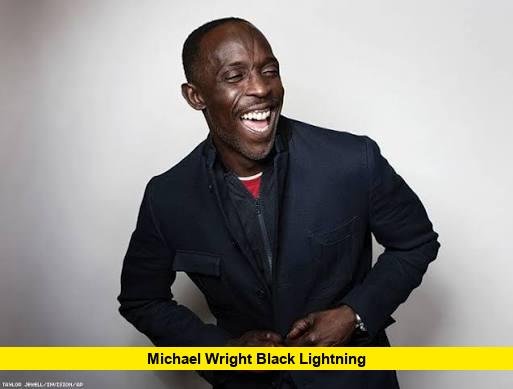

Actor Michael Wright, known to television audiences for his role in Black Lightning, has died at the age of 70. He passed away on August 19, 2026, in Los Angeles, and his family confirmed the news through his wife, Susan Wright.
Susan Wright announced her husband’s death on his official Instagram page on Friday, August 21. She shared eight photographs, beginning with a picture of the couple together, alongside a heartfelt tribute to his life and career.
How Michael Wright Died
Wright’s family told TMZ that he died from heart failure combined with complications from Marchiafava-Bignami disease. This rare degenerative neurological condition affects the brain and is not commonly seen outside patients with a history of chronic alcohol use, though the family has not released additional medical details.
No further information about his final days has been made public. Wright’s loved ones asked for privacy as they process the loss, and no funeral arrangements have been announced yet.
Susan Wright’s Emotional Tribute
Susan Wright’s Instagram post captured both grief and gratitude. She wrote that it was “with profound sadness and an unimaginable heaviness” in her heart that she shared news of her husband’s passing.
She described Michael as a husband, father, grandfather, and an extraordinary artist whose work touched generations. Her message emphasized that his talent and screen presence would live on, even as she and their family mourn the man behind the roles.
Susan closed her tribute by noting that to those who loved him personally, Wright was far more than the characters audiences knew him for. The post drew an outpouring of comments from fans and fellow actors within hours.
Michael Wright’s Career Highlights
Wright built a screen career spanning more than four decades, moving fluidly between film and television. His earliest credit came in 1979, when he appeared as Clinton in the coming-of-age drama The Wanderers.
He followed that debut with a role in Robert Altman’s 1983 war drama Streamers, where the ensemble cast collectively won the Volpi Cup for Best Actor at the Venice Film Festival. The award remains one of the most notable honors of his early career.
Wright’s most celebrated performance came in 1991, when he played troubled singer Eddie King Jr. in Robert Townsend’s musical drama The Five Heartbeats. The role cemented his status as one of the defining actors of Black cinema from that era, and it remains the part most fans associate with his name.
Throughout the 1980s and 1990s, Wright continued building a diverse résumé. Key film and television credits included:
- V and V: The Series (1984–1985), portraying resistance fighter Elias Taylor
- Sugar Hill (1994), starring opposite Wesley Snipes as Raynathan “Ray” Skuggs
- The Principal, Money Talks, Point Blank, and The Interpreter
- Miami Vice and New York Undercover, in supporting television roles
Michael Wright and Black Lightning
Wright joined the cast of Black Lightning, the CW superhero drama, in 2019, playing the character Lazarus Prime. The role introduced him to a younger generation of viewers who may not have been familiar with his earlier film work.
His appearance on Black Lightning came during a period when Wright remained active in the industry well into his sixties. He also spent three seasons, from 2001 to 2003, playing inmate Omar White on HBO’s acclaimed prison drama Oz, a role that showcased his ability to portray morally complex characters.
Wright’s most recent screen credit came in 2025, when he appeared in the film Dope King. The project demonstrated that he continued working steadily right up until his health declined, and it stands as one of his final contributions to the screen.
Tributes Pour In From the Entertainment Industry
News of Wright’s death prompted an immediate wave of tributes from colleagues and fans. Leon Robinson, who starred alongside Wright in The Five Heartbeats, posted a message on Instagram honoring their shared history and the mark Wright left on the industry.
Comedian and actress Loni Love also paid tribute, calling Wright an underrated actor and extending prayers to his family. Other entertainment figures used social media to share memories of working with him or watching his performances over the decades.
Fans flooded comment sections with reflections on how The Five Heartbeats, Black Lightning, and Oz shaped their appreciation for Black storytelling on screen. Many pointed to his range as an actor who could move between musical drama, science fiction, and gritty prison narratives with equal skill.
Michael Wright’s Survivors
Wright is survived by his wife, Susan Wright, along with his children Manon Wright, Byron Barr, Brittney Briggs, Brianna Barr, and Sir Barr. He is also survived by his grandchild, Yoko.
The family has not indicated whether a public memorial service will take place. Details regarding funeral arrangements are expected to be shared by representatives in the coming days.
A Career That Spanned Generations
Wright’s body of work reflected a commitment to storytelling that valued depth over recognition. He rarely chased mainstream fame, yet his performances consistently resonated with audiences across multiple decades and genres.
From his breakout in The Wanderers to his final role in Dope King, Wright’s career illustrated the arc of an actor who adapted alongside a changing industry. He moved from 1980s network television to premium cable drama, and eventually into the modern superhero genre with Black Lightning.
His passing marks the loss of a performer whose influence extended well beyond box office numbers or awards tallies. For many in the Black entertainment community, Wright’s work in The Five Heartbeats alone secured his place in cinematic history.
As tributes continue to emerge, Wright’s family has asked that his legacy be remembered through the stories he told rather than the circumstances of his death. His decades of work across film and television remain available for new audiences to discover.
Share your memories of Michael Wright’s performances in the comments below, and check back for updates on funeral arrangements as they become available.