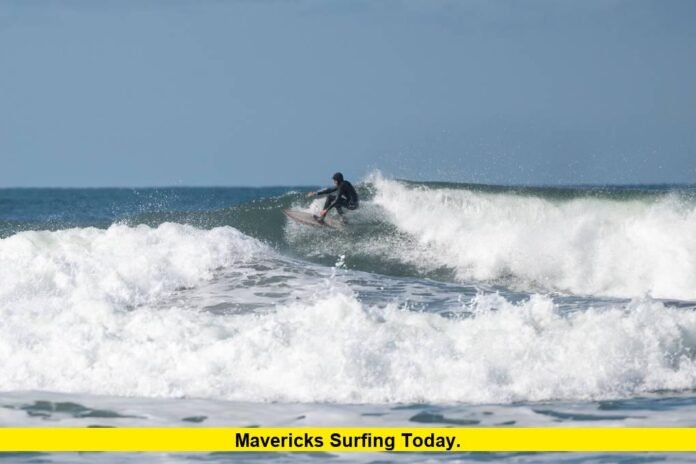

The mavericks surfing today forecast is drawing attention as enormous Pacific swells pound California’s coastline, bringing dangerous surf, coastal flooding, and reports of property and infrastructure impacts. The powerful wave event has particularly affected the Central California coast, where waves have surged over seawalls, pushed debris onto coastal roads, and threatened homes and businesses.
Mavericks, the legendary big-wave surf break near Half Moon Bay, is among the locations facing exceptionally powerful ocean conditions. Forecasters have warned that breaking waves could reach 25 to 35 feet along exposed stretches of the coast, with occasional sets potentially reaching 40 to 50 feet at favored locations, including Mavericks.
The situation is about more than spectacular surfing conditions. The combination of large northwest swells, strong currents, high tides, and coastal exposure has created a serious safety concern for surfers, residents, visitors, and anyone traveling along the shoreline.
Mavericks Surfing Today: What Is Happening Along the California Coast?
California is experiencing an unusually powerful stretch of ocean conditions as a series of strong Pacific storm systems generate large northwest swells.
The National Weather Service has highlighted hazardous surf conditions affecting several coastal areas, including San Francisco, the San Francisco Peninsula, Northern Monterey Bay, and the Southern Monterey Bay and Big Sur coastline.
The largest waves are expected at exposed beaches and steep coastal formations, where incoming swell can rise dramatically before breaking.
Mavericks is particularly vulnerable to these conditions because of its underwater geography. The offshore reef helps transform incoming ocean swells into exceptionally large waves.
When the right combination of swell direction, period, and ocean conditions occurs, Mavericks can produce some of the biggest surfable waves in the United States.
However, the current conditions should not be confused with an ordinary big-wave surfing opportunity. The powerful surf is accompanied by dangerous currents, unpredictable wave sets, and significant coastal hazards.
How Big Are the Waves at Mavericks?
The National Weather Service forecast indicates that breaking waves could reach 25 to 35 feet along affected portions of the California coastline.
At favored big-wave locations, including Mavericks, occasional wave sets could reach approximately 40 to 50 feet.
These figures describe forecast breaking-wave conditions, not a guaranteed height for every wave or a continuous series of waves at that size.
There is also an important distinction between significant wave height and individual wave height.
Significant wave height represents the average height of the highest one-third of waves measured over a particular period. Individual waves can be considerably larger.
This distinction matters when interpreting ocean buoy reports and comparing offshore measurements with the waves breaking near the shoreline.
Recent measurements have demonstrated just how powerful the swell has become. A Point Reyes offshore buoy recorded significant wave heights reaching approximately 31 feet on Saturday morning, November 14, according to regional reporting.
That measurement was reported as the second-highest reading in the buoy’s three decades of records.
For surfers, these conditions represent an extraordinary ocean event. For coastal communities, they also create a substantial threat of flooding, erosion, and infrastructure damage.
Central California Coast Experiences Wave Damage
The powerful swell has already produced visible consequences along parts of the California coastline.
Pacifica has been among the areas experiencing particularly disruptive conditions. Large waves have repeatedly pushed over coastal barriers, carrying water, rocks, kelp, and other debris toward nearby roads and businesses.
Floodwater was also reported near Highway 1, affecting access around the coastal commercial area.
In some locations, the ocean has approached homes and businesses, illustrating how quickly powerful surf can turn into a coastal flooding problem.
The impacts are not limited to the immediate shoreline. Wave-driven flooding can affect parking areas, coastal access roads, walkways, seawalls, and other infrastructure situated close to the water.
The situation is particularly concerning when large waves coincide with high tides.
Even when the average water level appears manageable, individual waves can travel much farther inland than expected.
Residents and visitors should therefore avoid assuming that a temporarily calm stretch means the danger has passed.
Which California Coastal Areas Are Being Affected?
The current swell event has implications for several communities along the Central and Northern California coastline.
1. Mavericks and Half Moon Bay
<escape> </escape>
Mavericks, located near Pillar Point outside Half Moon Bay, is one of the most recognizable big-wave surfing locations in the world.
Its exposed position and offshore reef make it especially sensitive to large northwest swells.
Forecasts have identified Mavericks as a location where occasional waves could reach 40 to 50 feet.
The surrounding coastline also faces risks from powerful wave run-up, strong currents, and erosion.
Anyone visiting the area should remain well away from exposed rocks, jetties, and ocean-facing structures.
2. Pacifica
Pacifica has experienced significant coastal impacts as waves have overtopped seawalls and pushed water and debris inland.
The area around the Pacifica waterfront is particularly vulnerable when large swells coincide with elevated tides.
Floodwater and debris near coastal access points can also create additional problems for motorists and pedestrians.
The Pacifica Pier and surrounding waterfront should not be treated as safe viewing locations during hazardous surf conditions.
3. San Francisco Peninsula
Coastal communities along the San Francisco Peninsula are also included in the high-surf threat area.
Exposed beaches and shoreline infrastructure can experience dangerous wave run-up, erosion, and localized flooding.
The National Weather Service has emphasized that even people standing on beaches or rocks can be swept into the ocean by unexpected waves.
4. Monterey Bay and Big Sur
The Southern Monterey Bay and Big Sur coastline faces additional exposure to powerful northwest swells.
Several coastal locations have been subject to precautionary closures because of the expected combination of large waves, ocean overwash, and hazardous shoreline conditions.
Monterey, Pacific Grove, Pebble Beach, Carmel, and nearby coastal communities should pay close attention to local closure notices.
The rugged Big Sur coastline also presents additional risks because steep terrain, narrow coastal roads, and exposed viewpoints can make emergency access difficult.
Why Are the Waves So Powerful Right Now?
The current ocean conditions are connected to a series of strong low-pressure systems moving across the North Pacific.
These weather systems generate powerful winds over large stretches of open water. As those winds transfer energy into the ocean, they create large swells that travel toward the West Coast.
By the time the swell reaches California, it can carry substantial energy even when local weather conditions do not appear particularly severe.
Several factors contribute to the size and intensity of the waves.
- Strong Pacific storm systems: Powerful low-pressure systems generate large ocean swells.
- Northwest swell direction: The direction of incoming waves exposes sections of the Northern and Central California coastline.
- Long-period ocean swell: Longer-period waves can carry considerable energy and produce powerful breaking conditions.
- Underwater geography: Offshore reefs and changes in water depth can concentrate wave energy at particular locations.
- Tidal conditions: Higher tides can allow waves to reach farther inland and overtop coastal barriers.
Mavericks is especially well known for its underwater reef formation, which helps create exceptionally large breaking waves under favorable swell conditions.
This combination makes the location famous among professional big-wave surfers but also creates serious hazards when ocean conditions become extreme.
Is It Safe to Surf at Mavericks Today?
The short answer is that the current conditions are extremely dangerous, and recreational surfers should stay out of the water.
Although large waves attract experienced surfers and spectators, a major swell does not automatically create safe surfing conditions.
The present event includes several hazards that can overwhelm even experienced ocean users.
Strong Rip Currents
Large surf can generate powerful rip currents capable of pulling swimmers away from shore.
These currents may be difficult to identify from the beach, particularly when the ocean is filled with breaking waves and turbulent water.
Dangerous Sneaker Waves
Sneaker waves can travel much farther up the beach than preceding waves.
People standing on wet sand, rocks, or low coastal platforms may have very little time to escape when an unexpectedly large wave arrives.
Powerful Wave Impact
A breaking wave can knock a person off their feet, throw them against rocks, or pull them into deeper water.
At Mavericks, the force associated with exceptionally large waves makes entering the ocean particularly hazardous.
Limited Rescue Opportunities
Large surf can make rescue operations difficult for lifeguards and emergency responders.
Even trained professionals face serious challenges when attempting to reach someone in powerful surf.
The National Weather Service has specifically advised people to remain out of the water, avoid jetties and piers, and stay away from exposed coastal infrastructure.
High Surf Warning and Coastal Flooding Concerns
The National Weather Service issued a High Surf Warning covering affected coastal areas through 4 a.m. Pacific Standard Time on Sunday, November 15.
The warning called for breaking waves of 25 to 35 feet, with occasional sets reaching 40 to 50 feet at favored locations.
A separate Coastal Flood Advisory covered vulnerable Pacific shoreline locations through Saturday evening.
These alerts highlighted several potential impacts:
- Flooding of low-lying coastal infrastructure.
- Isolated road closures.
- Coastal erosion.
- Waves overtopping seawalls.
- Dangerous water movement across beaches.
- Increased risks for swimmers and shoreline visitors.
The scheduled expiration of a warning does not mean every coastal hazard disappears immediately. Residents should check for updated alerts before visiting the shoreline.
For the latest regional alerts and warning information, consult the National Weather Service San Francisco Bay Area forecast office.
Are More Large Waves Expected on Sunday and Monday?
The weekend swell is expected to change as the first major wave event gradually moves beyond its peak.
The National Weather Service forecast discussion issued Saturday indicated that wave heights should subside somewhat on Sunday.
However, that does not necessarily mean conditions will become calm.
Another round of strong Pacific weather is expected to affect the region Sunday into Monday. Forecasters have indicated that ocean conditions could rebuild as the next weather system moves through.
High west-northwest seas are expected to remain a concern into early next week.
The return of additional swell means coastal communities should not assume that Saturday’s most dramatic waves represent the end of the event.
The timing and precise size of the next round of waves will depend on evolving weather and ocean conditions.
Visitors planning beach trips should review the latest local forecast rather than relying on an earlier warning or a previous day’s wave report.
What Should Residents and Visitors Do During Extreme Surf?
Large waves can create dangerous situations even for people who have no intention of entering the ocean.
The safest approach is to avoid exposed shoreline locations while hazardous surf conditions continue.
Here are several important precautions:
- Stay away from beaches, exposed rocks, jetties, and piers during high-surf conditions.
- Never turn your back on the ocean, even when the water temporarily appears calm.
- Keep children and pets away from the shoreline.
- Follow official beach closures and instructions from emergency personnel.
- Avoid driving through flooded roads or around barricades.
- Do not park vehicles in areas exposed to coastal flooding.
- Check local tide information before traveling near the coast.
- Call 911 if someone is in danger rather than attempting a water rescue yourself.
Drivers should also check road conditions before traveling along Highway 1 and other coastal routes.
The Caltrans Highway Information service provides road-condition information for California motorists.
For visitors traveling to Monterey County, official public safety announcements have also highlighted precautionary beach and coastal access closures during the dangerous surf period.
The Caltrans District 5 coastal safety announcement provides additional information about affected locations and recommended precautions.
How to Monitor Real-Time Wave Conditions Near Mavericks
People following the big-wave event can monitor ocean observations through official government resources.
The National Data Buoy Center and regional weather offices provide information that helps explain how offshore conditions are developing.
Useful measurements include:
- Significant wave height.
- Dominant wave period.
- Wave direction.
- Wind speed and direction.
- Offshore water conditions.
The National Weather Service West Coast Buoy Monitor provides access to regional buoy observations.
One important consideration is that offshore buoy measurements do not necessarily represent the exact wave height at Mavericks or another individual beach.
Local underwater geography, swell direction, and coastal exposure can produce substantial differences between offshore measurements and breaking waves.
For that reason, buoy readings should be considered alongside official coastal forecasts and local safety announcements.
Will the Mavericks Big-Wave Surfing Season Be Affected?
The arrival of a powerful Pacific swell is an important development for the broader big-wave surfing community.
Mavericks has historically attracted elite surfers seeking some of the largest rideable waves in the world.
However, a major swell does not automatically mean an organized surfing competition will take place.
Competition scheduling depends on several factors, including wave quality, wind conditions, swell direction, safety considerations, and event organizers’ decisions.
The current conditions should therefore be understood as a significant ocean and coastal weather event rather than confirmation of a scheduled Mavericks competition.
Surfers and fans should wait for official event announcements before making plans around a possible competition.
What Happens Next Along the California Coast?
The immediate priority is monitoring coastal safety conditions and assessing the effects of the powerful swell.
Local authorities and transportation agencies may continue evaluating vulnerable coastal infrastructure, particularly in areas where waves have overtopped barriers or carried debris onto roads and public access areas.
Residents should also watch for additional coastal flooding risks as subsequent weather systems approach.
Even if the largest waves begin to ease, erosion and debris can remain problems after the peak swell has passed.
The next important development will be the arrival of the forecast additional swell early next week.
Weather conditions, offshore wave measurements, and local advisories will help determine whether another period of dangerous surf develops.
For communities along the California coast, the event is a reminder that powerful Pacific swells can affect much more than beaches and surfing conditions. They can threaten transportation, homes, businesses, and public infrastructure.
Final Outlook: Huge Waves Make Mavericks a Dangerous Coastal Hotspot
The latest developments surrounding Mavericks highlight the extraordinary power of the Pacific Ocean. Forecast waves of up to 40 to 50 feet at favored locations, combined with coastal flooding and reported damage in Pacifica, have made this a particularly serious surf event.
Although the biggest waves may gradually ease after Saturday’s peak, another round of unsettled weather could bring renewed hazardous ocean conditions on Monday.
The most important message for residents, surfers, and visitors is to prioritize safety and follow updated official warnings before approaching the shoreline.
Have you witnessed the powerful California waves, or have you experienced coastal flooding in your area? Share your observations in the comments and stay tuned for the latest updates.