
For over a decade, the Marvel Cinematic Universe has dominated modern pop culture. From its humble beginnings in 2008 with Iron Man to its box-office-shattering epics like Avengers: Endgame, the MCU became more than just a movie franchise — it became a storytelling phenomenon.
But in 2025, the landscape is changing. The MCU is no longer just about connecting heroes; it’s about redefining what cinematic storytelling can be in an era where audience expectations, streaming trends, and superhero fatigue all collide.
With new films, evolving characters, and a creative reset underway, the Marvel Cinematic Universe is entering one of its most transformative chapters yet.
The Legacy of the Marvel Cinematic Universe
When Kevin Feige and Marvel Studios launched Iron Man in 2008, few could have predicted the cultural tidal wave that would follow. The interconnected universe model — where individual films fed into a larger narrative — revolutionized how Hollywood approached franchise storytelling.
Across three main sagas — the Infinity Saga (Phases 1–3), the Multiverse Saga (Phases 4–6), and the upcoming unannounced Phase 7 roadmap — Marvel has built an empire of more than 30 films and 10+ streaming series.
From The Avengers (2012) breaking new ground for ensemble superhero cinema to Avengers: Endgame becoming one of the highest-grossing films in history, the MCU has defined an era.
Yet, as the post-Endgame era unfolded, fans began to notice fatigue. The sprawling storytelling, multiple Disney+ series, and shifting creative tones left some audiences disconnected. By 2025, Marvel Studios is responding with a recalibrated focus — fewer releases, stronger scripts, and a return to character-driven stories.
The Marvel Cinematic Universe in 2025: Where It Stands
As of October 2025, Marvel Studios is rebuilding momentum with a refined content plan.
Confirmed MCU Titles and Key Dates:
| Release Date | Title | Platform | Highlights |
|---|---|---|---|
| February 2025 | Captain America: Brave New World | Film | Anthony Mackie’s first solo outing as the new Captain America |
| July 2025 | Fantastic Four | Film | Official MCU debut of Marvel’s First Family |
| November 2025 | Thunderbolts | Film | Antihero ensemble led by Florence Pugh and Sebastian Stan |
| December 2025 | Wonder Man | Disney+ Series | A Hollywood satire with superpowered flair |
| Early 2026 | Avengers: The Kang Dynasty | Film | The next major crossover event |
This tighter schedule reflects Marvel’s shift from producing sheer quantity to emphasizing cohesive world-building and emotional depth.
A Strategic Reset: Quality Over Quantity
In early 2025, Disney CEO Bob Iger confirmed that Marvel Studios would scale back its output to prioritize quality storytelling. After years of overlapping films and shows, the new model limits releases to two or three films per year and one to two series annually.
This recalibration comes after audience feedback suggested the MCU had become oversaturated. Projects like Secret Invasion and Eternals received lukewarm responses, while Guardians of the Galaxy Vol. 3 and Deadpool 3 proved that well-written, character-focused stories still resonate.
Now, Marvel’s approach is about depth, not density — returning to the emotional resonance that defined Phase 1 and 2.
As Kevin Feige put it earlier this year: “We’re rebuilding trust by going back to what made people care in the first place — heroes with humanity, not just superpowers.”
Fantastic Four: The Future Cornerstone of the MCU
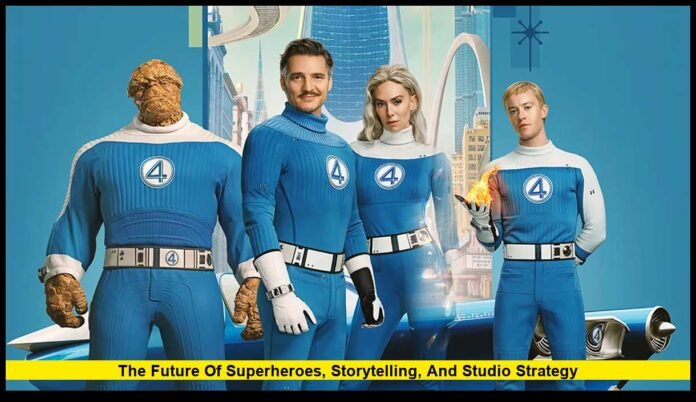
The upcoming Fantastic Four movie is poised to anchor the MCU’s next era. Directed by Matt Shakman (WandaVision), it stars Pedro Pascal as Reed Richards (Mr. Fantastic), Vanessa Kirby as Sue Storm (Invisible Woman), Joseph Quinn as Johnny Storm (Human Torch), and Ebon Moss-Bachrach as Ben Grimm (The Thing).
The film is expected to set the stage for Marvel’s cosmic future while reintroducing one of its oldest comic teams to new audiences.
According to insiders, Fantastic Four will blend science fiction and family drama, offering a tone reminiscent of early MCU entries like Iron Man — grounded, character-first, but with grand world-building ambitions.
It’s also widely believed that Fantastic Four will establish Doctor Doom as the next long-term antagonist, potentially replacing Kang as the central villain of the Multiverse Saga.
The Kang Dilemma and Marvel’s Pivot
Originally, the Marvel Cinematic Universe planned to center its multiverse narrative around Kang the Conqueror, played by Jonathan Majors. However, following Majors’ legal controversies in 2024 and his subsequent exit from the studio, Marvel was forced to rethink its long-term arc.
Insiders suggest that Doctor Doom, one of Marvel Comics’ most iconic villains, will now fill that void. His introduction aligns perfectly with the upcoming Fantastic Four and offers a more grounded yet menacing adversary.
Marvel’s ability to pivot its storytelling — even under unforeseen challenges — speaks to its flexible narrative design. This adaptability could be key to revitalizing the MCU’s cinematic momentum heading into 2026 and beyond.
Disney+ Series: A Tighter Connection to the Movies
The Disney+ expansion of the Marvel Cinematic Universe changed how audiences consume superhero stories. However, with too many interconnected series between 2021 and 2024, even devoted fans began to feel overwhelmed.
In 2025, Marvel has restructured its streaming division to create fewer, higher-quality series that directly complement the films rather than distract from them.
Upcoming highlights include:
- Daredevil: Born Again – A mature, character-driven continuation of Netflix’s acclaimed series.
- Wonder Man – A darkly comedic take on fame and identity within Hollywood’s superhero culture.
- Ironheart – Following a young inventor inspired by Tony Stark, connecting back to the Iron Man legacy.
By consolidating storylines, Marvel aims to make the MCU’s streaming and theatrical arms feel more unified, echoing the simplicity of its early years.
The Box Office Balancing Act
For over a decade, the MCU was an unstoppable financial force. Films like Black Panther (2018) and Avengers: Endgame (2019) broke records worldwide. But since 2022, the box office climate has shifted.
While Spider-Man: No Way Home (2021) and Guardians of the Galaxy Vol. 3 (2023) performed exceptionally well, several titles — including The Marvels and Ant-Man and the Wasp: Quantumania — fell short of expectations.
Rather than chasing constant billion-dollar totals, Marvel is now focusing on sustainable profitability and long-term storytelling value.
By spacing out releases and rebuilding emotional investment, the studio hopes to make each film an event again — much like the early phases that turned casual viewers into passionate fans.
New Heroes for a New Generation
A major theme of the current MCU phase is passing the torch. With many original Avengers either retired or deceased within the story, new heroes are stepping forward to define the franchise’s next decade.
Emerging MCU Heroes:
- Captain America (Sam Wilson): Anthony Mackie’s character embodies a modern, socially conscious symbol of leadership.
- Shang-Chi: Simu Liu’s martial arts hero will reportedly take on a larger role in the next Avengers films.
- Ms. Marvel (Kamala Khan): Iman Vellani’s youthful optimism and charm are expected to anchor the next generation of heroes.
- Kate Bishop (Hawkeye): Hailee Steinfeld’s successor is rumored to join future crossover teams.
- Deadpool & Wolverine: Their upcoming team-up has already created massive buzz, merging humor, nostalgia, and action.
These younger, diverse characters are designed to broaden Marvel’s audience base while maintaining continuity with legacy heroes.
Marvel’s Cultural and Industry Influence
The Marvel Cinematic Universe remains one of Hollywood’s most powerful cultural exports. Its influence extends far beyond film:
- Theme Parks: Disney’s Avengers Campus continues expanding globally, with immersive rides inspired by Black Panther and Guardians of the Galaxy.
- Gaming: Marvel’s collaboration with Insomniac Games has produced critically acclaimed titles like Spider-Man 2 and the upcoming Wolverine.
- Comics and Merchandising: MCU releases directly boost comic sales and collectibles, fueling billion-dollar merchandise markets.
Even as superhero fatigue becomes a frequent talking point, the MCU’s ecosystem of film, TV, games, and consumer experiences keeps the brand relevant.
Marvel’s Long-Term Vision: Phase 7 and Beyond
Looking ahead, Marvel Studios is already mapping out its post-Secret Wars future. While details remain under wraps, sources indicate that Phase 7 will shift focus from the multiverse to new frontiers — possibly exploring space-based sagas and supernatural storylines.
There are also rumors of a mutant saga, now that Marvel holds full rights to the X-Men franchise. Fans are eagerly awaiting official casting and story announcements following years of speculation.
With Deadpool 3 and Fantastic Four paving the way, the next wave of films could integrate mutants, cosmic heroes, and even new Avengers lineups in unexpected ways.
Challenges Ahead: Creativity vs. Continuity
The MCU’s greatest strength — its interconnected universe — is also its biggest challenge. As the franchise expands, maintaining narrative clarity becomes increasingly difficult.
Marvel’s current solution is to restructure its creative hierarchy, with showrunners and directors collaborating more closely to ensure consistent tone and pacing.
According to Kevin Feige, the studio’s goal isn’t just to keep the universe connected, but to make each story meaningful on its own. “Every movie should feel like an entry point,” Feige said earlier this year. “The universe should expand, not overwhelm.”
Conclusion: A Reimagined Era for the Marvel Cinematic Universe
The Marvel Cinematic Universe has weathered over 17 years of evolution, cultural shifts, and creative risks — and it’s still standing strong.
In 2025, Marvel isn’t chasing nostalgia; it’s rebuilding a foundation for the future. With new heroes, smarter storytelling, and a return to emotional authenticity, the next phase of the MCU could mark its most innovative period yet.
From Fantastic Four to Avengers: Kang Dynasty, the road ahead is full of possibilities. Whether on the big screen or streaming platforms, Marvel’s universe continues to prove that great stories — when told with heart and vision — never truly end.
How do you feel about Marvel’s direction? Are you excited for the next generation of heroes or missing the old Avengers? Share your thoughts below.