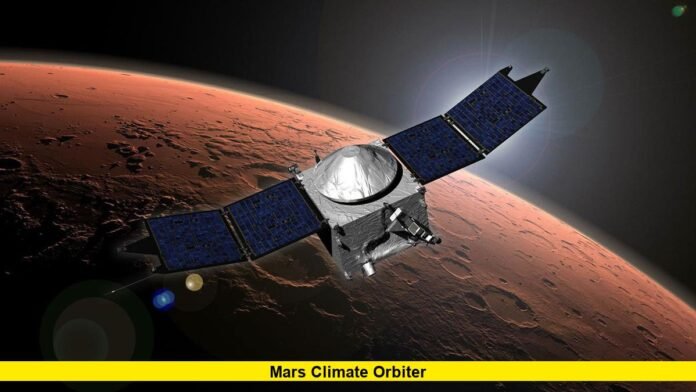

The Mars Climate Orbiter is back in the spotlight as conversations about space exploration surge across social media and scientific communities in 2026. The decades-old NASA mission, once considered a costly failure, is now being widely discussed as a defining lesson in engineering precision and organizational coordination.
The renewed attention comes at a time when modern Mars missions are achieving remarkable success, prompting comparisons between past setbacks and present-day advancements. As a result, the orbiter’s story has re-emerged as both a cautionary tale and a benchmark for how far space exploration has evolved.
Stay with this story as it continues to gain traction and reveal why one of NASA’s most infamous errors still matters today.
Why the Topic Is Trending
Interest in the Mars Climate Orbiter has surged due to viral discussions across platforms where educators, engineers, and science communicators are revisiting the mission. The topic has gained momentum alongside recent Mars exploration milestones, sparking curiosity about earlier missions that shaped today’s success.
Short-form videos, classroom explainers, and space-focused content have brought the story to a new generation. Many are encountering the incident for the first time, while others are revisiting it with fresh perspective in light of modern technological achievements.
Background: What Was the Mars Climate Orbiter?
Launched by NASA in December 1998, the Mars Climate Orbiter was designed to study the Martian atmosphere, climate patterns, and surface changes. The spacecraft was part of a broader effort to better understand Mars and support future missions.
With a mission cost of approximately $125 million, the orbiter represented a significant investment in both scientific research and technological development. It was intended to relay valuable data and serve as a communication link for other missions.
However, the mission never reached its full potential.
What Triggered the Current Discussion
The current wave of attention was sparked by renewed comparisons between older missions and the precision of modern Mars exploration programs. As newer spacecraft successfully navigate complex trajectories and deliver high-resolution data, the contrast has drawn attention back to past failures.
A key point driving the conversation is the simplicity of the error that doomed the Mars Climate Orbiter. The spacecraft was lost due to a mismatch between measurement systems—one team used imperial units while another used metric units. This discrepancy caused the orbiter to enter Mars’ atmosphere at the wrong altitude, leading to its destruction in September 1999.
This detail has become central to the renewed discussions, as it highlights how even small inconsistencies can lead to major consequences.
Public Reaction: A Mix of Shock and Reflection
Public response has been swift and varied. Many people express disbelief that such a high-profile mission could fail due to a unit conversion issue. The story often circulates as an example of how minor errors can escalate dramatically when left unchecked.
Others view the incident as an important educational moment. It is frequently referenced in engineering courses and professional training programs as a real-world example of why standardized systems and clear communication are essential.
The reaction is not purely critical. In many discussions, there is also recognition of how the failure contributed to improvements in NASA’s processes and mission planning.
What NASA Has Said
NASA has long acknowledged the cause of the Mars Climate Orbiter failure. Investigations conducted after the incident identified the unit mismatch as the primary issue, along with gaps in communication and verification procedures.
In response, the agency implemented stricter checks and improved coordination across teams. These changes were designed to prevent similar issues in future missions.
NASA has also incorporated the lessons from this mission into its broader approach to risk management and system integration, ensuring that errors of this nature are far less likely to occur again.
Why This Topic Matters Today
The Mars Climate Orbiter remains relevant because it illustrates a universal principle: precision and communication are critical in complex systems. In an era where space missions are becoming increasingly ambitious, the margin for error remains extremely small.
The story also resonates beyond the scientific community. It serves as a reminder that even highly skilled teams can encounter challenges when systems and processes are not perfectly aligned.
As space exploration expands with new missions to Mars and beyond, the lessons from this incident continue to inform how organizations approach engineering, collaboration, and accountability.
What Comes Next
As new Mars missions continue to capture global attention, the Mars Climate Orbiter is likely to remain part of the conversation. Its legacy is embedded in the procedures and safeguards that guide current and future exploration efforts.
Upcoming missions will build on decades of experience, including lessons learned from failures like this one. The focus remains on improving reliability, enhancing communication, and ensuring that every detail is carefully managed.
The renewed interest in the Mars Climate Orbiter suggests that its story will continue to be revisited whenever discussions turn to the evolution of space exploration.
Bold takeaway: The story of the Mars Climate Orbiter continues to shape how we explore space—join the conversation and stay updated as new missions unfold.