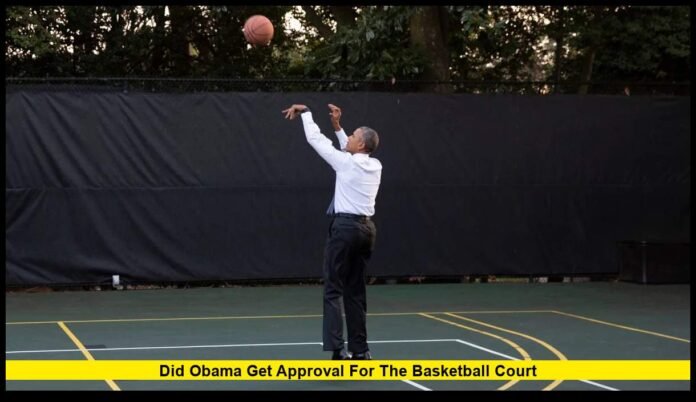

The question “Did Barack Obama get approval for the basketball court?” continues to resurface online, especially as interest in presidential lifestyle decisions and White House history grows. The topic has gained renewed attention in recent discussions, with many readers curious about how such a personal addition was handled within one of the most tightly regulated properties in the United States.
The short answer is yes—Obama did not bypass rules or act independently. The basketball court addition followed established procedures, approvals, and funding guidelines tied to the White House.
Stay with this breakdown as we explain exactly what happened, why it matters, and why people are still talking about it today.
Why This Topic Is Trending
The renewed interest in Obama’s basketball court stems from broader conversations about presidential perks, government spending, and transparency. As political discourse increasingly focuses on how public resources are used, past decisions—including relatively small-scale projects like recreational upgrades—are being revisited.
Social media has also played a role.
Clips, photos, and comparisons of past presidents’ lifestyle choices have circulated widely, prompting new audiences to question how and why certain decisions were made. The basketball court has become a talking point because it sits at the intersection of personal preference and public accountability.
Background
Barack Obama, who served as the 44th president from 2009 to 2017, is well known for his passion for basketball. Long before entering the White House, he regularly played the sport and often used it as a way to relax, connect with others, and maintain physical fitness.
When Obama moved into the White House, there was already a basic tennis court on the grounds.
That court became the foundation for the eventual basketball upgrade.
Rather than building an entirely new facility from scratch, the project involved modifying the existing tennis court to better accommodate basketball. This included adding permanent hoops and adjusting the playing surface.
The decision reflected both practicality and cost-efficiency.
What Triggered the Current Discussion
The current wave of interest has been sparked by renewed comparisons between past and present presidential lifestyles, as well as ongoing public curiosity about how taxpayer-funded properties are managed.
In particular, the basketball court has been highlighted as an example of how personal interests can influence changes within government-owned spaces.
However, what often gets overlooked in these discussions is the process behind the decision.
The modifications to the court were not made unilaterally by Obama. They were reviewed and approved through appropriate administrative channels. Importantly, reports at the time confirmed that private donations—not taxpayer funds—were used to finance the upgrades.
This detail has become central to understanding the situation accurately.
Public Reaction
Public reaction has historically been mixed but generally measured.
Supporters viewed the basketball court as a reasonable and relatable addition. They argued that presidents, like anyone else, benefit from recreational outlets, especially given the intense pressures of the role.
Critics, on the other hand, questioned whether such changes were appropriate within a government residence, regardless of funding sources.
Over time, however, the controversy has largely faded.
Today, the conversation is less about criticism and more about curiosity. Many people encountering the story for the first time are simply interested in how the decision was made and whether it followed proper procedures.
What Barack Obama Has Said
Barack Obama has consistently embraced his identity as a basketball enthusiast.
While he has not framed the court as a major policy decision, he has spoken openly about the role basketball played in his daily routine during his presidency. It served as a way to stay active, relieve stress, and maintain a sense of normalcy.
Informal games with staff, friends, and even professional players became a well-known aspect of his time in office.
These moments helped humanize the presidency and offered a glimpse into how Obama balanced personal interests with official responsibilities.
Why This Topic Matters
At first glance, a basketball court might seem like a minor detail in presidential history.
But the discussion touches on larger issues.
First, it highlights how decisions involving public property are handled. Even small modifications to the White House require oversight, approval, and adherence to regulations.
Second, it reflects ongoing public interest in transparency.
People want to know how leaders use their influence and whether personal preferences intersect appropriately with public resources. The fact that private funding was used in this case is a key reason the project was broadly accepted.
Third, it underscores the evolving expectations of modern presidents.
Today’s leaders are often expected to appear relatable and grounded. Obama’s visible connection to basketball contributed to that image, making the court more than just a recreational feature—it became part of his public identity.
What Comes Next
While Obama is no longer in office, the basketball court remains part of the White House grounds and continues to be used.
Future presidents have the option to use or modify existing facilities, but any changes would follow similar approval processes. The precedent set during Obama’s presidency reinforces the importance of transparency and proper authorization.
As public interest in presidential history continues to grow, stories like this are likely to resurface.
They offer insight into how personal habits, public perception, and institutional rules intersect at the highest level of government.
The question of whether Obama got approval for the basketball court ultimately has a clear answer: yes, the project followed established procedures and was funded privately, aligning with existing guidelines.
What keeps the story alive is not controversy—but curiosity about how even the smallest details of presidential life are managed behind the scenes.
Have thoughts on this story? Share your perspective and keep following for more deep dives into presidential history and decisions.