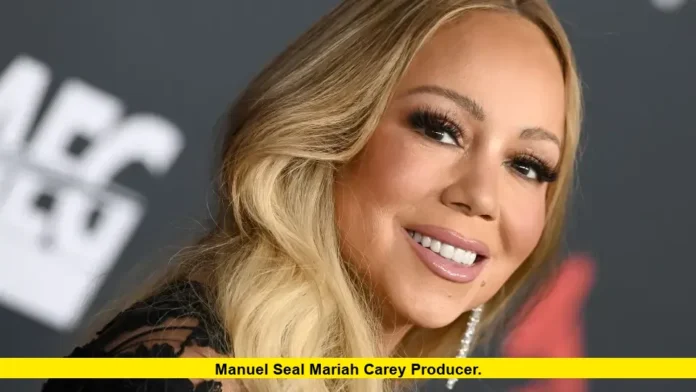

The Manuel Seal Mariah Carey producer connection has received renewed attention following Seal’s death at age 66, bringing fresh focus to the songwriter and musician’s important role in some of Carey’s most recognizable recordings. Manuel Lonnie Seal Jr. died on September 27, 2026, one day after his 66th birthday. His death was announced publicly by longtime collaborator Jermaine Dupri, who described Seal as a close creative partner and a key part of the So So Def sound.
Seal’s connection to Mariah Carey stretches across several stages of her career. He contributed to songs from the 1990s and later became part of the creative team behind The Emancipation of Mimi, Carey’s 2005 comeback-era album. His credits include songwriting, keyboards, production and co-production work, depending on the recording.
Who Was Manuel Seal?
Manuel Lonnie Seal Jr. was an American songwriter, record producer, arranger and multi-instrumentalist. He was born on September 26, 1960, in Freeport, Illinois. His musical abilities developed early, and his career eventually connected him with major artists across R&B, pop and hip-hop.
Seal became especially closely associated with Jermaine Dupri. Their professional partnership helped produce and shape records for artists including Mariah Carey, Usher, TLC, Janet Jackson, Xscape and others.
His skills went beyond traditional production. Seal was known as a musician who could contribute directly to the musical foundation of a song. He played piano and other instruments while also working as a songwriter and producer.
That combination became particularly important during collaborative studio sessions. Instead of simply overseeing a finished recording, Seal could help develop melodies, chords and arrangements while the song was still taking shape.
How Manuel Seal Worked With Mariah Carey
Seal’s work with Carey began during the period surrounding her 1995 album Daydream. One of the most significant results of that collaboration was “Always Be My Baby.”
Grammy’s retrospective on Jermaine Dupri’s career identifies Seal as a regular Dupri collaborator and credits him as a co-writer of “Always Be My Baby” alongside Carey and Dupri. The song became one of Carey’s signature recordings and was nominated for Best Female R&B Vocal Performance at the 1996 Grammy Awards.
The creative process behind “Always Be My Baby” also illustrates why Seal’s contribution was important. Carey had a melody and musical direction in mind, while Dupri worked on the drums and Seal played keyboards as the collaborators developed the arrangement.
Carey’s melody ultimately became the foundation of the finished song. Seal’s musical contribution helped translate that idea into a structured R&B-pop recording.
The collaboration demonstrated the strength of the Carey-Dupri-Seal creative combination. That relationship would become important again years later.
Manuel Seal and “We Belong Together”
The most important part of Seal’s association with Carey came with “We Belong Together,” released in 2005 as part of The Emancipation of Mimi.
The official Grammy database credits Manuel Seal as one of the song’s primary songwriters alongside Carey, Jermaine Dupri and Johntá Austin. It also identifies Carey, Dupri and Seal as the song’s producers.
Apple Music’s detailed credits list Seal as a co-producer on the recording. The same credit information identifies him as a songwriter alongside Carey, Dupri, Austin and additional writers connected to interpolated material.
“We Belong Together” became one of Carey’s defining career records. Its success also gave Seal one of the most visible credits of his career.
At the 48th Annual Grammy Awards in 2006, the song was nominated for Record of the Year, Song of the Year and Best R&B Song. Seal was specifically credited in the Grammy nominations for the songwriting and production of the record.
The song won Best R&B Song. That victory gave Seal his Grammy win and remains one of the clearest markers of his contribution to Carey’s catalog.
Was Manuel Seal the Main Producer of “We Belong Together”?
The production credits require some clarification because the phrase “Mariah Carey producer” can make the working relationship sound simpler than it was.
“We Belong Together” was a collaborative production. Mariah Carey and Jermaine Dupri received producer credits, while Manuel Seal was credited as a co-producer. The Grammy database lists all three among the production team.
That distinction matters. Seal was not the sole producer of the record. His contribution was part of a larger creative team that included Carey and Dupri.
His songwriting credit was also significant. Grammy identifies Carey, Dupri, Austin and Seal as the song’s credited songwriters in the Best R&B Song category.
So, when listeners search for information about Seal’s role, the most accurate description is that he was a songwriter and co-producer who helped create the record rather than the only producer responsible for it.
Manuel Seal’s Other Work With Mariah Carey
Seal’s Carey credits were not limited to “Always Be My Baby” and “We Belong Together.”
His musical connection with Carey also extended to Daydream. The album’s personnel credits identify Seal as a piano player and writer.
He later worked with Carey and Dupri on The Emancipation of Mimi. Music credits for the album identify Seal as a co-producer on “We Belong Together” and other recordings from the project.
His involvement continued into Carey’s next studio album, E=MC², released in 2008. MusicBrainz credits Seal as a co-producer on multiple tracks, including “Cruise Control,” “Love Story,” “Last Kiss” and “Thanx 4 Nothin’.”
These credits show that Seal’s relationship with Carey was not based on one isolated hit. He worked with her across multiple albums and different periods of her recording career.
Why “Always Be My Baby” Remains Important
“Always Be My Baby” is particularly relevant when examining Seal’s relationship with Carey because it predates his later work on “We Belong Together.”
The 1995 song was built through collaboration between Carey, Dupri and Seal. Grammy describes Seal as a regular Dupri collaborator and specifically names him among the writers who helped create the Carey classic.
The song also became a major commercial success for Carey. It reached No. 1 on the Billboard Hot 100, adding another major achievement to Carey’s career.
In 2026, the recording remains part of Carey’s active catalog. The song was certified seven-times platinum by the Recording Industry Association of America in July 2026, showing that its commercial significance has continued decades after its original release.
Seal’s Grammy Connection to Mariah Carey
Seal’s Grammy history is closely tied to Carey’s music.
The Recording Academy lists six Grammy nominations for Manuel Seal and one win. His nominations include Album of the Year for Daydream, Album of the Year for The Emancipation of Mimi, Record of the Year for “We Belong Together,” Song of the Year for “We Belong Together,” and Best R&B Song for both “My Boo” and “We Belong Together.”
His Grammy win came for Best R&B Song for “We Belong Together” at the 2006 ceremony. The award recognized the songwriters, including Seal, rather than simply the recording’s performers.
That distinction helps explain Seal’s career. Much of his influence came through songwriting, arrangement and production rather than front-and-center performances.
Manuel Seal’s Broader Music Career
Although Carey’s catalog is central to his legacy, Seal worked with many other major performers.
His credits include Usher, TLC, Janet Jackson, Xscape, Aretha Franklin, Alicia Keys and Destiny’s Child. His longtime partnership with Dupri also connected him with the So So Def recording operation.
One major non-Carey example was Usher and Alicia Keys’ “My Boo.” Seal received songwriting and co-production credits on the 2004 hit. The Recording Academy also lists him among the song’s Grammy nominees for Best R&B Song.
His work with Usher also included “You Make Me Wanna…” and other material associated with the singer’s breakthrough period.
Seal’s career therefore connected several important R&B and pop catalogs. His work with Carey was one especially prominent part of a much larger body of songwriting and production.
Latest Update on Manuel Seal
The latest confirmed development is Seal’s death on September 27, 2026, at age 66. He died one day after his birthday. Multiple reports have identified Jermaine Dupri’s Instagram announcement as the public confirmation of his passing.
As of the latest available reporting, a cause of death has not been publicly disclosed. Reports have not established a confirmed medical explanation, so claims beyond the confirmed date and age should be treated cautiously.
Dupri’s tribute emphasized their unusually close creative relationship. He described Seal as the person who understood his musical ideas and credited their partnership with helping create the sound associated with So So Def.
The news has renewed attention on Seal’s work with Carey, especially “Always Be My Baby” and “We Belong Together.” Those recordings remain among the clearest examples of his ability to combine musicianship, songwriting and production.
What Manuel Seal Contributed to Mariah Carey’s Music
Seal’s importance to Carey’s catalog can be summarized through several documented contributions:
- He co-wrote “Always Be My Baby” with Carey and Jermaine Dupri.
- He contributed piano and musical ideas during the development of “Always Be My Baby.”
- He co-produced “We Belong Together.”
- He received a songwriting credit on “We Belong Together.”
- He was part of the Grammy-winning songwriting team behind “We Belong Together.”
- He contributed to Carey’s Daydream and The Emancipation of Mimi eras.
- He received additional production credits on songs from E=MC².
These credits show why Seal’s name remains connected to Carey’s most celebrated R&B recordings.
The Legacy of Manuel Seal and Mariah Carey
The relationship between Seal and Carey represents a recurring feature of successful popular music: major records are often created by several musicians whose individual contributions can become less visible than the finished performance.
Carey supplied the voice and much of the songwriting vision. Dupri brought production, rhythm and a long-running creative partnership. Seal contributed musicianship, songwriting and production skills that helped shape the final recordings.
That collaborative history is particularly clear when comparing “Always Be My Baby” with “We Belong Together.” The songs came from different periods of Carey’s career, yet both connect Seal to important moments in her catalog.
His death in September 2026 has therefore brought renewed attention to work that listeners have continued to hear for decades. His name may not appear in the spotlight as often as Carey’s, but his credits are permanently attached to several songs that remain central to her musical history.
The latest information confirms that Manuel Seal’s career with Mariah Carey was substantial, spanning songwriting, musicianship and production across multiple albums rather than being limited to one famous single. His contributions to “Always Be My Baby” and “We Belong Together” remain especially important parts of that history.
For fans revisiting Mariah Carey’s catalog, Manuel Seal’s credits offer a closer look at the creative team behind two of her most enduring recordings.