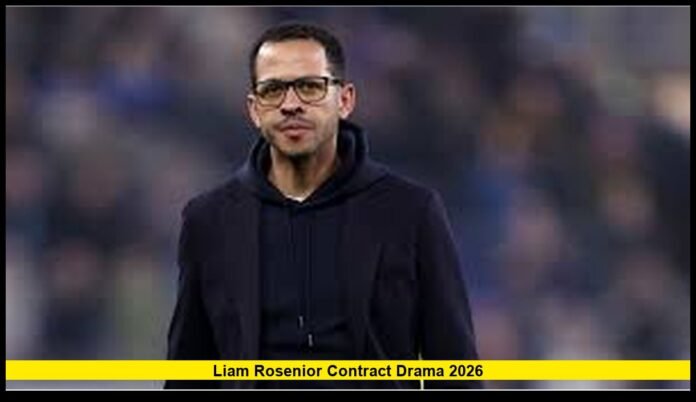

The liam rosenior contract situation has taken a dramatic and unexpected turn, shaking the Premier League landscape and raising serious questions about long-term managerial deals at elite clubs.
A Stunning Rise and Sudden Fall at Chelsea
When Chelsea appointed Liam Rosenior in January 2026, the move was seen as bold and forward-thinking. The club handed him a long-term deal running until 2032—one of the lengthiest managerial contracts in modern English football.
That decision reflected confidence in Rosenior’s ability to build a new era. He had impressed during his time in European football and was viewed as a coach capable of developing young talent while implementing a progressive playing style.
Early results seemed to justify that belief. Chelsea won six of his first seven matches, including strong performances in domestic and European competitions. Optimism grew quickly among fans and within the club hierarchy.
Stay with us for more breaking Premier League developments as they happen.
What the Contract Actually Included
Rosenior’s deal was not just long—it was structured to signal stability. Key details included:
- Contract length of approximately six-and-a-half years
- Expiration set for 2032
- Estimated annual salary between £3.5 million and £4 million
- Performance-based clauses and structured internal reviews
The liam rosenior contract was designed with flexibility, allowing the club to reassess progress while still committing to a long-term vision. It reflected a modern approach to managerial appointments, where clubs aim to build sustained success rather than rely on short-term fixes.
Rapid Decline in Results
After a promising start, Chelsea’s form took a sharp downturn.
The team suffered:
- Five consecutive Premier League defeats
- A noticeable drop in attacking output
- A heavy Champions League elimination, including an 8–2 aggregate loss
This stretch marked one of the club’s most difficult runs in recent history. Performances became inconsistent, and the team struggled to maintain structure and confidence on the pitch.
Following a 3–0 defeat in league play, Rosenior openly criticized his players, questioning effort and discipline. While some supporters appreciated the honesty, others saw it as a sign of tension within the squad.
Chelsea Pull the Trigger Early
Despite the long-term nature of the deal, Chelsea made the decision to part ways with Rosenior in April 2026—just a few months into his tenure.
The move came amid:
- Increasing pressure from poor results
- Frustration among supporters
- Concerns about the team’s direction and internal dynamics
An interim manager was appointed while the club began its search for a permanent replacement.
The speed of the decision reinforced a familiar pattern: even long-term contracts offer little protection when results fail to meet expectations.
Financial Fallout of the Deal
The early end to the liam rosenior contract has significant financial implications.
Because of the structure of the agreement:
- Compensation is expected to cover a portion of remaining wages
- Clauses in the contract likely reduced the overall payout
- The club avoided a larger financial burden through performance-related provisions
Even so, the situation highlights the risks clubs face when committing to extended deals without guaranteed stability.
What Went Wrong?
Several factors contributed to the rapid breakdown:
Limited Preparation Time
Rosenior took over mid-season, leaving little time to implement tactical systems or build cohesion.
Injury Setbacks
Key players were unavailable during critical matches, limiting attacking options and squad depth.
Inconsistent Squad Performance
A young and evolving squad struggled with consistency under pressure.
Tactical Adjustments
Frequent changes in approach created uncertainty on the field.
External Pressure
Fan expectations and media scrutiny intensified quickly, accelerating the timeline for results.
A Broader Pattern at Chelsea
This situation fits into a wider trend at the club in recent years.
Chelsea has consistently:
- Changed managers frequently
- Invested heavily in emerging talent
- Attempted to balance long-term planning with immediate success
The Rosenior episode underscores the challenge of aligning those goals. A contract running through 2032 suggested patience, but the quick dismissal revealed the reality of modern football.
Impact on Rosenior’s Career
Although the tenure ended abruptly, Rosenior remains a respected figure in coaching circles.
He is known for:
- Developing young players
- Emphasizing a modern, attacking style
- Adapting to different football environments
Short managerial stints are not uncommon at top clubs, and many coaches recover quickly with new opportunities. Rosenior is expected to remain a candidate for future roles.
What Comes Next for Chelsea?
Chelsea now faces another critical decision as it searches for its next manager.
The club’s priorities include:
- Stabilizing performances immediately
- Rebuilding confidence within the squad
- Maximizing the potential of a talented roster
There are indications that the club may look for a more experienced coach to guide the team through its next phase.
Why This Story Matters in Modern Football
The liam rosenior contract situation reflects a larger issue across elite football.
Clubs often aim for long-term stability, yet results continue to drive short-term decisions. This creates a cycle where managers are hired with ambitious plans but are rarely given the time needed to fully execute them.
It raises a key question about the future of the game:
Can long-term managerial projects truly succeed in an environment driven by immediate performance?
Final Thoughts
Rosenior’s time at Chelsea will be remembered as a brief but intense chapter. It began with optimism and a long-term vision but ended quickly due to results and pressure.
The situation highlights the unpredictability of football management and the challenges clubs face when trying to balance patience with performance.
As Chelsea moves forward, the lessons from this episode may influence how the club approaches managerial appointments in the future.
Keep checking back for more updates as this story continues to develop.
What do you think—should clubs rethink long-term managerial contracts, or is patience still the key to success? Share your thoughts below.