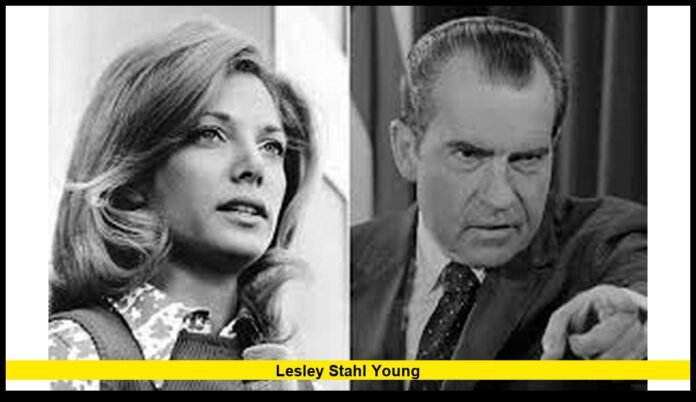

Lesley Stahl young is a topic that continues to draw public interest as viewers look back at how one determined reporter evolved into one of the most respected figures in American broadcast journalism. As of December 2025, she remains active on television, delivering new interviews and high-impact stories while her early years continue to shape how she approaches every assignment.
Early Life and the Roots of Curiosity
Lesley Rene Stahl was born in Lynn, Massachusetts, on December 16, 1941, and grew up in the nearby coastal town of Swampscott. Her New England upbringing fostered a strong work ethic, and her household encouraged reading, debate, and attention to civic life. These influences grew stronger over time and helped guide her toward a professional path centered on public affairs.
She attended Wheaton College, where she studied history. Her academic focus sharpened her interest in government, international relations, and the evolution of American policy. Graduating in 1963, she left college with a deep respect for documented truth and analytical thinking. These skills served as a foundation when she later entered television journalism.
After college, she moved to New York City, where she was exposed to the rush and urgency of big-city newsrooms. She worked in various production settings before finding the opportunity that ultimately redirected her future. Her curiosity, persistence, and ability to learn quickly allowed her to stand out among colleagues.
Entering Television News as a Young Reporter
Stahl began her reporting career at a time when opportunities for women in national broadcast journalism were limited. The newsroom culture of the early 1970s was still dominated by men, particularly in political and investigative reporting. New hires had to prove themselves through accuracy, hard work, and consistent follow-through.
Her early assignments ranged from local coverage to federal court activity. She approached each story with the same seriousness, regardless of scale. That approach soon placed her at a historic turning point. She was assigned to cover the early stages of the Watergate break-in investigation, which at first seemed like a routine event with little long-term consequence.
What began as small courthouse updates quickly became the political crisis of the decade. Stahl’s coverage helped establish her as a focused, fearless reporter capable of navigating a story that grew in complexity every day. Her interviews, detailed observations, and ability to identify key developments made her stand out in a crowded field of journalists.
Shaping a Style Defined by Determination
During her early career, Stahl developed the reporting style that would later define her professional identity. She became known for direct questioning, careful preparation, and attention to detail. She reviewed court documents, press statements, and transcripts with precision. She also cultivated an ability to remain calm when questioning powerful figures.
These skills built trust with viewers. People came to recognize her voice, her cadence, and her approach to interviews. The qualities she developed during those early years continued to shape her later work, making her one of the most consistent and respected broadcast journalists of her generation.
Colleagues often observed that she treated every interview as an opportunity to learn and every assignment as a chance to uncover something meaningful. This mindset kept her grounded even when her visibility increased.
A Breakthrough Role Covering the White House
Stahl’s rise continued when she became a White House correspondent. In this role, she covered presidential administrations and major national policy debates. She interviewed high-ranking officials, traveled for diplomatic summits, and reported from the West Wing during critical moments in U.S. political history.
Her presence in the briefing room broke barriers for women in broadcast journalism. More importantly, her work brought credibility and depth to political news coverage. She asked clear, fair, and persistent questions that held leaders accountable. Viewers appreciated her ability to distill complicated events into accessible language without sacrificing accuracy.
Her reporting helped clarify moments of national confusion and tension. By providing context and asking pointed questions, she bridged the gap between government decision-makers and the public.
Moderating High-Impact Public Affairs Programming
Stahl later took on the role of moderator for a major weekly public affairs program. This responsibility strengthened her interviewing skills and expanded her influence. The format required her to guide discussions, assess the significance of rapidly developing events, and deliver insights with composure.
Through this platform, she interviewed policymakers, business leaders, world figures, and experts across diverse fields. Her calm, analytical manner allowed her to navigate even the most intense exchanges. She demonstrated that strong journalism does not require confrontation for its own sake; it requires clarity, preparation, and consistency.
During this period, she also mentored younger journalists. Her advice centered on discipline, accuracy, and the importance of mastering the details of every story.
A Landmark Tenure at 60 Minutes
In 1991, Stahl joined 60 Minutes, launching the chapter of her career that millions of viewers now associate with her name. Over the next three decades, she reported on politics, economic challenges, emerging technologies, cultural changes, war zones, and deeply personal human stories.
Her work on the program includes:
- High-profile sit-down interviews with global leaders
- Investigations into corporate misconduct
- Coverage of social issues affecting communities across the United States
- Profiles of innovators in science, business, and entertainment
- Reporting from conflict regions and areas affected by disaster
Stahl earned a reputation for balancing empathy with accountability. Her interviews encouraged honesty without sacrificing toughness. Viewers trusted her because she approached every segment with fairness and preparation.
As of late 2025, she continues to appear on new episodes, underscoring her commitment to journalism and her ability to adapt to evolving media environments.
The Enduring Interest in “Lesley Stahl Young”
The phrase lesley stahl young continues to generate attention because many viewers want to understand how a young reporter developed into a national figure. People search for early images, archived interviews, and background information that reveal how her skills, instincts, and discipline formed.
Several themes drive this interest:
- Her early assignments evolved into major national events
- She demonstrated that strong reporting can begin long before public recognition
- Her path shows how preparation and persistence shape long-term success
- She modeled how women can lead in high-pressure news environments
- Her early work continues to influence journalists entering the field today
Her story provides a roadmap for anyone beginning a career in journalism. It shows that excellence develops through experience, curiosity, and resilience.
A Closer Timeline of Key Early Milestones
Below is a detailed timeline highlighting central moments in Stahl’s early and mid-career path:
1941: Born in Lynn, Massachusetts
1963: Graduated from Wheaton College
1960s–early 1970s: Entered New York broadcast production and news reporting
Early 1970s: Covered the initial court activity tied to the unfolding Watergate investigation
Late 1970s: Transitioned into high-level political reporting
1980s: Became a leading White House correspondent
1980s: Took on the role of weekly program moderator, shaping national discussions
1991: Joined 60 Minutes, beginning a historic run in investigative journalism
Each stage built the foundation for her later achievements and public recognition.
Lessons Modern Journalists Draw From Stahl’s Early Career
Today’s journalists often study Stahl’s early reporting to understand how to navigate rapidly shifting news cycles. Several lessons stand out:
1. Treat every assignment with seriousness.
Small stories can grow into major national events, and strong reporting at every stage builds credibility.
2. Prepare thoroughly for every interview.
Knowledge of background facts, timelines, and context strengthens the quality of questioning.
3. Ask clear, direct questions.
Effective journalism relies on transparency and precision, not confrontation alone.
4. Balance confidence with humility.
Stahl demonstrated that listening is as important as speaking during an interview.
5. Protect accuracy at all costs.
Her work shows that trust develops through reliable, consistent reporting year after year.
A Career That Continues to Influence New Generations
Stahl’s longevity in journalism highlights the value of sustained discipline and adaptability. Her early years shaped her identity as a reporter who approaches each story with fresh perspective and rigorous preparation. Younger journalists study her techniques to better understand how to balance empathy with accountability.
Her contributions have enriched public understanding of political systems, cultural shifts, and global issues. She remains a central figure in American broadcast news, proving that experience, integrity, and curiosity endure.
Final Thought
Share your thoughts below on how Lesley Stahl’s early years shaped the journalist she continues to be today.