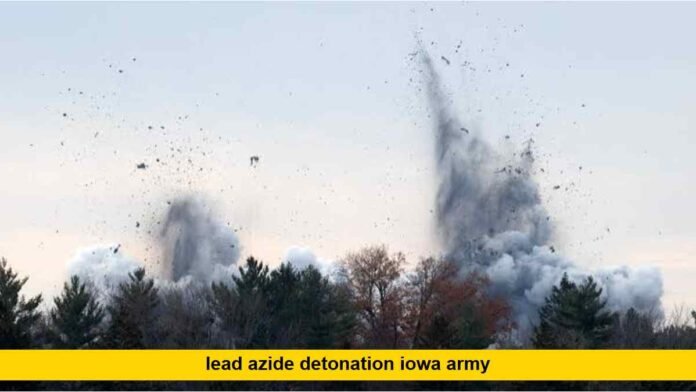

The lead azide detonation iowa army operation concluded on November 25, 2026, after military authorities carried out a controlled destruction of deteriorated explosive material at the Iowa Army Ammunition Plant near Middletown. The operation followed weeks of safety planning, environmental preparation, public concern, and coordination between federal, state, and local agencies. Initial post-event monitoring reported no airborne lead detected by regional EPA monitors, while environmental sampling and follow-up assessments continued.
The operation was closely watched across southeastern Iowa and neighboring states because officials had identified an aging stockpile that posed a growing safety concern. Residents had questions about potential contamination, possible effects on homes and farms, temporary relocation recommendations, and what would happen after the Army completed its work.
The latest developments indicate that the immediate operation is over. Attention has now shifted toward environmental verification, community safety, public communication, and the release of additional monitoring information.
What Happened at the Iowa Army Ammunition Plant?
The U.S. Army carried out a controlled operation at the Iowa Army Ammunition Plant in Middletown on November 25. The operation was intended to eliminate a hazardous stockpile of degraded lead azide that military inspectors had identified during a safety inspection.
The material had deteriorated significantly over time, raising concerns about its condition and the possibility of an uncontrolled event. Military authorities determined that the situation required urgent action rather than continued storage.
The operation was completed under the oversight of military explosives-safety personnel and with coordination from environmental and emergency-management agencies.
The Army described the event as successful. Initial reports indicated that the targeted material had been destroyed and that officials had not reported secondary explosions or infrastructure damage following the operation.
While the detonation was the central event, the broader response included environmental monitoring, temporary relocation support, emergency planning, and communication with nearby communities.
Why the Army Considered the Stockpile a Serious Safety Concern
The concern was not simply the age of the stored material. Officials identified substantial deterioration that changed the safety conditions surrounding the stockpile.
The material had developed crystallized and degraded characteristics, making its condition increasingly difficult to manage. The Army and its technical partners assessed the risks associated with leaving it in place, handling it, or attempting to move it.
The safety assessment concluded that the material presented an unacceptable risk if it remained in its deteriorated condition.
Officials also considered the possibility of an uncontrolled incident. The Army’s position was that eliminating the hazardous stockpile through a controlled operation was necessary to reduce the danger to personnel and nearby communities.
The decision was made after technical reviews and coordination among military specialists, federal environmental officials, and other agencies responsible for explosives safety and public protection.
How the Operation Was Prepared
The operation required substantial planning because authorities needed to address several risks at the same time.
The Army coordinated with the EPA, FEMA, health agencies, emergency-management officials, and state and local authorities. These agencies worked on operational planning, public information, environmental sampling, community assistance, and post-event monitoring.
Preparation included environmental sampling before the operation, deployment of monitoring equipment, emergency communication planning, and arrangements for residents who were advised to temporarily relocate.
Federal agencies also positioned personnel in the area to support environmental monitoring and response activities.
The planning process reflected the importance of protecting the public while addressing the safety concern associated with the deteriorated stockpile.
Operation Completed, but Monitoring Has Not Ended
The Army’s operation was completed on November 25, but environmental agencies are continuing to evaluate conditions around the installation.
Initial monitoring results were encouraging. The EPA reported that its real-time air-monitoring equipment detected no airborne lead in the region during the initial post-detonation monitoring period. The agency said its monitors continued collecting information throughout the event.
However, officials have not treated the initial air-monitoring results as the only measure of environmental conditions. Additional sampling and evaluation remain part of the response.
Air, soil, dust, and water testing can provide different types of information. Continued monitoring is intended to help authorities determine whether any areas require further investigation, precautionary measures, or remediation.
The distinction between initial results and a completed environmental assessment is important. Early findings may provide reassurance, but a broader evaluation can take additional time as agencies collect and analyze samples.
EPA’s Initial Monitoring Results
The EPA played a central role in evaluating environmental conditions before and after the operation.
Before the detonation, the agency had collected more than 1,200 environmental samples involving air, soil, dust, and water. The sampling effort was intended to establish information about conditions before the operation and support comparisons with post-event results.
The agency also deployed hundreds of personnel and contractors to the area to support sampling and monitoring activities.
Following the detonation, EPA officials reported that real-time monitors showed no airborne lead detected in the monitored region during the initial post-event period.
The agency continued collecting information and conducting additional assessments. Environmental monitoring remains a key part of determining whether the operation had measurable effects beyond the installation.
Why Air Monitoring Matters
Air monitoring is important because airborne particles can potentially travel away from an incident site and settle on nearby surfaces.
The EPA’s real-time monitoring provides information about conditions in the air during and after the operation. Such data can help officials identify whether measurable airborne contamination is present and whether additional protective measures may be necessary.
Initial results showing no detected airborne lead are encouraging, but authorities continue evaluating other environmental pathways as part of the broader response.
Temporary Relocation Recommendations for Residents
Before the operation, federal authorities recommended temporary relocation for residents in Middletown and certain surrounding areas.
The relocation recommendation was based on safety planning and environmental modeling. Authorities identified an affected area extending southwest from the installation, with a safety buffer incorporated into the planning.
The recommendation was intended to reduce potential risks to residents during the operation and its immediate aftermath.
FEMA coordinated assistance for people who needed help leaving the area. Support included transportation, temporary lodging, food, water, and other necessities.
Residents who were unable to travel independently could seek assistance through federal emergency-support arrangements.
The relocation effort also required coordination with local officials, emergency services, and community organizations to help residents understand where to go and how to access assistance.
Why Residents Were Asked to Leave Temporarily
The relocation recommendation reflected the Army’s and federal agencies’ assessment of potential risks associated with the operation.
Authorities wanted to reduce the number of people potentially exposed to the event and provide residents with a safer alternative while monitoring was underway.
The recommendation also helped emergency-management agencies prepare for possible public-health or environmental concerns.
Residents were encouraged to follow official instructions rather than rely on informal reports or social-media claims. Information about the affected area, relocation assistance, and return-home guidance was communicated through government agencies.
Community Concerns About Lead Exposure
Lead-related concerns were among the most significant issues raised by residents and other stakeholders.
Lead is a toxic metal that can affect human health, particularly when exposure occurs over time or involves vulnerable populations. Children and pregnant women are generally considered especially sensitive to the effects of lead exposure.
People living near the installation wanted information about whether the operation could affect:
- Homes and residential properties
- Outdoor surfaces and dust
- Drinking water
- Soil and gardens
- Farms and agricultural land
- Livestock and animal health
- Schools, playgrounds, and public spaces
These concerns contributed to the extensive environmental monitoring and public communication effort.
The EPA and public-health agencies have continued evaluating environmental information to determine whether any additional protective measures may be necessary.
What the Latest Update Means for Nearby Residents
The completion of the operation represents an important milestone, but residents should continue to pay attention to official guidance.
The initial EPA monitoring results indicated no airborne lead detected by regional monitoring equipment. The Army also reported a successful operation without initial reports of secondary explosions or infrastructure damage.
Those findings provide encouraging information about the immediate aftermath.
However, people who were included in the temporary relocation recommendation should follow official return-home instructions. Residents should also pay attention to additional environmental updates, particularly if authorities announce new testing results or precautionary recommendations.
The status of environmental monitoring can change as more information becomes available, so official communications remain the most reliable source for current guidance.
Neighboring States Also Followed the Operation
The incident attracted attention beyond Iowa because environmental conditions and weather patterns were part of regional safety planning.
Authorities in neighboring states monitored the situation and reviewed information about potential environmental impacts. State agencies communicated with federal officials and prepared to provide guidance if monitoring indicated a need for additional action.
Illinois officials, for example, reported that they were monitoring developments and coordinating with state and federal partners. Initial information indicated that Illinois was not expected to be affected by the anticipated plume under the prevailing conditions.
Missouri also reviewed the situation and communicated public-health information concerning potential environmental impacts.
The regional response highlights how incidents involving hazardous materials can require coordination across state boundaries, particularly when air monitoring and environmental conditions are part of the assessment.
How Environmental Testing Can Provide More Information
Environmental testing is an important part of the post-operation response.
Initial air-monitoring data provide information about airborne conditions, but additional samples can help officials evaluate other environmental factors. Testing may include assessments of soil, dust, water, and other surfaces.
Agencies use environmental data to determine whether measurable contamination exists, whether conditions are consistent with pre-event measurements, and whether additional action may be needed.
The testing process may take time because samples need to be collected, analyzed, reviewed, and interpreted.
Authorities may also need to compare information from different locations to understand whether conditions vary across the surrounding area.
Residents who have questions about potential environmental effects should look for information from official environmental and public-health agencies.
Why the Incident Has Generated National Attention
The operation became a national news story because it combined several issues that are of public concern: military safety, hazardous materials, environmental protection, community preparedness, and federal emergency response.
The deteriorated stockpile was located at a major military installation, but the potential consequences of an incident were not limited to military personnel.
Residents wanted to understand why the Army considered the operation necessary, how the surrounding area would be protected, and what monitoring would take place afterward.
The situation also highlighted the challenges associated with aging hazardous materials stored at government facilities. Public attention focused not only on the immediate operation but also on the need for long-term safety planning and responsible management.
For communities near military or industrial facilities, clear information about safety procedures and environmental monitoring can be particularly important during emergency operations.
Latest Update on the lead azide detonation iowa army Operation
The latest verified information indicates that the controlled operation at the Iowa Army Ammunition Plant was completed on November 25, 2026.
The Army reported that the operation was successful, while initial EPA monitoring detected no airborne lead in the monitored region following the event. Agencies continued environmental sampling and monitoring after the detonation.
Authorities also reported no initial secondary explosions or infrastructure damage associated with the operation.
The focus now is on follow-up monitoring, environmental evaluation, and providing information to the public. Additional results may help clarify whether any environmental effects were detected and whether further measures are necessary.
Residents should continue following official guidance regarding return-home recommendations, environmental precautions, and any additional public-health information.
What Happens Next?
The immediate operation has concluded, but several follow-up responsibilities remain.
Federal agencies are continuing environmental monitoring and reviewing data collected before and after the operation. The Army and environmental authorities may also evaluate the response to identify lessons that could be relevant to the management of aging or deteriorated hazardous materials at other facilities.
The next phase will likely focus on communicating results, addressing remaining questions, and determining whether additional environmental or public-health actions are warranted.
For residents, the most important development will be the availability of clear, updated information about local environmental conditions and any recommended precautions.
Officials may provide additional updates as monitoring and analysis continue.
Final Thoughts
The completed operation at the Iowa Army Ammunition Plant marks the end of an immediate military safety response involving deteriorated hazardous material. The Army reported that the operation was successful, and initial EPA monitoring provided encouraging information about airborne lead conditions in the monitored region.
The situation nevertheless remains important for nearby residents because environmental sampling, monitoring, and follow-up assessments are continuing. Authorities will need to communicate additional findings clearly so residents can understand the results and any recommendations that may follow.
The coming updates are expected to focus on environmental data, community safety, and whether any further protective measures are necessary.
Leave a comment with your thoughts and stay updated as authorities release additional information about the Iowa operation and its environmental monitoring results.