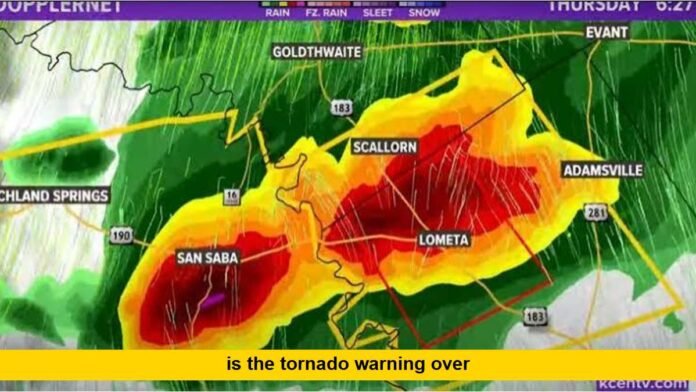

Is the tornado warning over for your area? Residents dealing with severe weather need to know whether an active tornado alert has expired, been canceled, or been replaced by another warning. Tornado warnings are issued for specific locations and can change rapidly as thunderstorms move, making it important to check the latest official information before leaving shelter or resuming outdoor activities.
Severe weather can create dangerous conditions even after the immediate tornado threat appears to weaken. Strong winds, heavy rain, flooding, fallen trees, damaged buildings, and additional thunderstorms may continue after a tornado warning ends. A warning’s expiration therefore does not automatically mean every weather-related danger has disappeared.
The safest approach is to confirm the current alert for your city or county, follow instructions from emergency officials, and remain prepared to take shelter again if another warning is issued.
Latest Tornado Warning Update for Southeastern Virginia
Severe weather affected the Hampton Roads region of Virginia on Thanksgiving morning, November 26, 2026. The National Weather Service issued multiple tornado warnings as a fast-moving thunderstorm moved through southeastern Virginia, with radar indicating rotation that could produce a tornado.
The warnings affected different communities at different times. Earlier alerts included portions of Chesapeake, Norfolk, Portsmouth, and northwestern Virginia Beach. As the storm moved, later warning information shifted attention toward Norfolk, northwestern Virginia Beach, and communities farther north and west.
The warning situation changed rapidly, demonstrating why residents should check the most recent alert rather than relying on an earlier phone notification.
Communities affected by the warnings
The severe-weather alerts covered portions of the Hampton Roads region, including areas around:
- Norfolk
- Virginia Beach
- Chesapeake
- Portsmouth
- Hampton
- Newport News
- Poquoson
- York County
The precise area covered by each warning varied. Not every community listed above was necessarily under the same warning at the same time.
Why the warnings were issued
The National Weather Service detected rotation within a fast-moving thunderstorm using weather radar. Radar-indicated rotation can signal the possibility of a tornado even when a funnel cloud or tornado is not visible to people on the ground.
Heavy rain can make visual confirmation particularly difficult. Officials therefore advised people not to wait for a tornado to become visible before seeking shelter.
A radar-indicated tornado threat should be treated seriously because a storm may move quickly and leave residents with little time to react.
What Does It Mean When a Tornado Warning Expires?
A tornado warning has a defined time period and geographic area. When the warning expires, the alert is no longer active for the area and time covered by that specific warning.
However, an expiration does not necessarily mean the storm has completely weakened or that every weather hazard has ended.
A warning may expire because:
- The storm moved out of the warned area.
- The immediate tornado threat diminished.
- The warning reached its scheduled expiration time.
- Meteorologists determined that a new warning was unnecessary for the area.
- The alert was replaced by a newer warning covering another location.
Residents should check whether the warning was simply allowed to expire, canceled early, or replaced with another alert. Those distinctions can help explain why one community may no longer be under a tornado warning while a nearby location remains at risk.
Other Weather Hazards May Continue After the Tornado Warning
The Thanksgiving storm affecting the Mid-Atlantic region was not limited to tornado concerns. Strong winds, heavy rain, flooding, and coastal weather hazards also created risks.
Damaging wind gusts
Strong winds can bring down tree limbs, damage roofs, knock over outdoor objects, and cause power outages. Wind can also make travel difficult, particularly for trucks, buses, trailers, and other high-profile vehicles.
Even if the tornado threat ends, wind-related alerts may remain in effect.
Heavy rainfall and flooding
Prolonged rainfall can cause water to accumulate on roads, in low-lying areas, and near waterways. Flooding may develop quickly when rain falls heavily over a short period.
Drivers should never attempt to cross flooded roads. Water can hide road damage, and moving water can sweep away vehicles.
Coastal flooding
Coastal communities may face additional risks from elevated water levels, strong winds, and storm conditions. Areas near bays, rivers, beaches, and other vulnerable shorelines may experience flooding or difficult access.
A tornado warning ending does not cancel separate coastal flood warnings or other weather alerts.
Power outages
Strong winds can damage electrical infrastructure and cause outages. If power is lost, residents should use flashlights rather than candles whenever possible and avoid approaching damaged electrical equipment.
Downed power lines should always be treated as energized.
How to Confirm Whether a Tornado Warning Is Over
Weather alerts can change within minutes, particularly when storms move quickly. The most reliable way to confirm whether a tornado warning has ended is to check official alert information for your exact location.
Check the National Weather Service alert
The National Weather Service provides warnings for specific cities, counties, and geographic areas. Check the alert’s location list, expiration time, and any updates or cancellation notices.
Do not rely only on an old alert that remains on your phone.
Review emergency notifications on your phone
Wireless Emergency Alerts can provide tornado warnings directly to compatible phones. These notifications are useful for receiving immediate information, but follow-up updates may arrive after the original alert.
Keep emergency alerts enabled and make sure your phone has sufficient battery power during severe weather.
Listen to local news coverage
Local television and radio stations may provide live updates during severe weather. Broadcasters can relay new warnings, explain which areas are affected, and provide information from local emergency officials.
Use NOAA Weather Radio
NOAA Weather Radio broadcasts weather information and emergency alerts. A battery-powered or backup-powered radio can be valuable if electricity or mobile service becomes unavailable.
Follow emergency-management agencies
Local authorities may issue instructions about sheltering, road closures, flooding, evacuation, and damaged infrastructure. Official emergency instructions should take priority over unverified posts or rumors on social media.
What to Do When a Tornado Warning Is Issued
A tornado warning requires immediate action. Residents should not wait for a tornado to appear before moving to a safe location.
Move to the lowest floor
Go to a basement if one is available. If there is no basement, use a small interior room on the lowest floor of a sturdy building, such as a bathroom, closet, hallway, or interior storage area.
Stay away from windows
Windows can break during tornadoes and strong winds. Choose a location away from exterior walls, glass doors, and large windows.
Protect your head and neck
Use a helmet if available. A mattress, thick blanket, cushions, or other protective materials may help shield you from debris.
Avoid mobile homes
Mobile homes can be vulnerable to tornado winds, including tornadoes that may not appear particularly large or powerful. If a warning is issued, move to a sturdy nearby shelter as quickly as possible.
Do not remain inside a vehicle
Vehicles offer limited protection from tornadoes. If you are driving, seek a sturdy building where you can shelter.
Do not attempt to drive through severe weather if visibility is poor, flooding is present, or roads are blocked.
Stay sheltered until the danger passes
Do not leave your shelter simply because the rain becomes lighter or the wind temporarily stops. Storm conditions can change suddenly.
Wait for official updates and continue monitoring alerts.
Tornado Watch vs. Tornado Warning: Understanding the Difference
Knowing the difference between a watch and a warning can help people respond correctly during severe weather.
| Alert | What It Means | Recommended Action |
|---|---|---|
| Tornado Watch | Conditions are favorable for tornadoes to develop. | Prepare, monitor weather updates, and identify shelter. |
| Tornado Warning | A tornado has been reported or radar indicates a tornado threat. | Seek shelter immediately. |
| Severe Thunderstorm Warning | A storm is producing or expected to produce dangerous conditions, such as damaging wind or hail. | Move indoors and protect yourself from severe weather. |
| Tornado Emergency | An exceptionally dangerous tornado situation threatens populated areas. | Take immediate shelter and follow emergency instructions. |
A tornado watch is primarily a preparation alert. A tornado warning is an immediate safety alert.
When a warning is issued for your location, take shelter without waiting for additional confirmation.
Can a Tornado Warning Be Canceled Before Its Expiration Time?
Yes. Meteorologists may cancel a tornado warning early if the immediate threat diminishes or the storm moves away from the area covered by the alert.
Early cancellation may occur when radar no longer shows threatening rotation, the storm weakens, or the tornado threat moves outside the warned area.
However, cancellation does not mean that all severe weather has ended. A thunderstorm may still produce strong winds, heavy rain, lightning, or flooding.
Residents should continue checking for other warnings and advisories.
Can Another Tornado Warning Be Issued After the First One Ends?
Yes. Tornado warnings are issued according to changing storm conditions and location-specific threats.
A storm may move away from one community while another storm approaches a neighboring area. Meteorologists may also detect renewed rotation or identify a new storm capable of producing a tornado.
This means a warning can expire in one location while another warning is issued nearby. Residents should keep emergency notifications enabled and continue monitoring weather conditions during the broader storm system.
What to Do After a Tornado Warning Ends
Once the warning for your location has officially expired or been canceled, take a few precautions before returning to normal activities.
Check for other active weather alerts. A severe thunderstorm warning, flood warning, high-wind warning, or coastal flood alert may remain active.
Look for damage from a safe distance. Watch for fallen trees, damaged roofs, broken windows, and debris. Avoid entering buildings that may have structural damage.
Stay away from power lines. Downed wires can be dangerous even when they appear inactive. Do not touch power lines or objects in contact with them.
Avoid flooded roads. Water may hide damaged pavement or dangerous currents. Never drive through floodwater.
Keep monitoring weather updates. Additional storms may develop or move through the region. Another warning could be issued if conditions become dangerous again.
Check on neighbors when it is safe. Older adults, people with disabilities, and residents who may have difficulty receiving alerts could need assistance after severe weather.
Why Tornado Warnings Can Be Difficult to Follow in Real Time
Tornado warnings are often issued during rapidly changing weather conditions. A storm may move several miles in a short period, and the warning area may be updated as meteorologists track its movement.
This can create confusion for residents who receive multiple notifications within a short time.
Some alerts may expire while others are issued for nearby areas. A person may also receive a notification that refers to a warning that has already been updated.
The best approach is to check the most recent official alert and verify whether your specific location remains inside the warning area.
Residents should avoid relying on screenshots, reposted alerts, or older social media updates because those messages may not reflect the current situation.
Final Update on Tornado Warning Status
Tornado warnings issued during the Thanksgiving severe-weather event in southeastern Virginia changed as thunderstorms moved across the Hampton Roads region. The warnings were based on radar-indicated rotation, and the affected locations and expiration times changed as the storm progressed.
The end of an individual tornado warning is an important update, but residents should not assume that all weather hazards have ended. Strong winds, flooding, additional thunderstorms, and hazardous travel conditions can continue after a tornado alert expires.
If you are checking whether the tornado warning is over, verify the latest official alert for your location, follow local emergency instructions, and remain prepared to shelter again if another warning is issued.
Stay informed, prioritize safety, and share your local weather experience or questions in the comments. Keep checking for updates as conditions change.