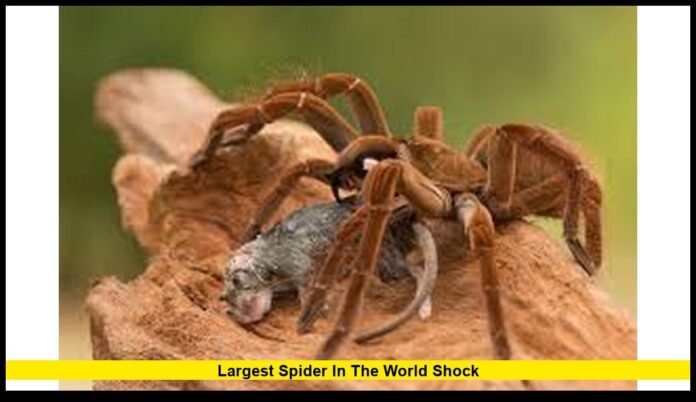

The largest spider in the world continues to captivate scientists and the public alike, not just because of its massive size but also due to its unique behavior, ecological importance, and surprising adaptations. Known as the Goliath birdeater, this giant tarantula has remained a subject of fascination for decades, and ongoing observations continue to deepen our understanding of this remarkable species.
Far from being a creature of nightmares, this spider plays a vital role in its ecosystem. Its presence highlights the complexity of rainforest life and reminds us how even the most intimidating animals can be essential to environmental balance.
If you’ve ever wondered how such a massive spider lives, hunts, and survives in the wild, this detailed guide will take you through everything currently known about this extraordinary species.
A Closer Look at the Giant Behind the Title
The Goliath birdeater holds the title of the heaviest spider on Earth. Adult specimens can weigh more than 6 ounces and stretch up to 11 inches across from leg to leg. To put that into perspective, its body alone can be as large as a human fist, while its full leg span rivals the size of a dinner plate.
Unlike many spiders that rely on delicate webs, this species is built for strength and endurance. Its thick legs, dense body, and powerful fangs make it one of the most physically imposing arachnids ever documented.
Despite its size, it moves with surprising control. Rather than sprinting constantly, it conserves energy and relies on ambush tactics to capture prey.
Where This Giant Spider Lives
The natural habitat of the Goliath birdeater is the dense rainforest regions of northern South America. These environments are warm, humid, and rich in biodiversity, providing the perfect conditions for a large ground-dwelling predator.
This spider prefers:
- Moist, swampy forest floors
- Areas with soft soil for burrowing
- Locations with dense vegetation for cover
It typically digs deep burrows that serve as both shelter and hunting bases. These underground homes help regulate temperature and protect the spider from predators.
The spider rarely strays far from its burrow, making it a largely hidden presence in an already dense ecosystem.
How It Hunts Without a Web
Unlike many smaller spiders that spin intricate webs, the Goliath birdeater relies on a completely different hunting strategy.
It is an ambush predator.
Using sensitive hairs on its legs, it detects vibrations in the ground. When potential prey approaches, the spider reacts quickly, lunging forward to capture it with its powerful front legs.
Its diet includes:
- Insects such as crickets and beetles
- Amphibians like frogs
- Small reptiles
- Occasionally small mammals
Although its name suggests it eats birds, such behavior is extremely uncommon. Most of its meals consist of animals found on the forest floor.
Once captured, prey is subdued with venom and then broken down for consumption.
Defense Tactics That Go Beyond Size
Being large does not make this spider invincible. In fact, it has developed several unique defense mechanisms to protect itself.
One of its most effective tools is its urticating hairs. These tiny, barbed hairs can be released into the air when the spider feels threatened. When they come into contact with skin or eyes, they cause intense irritation.
Another defensive behavior is its ability to produce a hissing sound. This noise is created by rubbing parts of its body together and can startle predators long enough for the spider to escape.
Its fangs are also a last line of defense. While capable of delivering a painful bite, the spider typically avoids confrontation unless absolutely necessary.
Is It Dangerous to Humans?
Despite its fearsome appearance, this spider poses little threat to humans.
Its venom is relatively mild and is not considered dangerous to healthy individuals. A bite may cause pain, swelling, and discomfort, but serious reactions are rare.
In most cases, the spider chooses to retreat rather than attack. Human encounters are uncommon, and incidents involving bites are even rarer.
The greater risk often comes from its defensive hairs, which can irritate skin or eyes if handled improperly.
Growth, Lifespan, and Behavior
The Goliath birdeater grows slowly over time, shedding its exoskeleton as it matures. This process, known as molting, allows the spider to increase in size.
Females can live significantly longer than males, sometimes reaching 15 to 20 years in suitable conditions. Males typically have shorter lifespans.
Behaviorally, the spider is mostly solitary. It does not form colonies and prefers to live alone in its burrow.
It is also nocturnal, becoming active at night when temperatures are cooler and prey is more abundant.
Comparing Size: Weight vs. Leg Span
When discussing giant spiders, it’s important to understand that size can be measured in different ways.
The Goliath birdeater is the heaviest spider, but another species—the giant huntsman spider—can have a slightly longer leg span.
However, the huntsman lacks the body mass and overall bulk of the Goliath birdeater. This distinction is why the Goliath remains widely recognized as the largest spider in the world in terms of overall size and weight.
The Role It Plays in the Ecosystem
Large predators like this spider are essential for maintaining ecological balance.
By controlling populations of insects and small animals, the Goliath birdeater helps prevent overpopulation and supports a stable food chain.
Its presence also contributes to biodiversity, ensuring that no single species dominates the environment.
Without predators like this, ecosystems can quickly become unbalanced, leading to cascading effects that impact many other species.
Challenges Facing Its Habitat
The rainforest environment where this spider lives is under increasing pressure.
Deforestation, land development, and climate changes are altering the landscape at a rapid pace. These changes can affect soil conditions, humidity levels, and prey availability—all of which are critical for the spider’s survival.
While the species is still found across multiple regions, preserving its habitat remains essential for long-term stability.
Conservation efforts focused on protecting rainforest ecosystems indirectly support the survival of this and many other species.
Why Public Perception Is Changing
For many years, large spiders have been portrayed as dangerous and aggressive creatures. However, growing awareness and education are helping shift that perception.
People are beginning to understand that:
- Most large spiders are not harmful to humans
- They play important ecological roles
- They are more defensive than aggressive
Educational programs, wildlife exhibits, and scientific outreach have all contributed to a more balanced view of these animals.
Human Fascination With Giant Spiders
There is something undeniably captivating about creatures that challenge our expectations of size and behavior.
The Goliath birdeater has become a symbol of nature’s extremes—an animal that pushes the limits of what many people imagine a spider can be.
Its combination of size, strength, and unique adaptations continues to attract attention from researchers, photographers, and wildlife enthusiasts around the world.
What the Future Holds
The future of this species depends largely on the preservation of its natural habitat.
As awareness grows around environmental conservation, there is increasing focus on protecting rainforest ecosystems. These efforts not only benefit large spiders but also countless other species that share the same environment.
Ongoing observation and research will continue to reveal new insights into the behavior and survival of this remarkable spider.
A Deeper Understanding of the Largest Spider in the World
The largest spider in the world is far more than just a record-breaking animal. It represents a complex and vital part of one of the planet’s most diverse ecosystems.
From its impressive size to its quiet, nocturnal lifestyle, the Goliath birdeater challenges common assumptions and highlights the importance of respecting even the most misunderstood creatures.
As research continues, this spider will likely remain one of the most fascinating examples of nature’s diversity and adaptability.
What do you think about this giant spider—fascinating or frightening? Share your thoughts and keep checking back for more incredible wildlife stories.