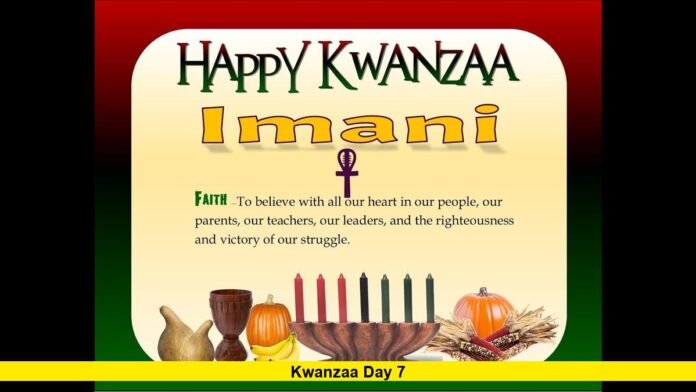

Kwanzaa Day 7 stands as the meaningful conclusion of the seven-day cultural observance that honors African heritage, shared values, and community strength across the United States. Observed on January 1, this final day focuses on Imani, the principle of faith. It is a time when families and communities reflect on belief in themselves, in their people, in their culture, and in a hopeful collective future. As the last candle is lit, Kwanzaa Day 7 offers both closure and renewal, encouraging participants to carry the spirit of Kwanzaa forward into the year ahead.
What Kwanzaa Day 7 Represents
Kwanzaa is observed annually from December 26 through January 1, with each day dedicated to one of the seven guiding principles known as the Nguzo Saba. These principles serve as a value system rooted in African traditions and adapted for life in the modern world. Kwanzaa Day 7 honors Imani, which translates to faith. This principle emphasizes trust in people, respect for cultural roots, and confidence in the ability of communities to overcome challenges and build a better future together.
Imani is not limited to spiritual belief. It also reflects faith in leadership, educators, families, and institutions that support cultural growth and social progress. On this final day, participants are encouraged to reflect on how faith strengthens unity and inspires action throughout the year.
The Origins of Kwanzaa and Its Lasting Purpose
Kwanzaa was established in 1966 to create a cultural celebration that reconnects African Americans with African traditions while reinforcing unity and self-determination. The holiday draws inspiration from traditional African harvest festivals that emphasized gratitude, community cooperation, and respect for cultural heritage.
Since its creation, Kwanzaa has grown into a widely recognized cultural observance celebrated in homes, schools, community centers, and cultural institutions across the country. While Kwanzaa is not a religious holiday, it complements religious and secular winter traditions by focusing on shared values, education, and collective responsibility.
The Role of the Kinara and the Final Candle Lighting
A central tradition of Kwanzaa is the lighting of the kinara, a seven-branched candleholder that symbolizes the seven principles. The candles consist of one black candle in the center, three red candles, and three green candles, reflecting unity, struggle, and hope.
On Kwanzaa Day 7, all seven candles are lit. This moment represents the completion of the journey through the Nguzo Saba and the unity of the principles as a whole. The lighting of the final candle for Imani often includes spoken reflections, affirmations, music, and moments of silence to honor faith in the community’s shared path.
How Families Observe Kwanzaa Day 7 at Home
For many families, Kwanzaa Day 7 is marked by gatherings that emphasize togetherness and reflection. Homes are often decorated with cultural symbols, artwork, and the kinara placed at the center of the celebration. Families take turns discussing what faith means to them and how the principles of Kwanzaa can guide decisions in the coming year.
Children frequently play an active role by helping light candles, reciting principles, or sharing lessons learned during the week. Elders may share stories about heritage, resilience, and the importance of maintaining cultural identity across generations.
The Feast of Faith and Shared Traditions
A special meal often accompanies Kwanzaa Day 7, sometimes referred to as the Feast of Faith. This gathering is not only about food but about connection and storytelling. Meals may include dishes inspired by African, Caribbean, and African American culinary traditions, reflecting regional and family influences.
The shared meal serves as an opportunity to honor ancestors, celebrate cultural creativity, and reaffirm commitments to unity and cooperation. Conversations during the feast often center on lessons learned during Kwanzaa and goals for applying those lessons in everyday life.
Community Celebrations Across the United States
Beyond family homes, Kwanzaa Day 7 is observed through public events that bring communities together. Cultural centers, museums, libraries, and educational institutions often host ceremonies that include music, dance, poetry, and group reflections on Imani.
These gatherings provide space for intergenerational dialogue, cultural education, and artistic expression. Drumming, call-and-response affirmations, and storytelling are common features, reinforcing the collective nature of the celebration. Public observances also allow individuals who may be new to Kwanzaa to learn about its principles and participate in meaningful ways.
Kwanzaa Day 7 and the New Year Connection
Because Kwanzaa Day 7 coincides with New Year’s Day, it carries added significance. As one year ends and another begins, the principle of faith aligns naturally with reflection and renewal. Many participants use this day to set intentions, outline personal and community goals, and reaffirm commitments to cultural growth and social responsibility.
The timing encourages a thoughtful transition into the new year, grounded in values rather than resolutions alone. Faith becomes a guiding force for personal development, community engagement, and collective progress.
Carrying Imani Beyond the Holiday
Although Kwanzaa officially ends after seven days, its principles are meant to be practiced year-round. Kwanzaa Day 7 serves as a reminder that faith should continue to influence daily actions, relationships, and community involvement.
Many families and organizations use the end of Kwanzaa as a starting point for ongoing initiatives such as educational programs, cultural workshops, service projects, and cooperative economic efforts. The values reinforced during the holiday provide a framework for sustained engagement and positive change.
Why Kwanzaa Day 7 Remains Meaningful Today
In a rapidly changing world, Kwanzaa Day 7 offers a moment to pause and reflect on enduring values. Faith, as expressed through Imani, strengthens resilience and encourages unity in the face of challenges. It reminds individuals and communities that cultural heritage is a source of strength, wisdom, and inspiration.
As the final candle burns, participants are reminded that the lessons of Kwanzaa do not end with the holiday. Instead, they continue through acts of unity, creativity, purpose, and belief in a shared future.
Kwanzaa Day 7 closes the celebration with hope and purpose—share how Imani shapes your life or community and stay connected for more cultural stories and reflections.