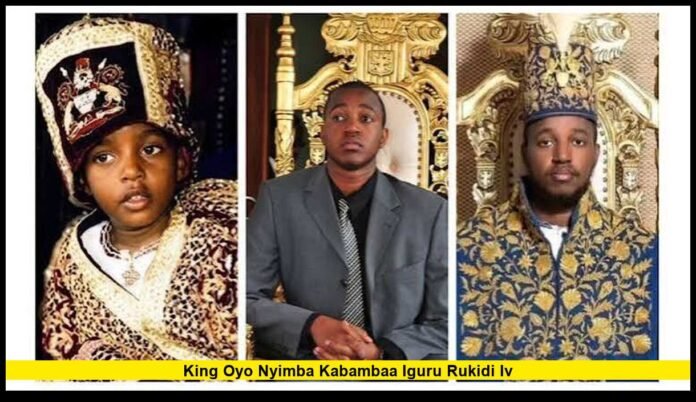

King Oyo Nyimba Kabamba Iguru Rukidi IV, the longtime monarch of Uganda’s Tooro Kingdom and once recognized as the world’s youngest reigning monarch, has died at the age of 34. His death on August 27, 2026, brings an extraordinary three-decade chapter of Tooro’s modern royal history to a close and leaves the kingdom preparing for a carefully managed succession.
The Tooro Kingdom confirmed that the king died at approximately 10 p.m. on Thursday. His passing was announced by Tooro Kingdom Prime Minister Calvin Armstrong Rwomiire Akiiki, who described the loss as devastating for the royal family, the people of Tooro and Uganda.
The announcement also addressed one of the immediate questions facing the kingdom: succession. Officials said the continuity of the Tooro Crown is assured because the late monarch left behind a Prince who is his heir. The identity of that heir is expected to be formally revealed according to Tooro customs and traditions.
A Remarkable Life That Began With an Extraordinary Coronation
Oyo was born on April 16, 1992. His life changed dramatically in 1995 following the death of his father, King Patrick David Matthew Kaboyo Olimi III.
At only three years old, Oyo inherited the Tooro throne.
His accession attracted international attention because of his exceptionally young age. He became known around the world as a boy king, a title that followed him throughout his childhood and teenage years.
The circumstances were unusual even within the long history of traditional monarchies. Oyo was too young to carry out the responsibilities of a mature monarch, so senior members of the royal institution and regents helped oversee the kingdom while he grew up.
For much of his childhood, the young monarch had to balance an extraordinary public position with the ordinary experiences of growing up.
He attended school, developed interests outside royal duties and gradually prepared for the point when he would take direct responsibility for his role.
That transition ultimately became one of the defining moments of his life.
From Child Monarch to Adult King
Oyo’s 18th birthday marked a major turning point.
After years of being represented as a child monarch, he began taking on the full responsibilities associated with his position as he reached adulthood.
The transition changed how the public viewed him. He was no longer simply the unusually young king who had captured global attention. He increasingly became a public figure associated with the cultural identity and development aspirations of Tooro.
His adult leadership focused on issues that affected ordinary people, particularly young people.
Education, employment, entrepreneurship, health awareness, environmental conservation and cultural preservation became important themes connected with his public work.
This period also allowed Oyo to establish an identity separate from the circumstances of his accession.
What the Tooro Kingdom Means in Modern Uganda
Understanding Oyo’s role requires understanding the position of traditional kingdoms in Uganda.
Uganda is a republic with an elected national government. Traditional monarchs do not function as political heads of state and do not exercise the executive powers associated with a national president.
Instead, kingdoms such as Tooro operate primarily as cultural institutions.
Their influence comes from history, identity, tradition and their relationship with the communities they represent.
For the people of Tooro, the Omukama is therefore much more than a ceremonial figure. The monarchy represents a connection with generations of history and provides an important symbol of Batooro cultural identity.
Oyo inherited that responsibility while still a toddler.
Over the years, he became one of the most recognizable faces of Uganda’s traditional leadership system.
King Oyo’s Focus on Young People
Youth development was among the most important themes associated with Oyo’s adult reign.
The monarch frequently emphasized the importance of education, vocational skills, entrepreneurship and opportunities for young people.
His position gave him a platform to speak directly to younger generations, particularly in a region where employment and skills development have remained major concerns.
Rather than presenting the monarchy simply as a link to the past, Oyo increasingly used his public role to discuss the future.
That approach helped shape his image as a modern traditional leader.
His generation of leadership also reflected the changing expectations placed on cultural institutions. Traditional leaders increasingly faced demands to participate in community development while preserving the customs and identity that gave their institutions legitimacy.
Oyo attempted to balance both responsibilities.
Tooro Vision 2045
One of the clearest examples of Oyo’s long-term thinking was Tooro Kingdom Vision 2045.
The development framework was designed to provide a long-term direction for the kingdom and focused on areas including culture, agriculture, tourism, health, environmental protection and youth skills.
The initiative was significant because it demonstrated that Oyo’s ambitions for Tooro extended beyond ceremonial responsibilities.
The vision sought to connect the kingdom’s cultural heritage with practical development goals.
Tourism, for example, could benefit from the region’s historical traditions and natural environment. Agriculture remained central to the livelihoods of many communities, while environmental protection was increasingly important because of the region’s natural resources.
Youth development provided another bridge between tradition and modern economic needs.
Through this broader approach, Oyo sought to present Tooro as an institution capable of contributing to the future while remaining firmly connected to its heritage.
Education and Skills as Part of His Legacy
Oyo’s own educational journey also influenced his public priorities.
He attended schools in Uganda before pursuing higher education abroad, eventually studying business management.
His background gave him exposure to different educational and cultural environments, while his royal responsibilities kept him closely connected to Tooro.
As an adult monarch, he repeatedly highlighted the importance of practical skills.
The emphasis was particularly relevant for young people who might not immediately find opportunities through conventional academic pathways.
Vocational education and entrepreneurship offered alternative routes toward employment and economic independence.
This became an important part of the development conversation surrounding his reign.
Health Awareness and Social Causes
Oyo also used his visibility to support health-related causes.
HIV/AIDS awareness was among the social issues associated with his public advocacy, particularly in relation to young people.
His work reflected a broader effort to use the visibility of the monarchy to promote issues that affected communities beyond the royal institution itself.
Health awareness, youth empowerment and education were often interconnected in his public message.
The king’s influence was particularly valuable when addressing younger audiences because of his own age and his ability to communicate as a relatively young traditional leader.
Environmental Conservation and Tourism
The natural environment surrounding Tooro also featured prominently in the kingdom’s development ambitions.
Western Uganda is known for its scenic landscapes, agricultural areas, forests and tourism attractions. Protecting those resources is important not only from an environmental perspective but also for the region’s long-term economic potential.
Oyo supported efforts that connected conservation with tourism and community development.
The underlying idea was straightforward: Tooro’s cultural and environmental heritage could become an asset for future generations if protected and managed responsibly.
This perspective formed another part of the modern identity Oyo developed during his reign.
His Passion for Football
Football was another important part of Oyo’s public personality.
The monarch was known as a passionate supporter of the sport and maintained an interest in Ugandan football.
His connection with the game went beyond watching matches. He supported football development in Tooro and encouraged the use of sport as a way to engage young people.
Following his death, Uganda’s football authorities announced plans for moments of silence before football activities across the country as a tribute to the late king.
The response reflected the affection Oyo had developed among football supporters and his contribution to promoting the sport in his kingdom.
For many young Ugandans, football was one of the areas where the king’s interests felt especially relatable.
A Monarch Who Bridged Generations
Perhaps the most distinctive feature of Oyo’s reign was its length relative to his age.
He became king as a child and remained monarch into his thirties.
That meant several generations of Batooro experienced him as their king.
Older residents remembered the three-year-old who inherited the throne. Younger people grew up knowing him as an adult monarch.
This gave Oyo a unique place in Tooro’s modern history.
He effectively grew up in public while the kingdom itself changed around him.
His reign therefore became a bridge between an older generation connected strongly to traditional institutions and a younger generation growing up in a rapidly changing Uganda.
The Final Days and Official Confirmation of His Death
News of Oyo’s declining health emerged shortly before his death, prompting concern among his supporters.
The king had been receiving medical treatment in the United States. Officials had previously urged the public to avoid unverified information as speculation about his condition spread.
The situation changed on August 27 when the Tooro Kingdom confirmed that he had died.
The official announcement stated that Oyo passed away at approximately 10 p.m.
The kingdom did not immediately disclose a specific cause of death.
That remains an important distinction as various reports and claims circulate. The confirmed facts are that Oyo died at 34 while receiving medical care abroad and that the kingdom is now handling the mourning and succession process.
Tooro Kingdom Begins Mourning
The death of a monarch who had ruled for nearly 31 years represents a profound moment for Tooro.
The kingdom has called for unity, calm and prayer during the mourning period.
Royal family members, traditional leaders, government officials and members of the public are expected to participate in ceremonies connected with the king’s passing.
Funeral arrangements and additional mourning details are expected to be communicated through official channels.
The atmosphere in Fort Portal and other parts of Tooro is expected to remain focused on remembrance as residents reflect on the king’s life and his contribution to the kingdom.
Succession Becomes the Next Major Chapter
The question of succession is naturally central following Oyo’s death.
The Tooro Kingdom has already stated that the Crown’s continuity is assured.
Officials have confirmed that the late monarch left behind a Prince who is his heir, although the identity of the Prince has not yet been formally revealed.
Royal succession in Tooro is governed by tradition and custom, meaning the process is expected to follow established cultural procedures.
A meeting of members of the royal family has also been called as the kingdom begins navigating the transition.
The coming days and weeks will therefore be closely watched as Tooro moves from mourning toward the formal process of establishing its next monarch.
The End of a Historic 31-Year Reign
For Tooro, Oyo’s death represents more than the loss of an individual.
It marks the end of a reign that began under extraordinary circumstances and continued for almost three decades and one year.
Few modern traditional leaders have had such a distinctive life story.
Oyo went from being an internationally famous three-year-old king to an adult monarch with his own priorities, interests and development agenda.
His reign included efforts to preserve cultural traditions while encouraging new approaches to education, youth development, health, environmental conservation and tourism.
That combination of tradition and modernization is likely to remain one of the defining elements of how his leadership is remembered.
The Legacy Left Behind
The story of King Oyo is ultimately a story of growing into responsibility.
He did not choose to become king at three years old. Circumstances placed the crown on his head when he was still a child.
Yet he eventually developed his own public identity and used the position to promote causes he believed could benefit his people.
His legacy will be measured not only by the unusual circumstances of his accession but also by what he did during his adult years.
For the people of Tooro, the late king will be remembered as a monarch who represented continuity while also embracing change.
The next chapter now belongs to the royal family and the heir who will eventually succeed him.
As the kingdom mourns, the institutions and traditions that Oyo spent his life representing will continue.
The passing of King Oyo closes one of the most remarkable royal stories in modern Uganda, but the history of Tooro continues.
As Tooro mourns the loss of its beloved monarch, the next chapter of the kingdom’s royal history is only beginning—stay connected for the latest developments and share your thoughts on King Oyo’s enduring legacy.
Key Points Summary
╔════════════════════════════════════════════════════════════════════╗
║ – King Oyo died at age 34 on August 27, 2026, after nearly 31 years as Tooro’s monarch. ║
║ – He inherited the Tooro throne at just three years old following his father’s death in 1995. ║
║ – His adult leadership emphasized youth empowerment, education, health, conservation and cultural preservation. ║
║ – Tooro Kingdom Vision 2045 provided a long-term framework for development and heritage protection. ║
║ – Oyo was also known for his passion for football and support for youth sports development. ║
║ – The specific cause of his death has not been officially disclosed by the Tooro Kingdom. ║
║ – The kingdom says the Crown’s continuity is assured because Oyo left behind a Prince who is his heir. ║
║ – The identity of the heir and details of the succession will be announced according to Tooro traditions. ║
╚════════════════════════════════════════════════════════════════════╝