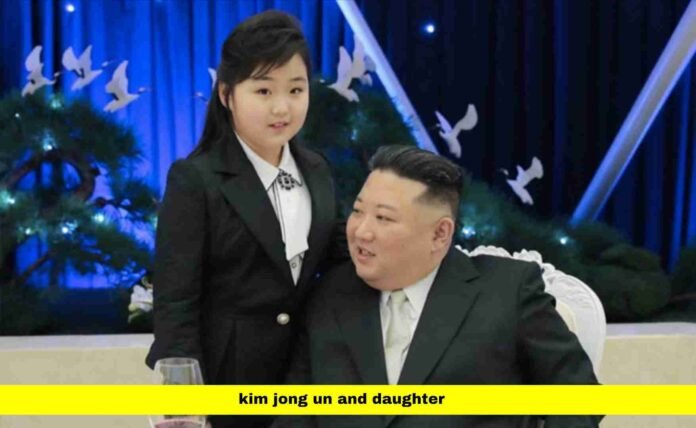

North Korea’s political landscape is drawing intense global focus this week as developments around kim jong un and daughter signal a major moment in the isolated country’s dynastic system of power. Intelligence assessments shared with lawmakers indicate that Kim Jong Un’s teenage daughter, widely believed to be Kim Ju Ae and around 13 years old, has advanced beyond simply being prepared for leadership into a stage where she is now positioned to become his formal successor.
As the nation prepares for a major political gathering later this month, these developments mark an unusual and highly symbolic shift. The growing presence of Kim Ju Ae in official contexts — from military ceremonies to visits to sites of national importance — reflects a carefully managed narrative of continuity and legacy. For a nation that has been ruled by a single family for three generations, the implications of this potential transition are significant both domestically and internationally.
A Break With Tradition: The Next Generation Steps Forward
North Korea’s leadership model has, since the country’s founding in 1948, followed a centralized and hereditary structure. Power passed from the founder to his son and then to his grandson, creating a lineage that has dominated national politics for decades. Unlike many political transitions in other nations, these shifts were controlled tightly and revealed to the public only gradually.
Now, the sudden prominence of Kim Ju Ae represents an evolution in how succession is presented. Rather than waiting until a crisis or abrupt health issue prompts a successor’s emergence, this step appears to be a deliberate effort to introduce the next generation well before any formal transfer of authority. Such a move may aim to mitigate uncertainty and bolster domestic stability by making sure the figure who could eventually lead is familiar to both the political elite and the public.
How Kim Ju Ae Is Being Seen in Public
The most visible aspect of this transition is the number of times Kim Ju Ae has appeared at significant state events alongside her father. Her presence at military celebrations, anniversary events, and symbolic state visits is not incidental. In North Korea’s political culture, visibility communicates power and position.
For example, during recent national celebrations, she has stood beside top officials and been positioned prominently, not merely as a family member but as part of the leadership tableau. These staging choices are part of a broader narrative strategy that reinforces her legitimacy and visibility as a potential future leader. Her appearance alongside Kim Jong Un at important national sites further heightens this symbolic role.
Where the Shift Is Most Noticeable
The most recent intelligence assessment noted a change in how analysts describe her status. Earlier evaluations characterized her as “undergoing training” for future leadership. Today, that language has shifted toward her being at a “designated successor” stage. This change reflects a judgment that she is no longer just being prepared but is actively being positioned to occupy leadership responsibilities.
This shift suggests that her role in state affairs may be more substantive than previously understood. Observers note that in addition to attending events, there are signs she may be providing input on policy matters, an unusual step for someone of her age and unprecedented in North Korea’s highly centralized political environment.
The Kumsusan Palace of the Sun: A Symbolic Milestone
One of the most significant appearances of Kim Ju Ae in recent months was during a visit to the Kumsusan Palace of the Sun, the iconic mausoleum where the bodies of her grandfather and great-grandfather lie. This site holds deep ideological importance in North Korean state mythology as the resting place of the nation’s founding figures.
Her presence there sends a layered message. Beyond paying respects, it aligns her symbolically with the lineage of leadership. In a society where political legitimacy is built around family legacy and sacred rituals, such appearances are weighty and deliberate.
What a Party Congress Could Reveal
Later this month, North Korea is expected to hold its ninth Workers’ Party Congress, a pivotal political event held every five years and used to outline policy direction and reinforce internal power structures. How Kim Ju Ae is featured at this gathering could be telling.
Observers will watch for where she stands in official seating arrangements, whether she addresses delegates, and whether she receives any formal recognition or title. These details, seemingly small, are powerful indicators in Pyongyang’s political theatre. In a state that rarely discloses internal dynamics publicly, such visible cues at major events offer rare insights.
Rigorous Commercial and Cultural Significance
North Korea’s leadership has always fused state goals with cultural narratives. The family dynasty at the center of this leadership is heavily mythologized, and its continuity forms a core part of national ideology. The expansion of the leadership narrative to include the next generation reinforces this cultural and political continuity.
Kim Ju Ae’s growing public profile is therefore not simply about pointing to a successor but about maintaining the narrative cohesion that holds the regime’s legitimacy in place. In a country where the leader is tied to ideology, myth, and national identity, the introduction of a new generation serves both political and cultural objectives.
Why Her Age Matters in the Transition Narrative
The age of the emerging successor — believed to be in her early teens — adds another layer of interest. In many political systems, leadership pathways are built around seasoned experience and gradual ascent through ranks. In North Korea’s case, the early visibility and responsibility assigned to someone so young contradict traditional expectations.
Yet, this may reflect the regime’s desire to normalize her presence over a prolonged period. By introducing her when she is still a teenager, the leadership ensures that, should formal succession occur years down the line, the transition will feel familiar rather than abrupt. This long game of visibility also provides space for internal elites and the public to adapt to the idea of a generational shift within the same family line.
The Broader Political Context
The emphasis on succession comes at a time when North Korea is preparing to lay out its policy goals for the next five years. The party congress is expected to reinforce the regime’s strategic direction and solidify its internal power structure. In this backdrop, the emphasis on leadership continuity takes on heightened urgency.
Observers inside and outside the region view this as a way for the regime to consolidate authority, reduce speculation or uncertainty about the future, and maintain a sense of stability. Whether or how policy priorities might shift in light of a next-generation figure emerging remains to be seen, but the move reinforces the notion that the ruling family’s legacy is intended to endure.
Gender and Succession in a Traditionally Patriarchal System
Assigning a future leadership role to a teenage girl in a society that has historically been male-dominated would be unprecedented for North Korea. Yet, the careful cultivation of her presence suggests that bloodline supersedes traditional gender norms in the regime’s succession planning.
This break with convention highlights the priority placed on maintaining family continuity, even if it clashes with long-standing cultural norms. In recent years, women in other leadership roles — including senior party positions — have shown that the regime can elevate female figures when it suits strategic goals. The case of the emerging successor appears to follow this pattern.
Public Visibility and Diplomatic Appearances
Beyond domestic contexts, Kim Ju Ae’s presence has been noted at international gatherings, including diplomatic events in which her father participated. Her attendance at such meetings amplifies her role beyond the domestic stage, signaling to foreign audiences that she is part of the leadership narrative.
These appearances, rare and carefully managed, also serve a diplomatic purpose. They convey continuity and stability to external governments and add a human dimension to a leadership style often perceived as opaque and secretive.
How the World Is Watching
Global reactions to these developments are shaped by both concern and curiosity. Analysts and policymakers in neighboring countries and beyond are closely monitoring how this potential transition unfolds, given its implications for regional stability, security dialogues, and international relations.
The fact that intelligence agencies are making assessments public through parliamentary briefings indicates that the situation is being taken seriously at the highest levels of foreign governments.
Legacy and Leadership in the Long Term
What makes this moment particularly remarkable is the way it blends personal legacy with political strategy. The leadership’s actions suggest an intent to secure long-term continuity while managing internal and external perceptions with utmost care. Introducing a successor in such a visible manner is unlike past practices but aligns with the regime’s broader emphasis on controlled narratives and symbolic power.
In the years ahead, how this figure grows into her public role will be watched by millions. Her evolution — whether as an influential political presence or as the formal head of state — will define the next chapter of North Korea’s unique political history.
What are your thoughts on how this generational shift could shape North Korea’s future? Share your views and join the discussion below.