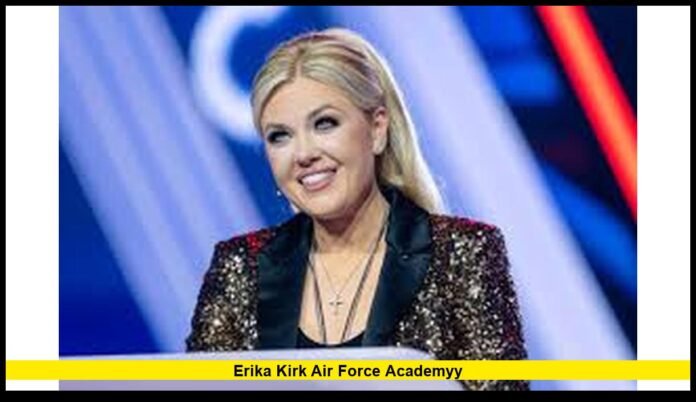

Erika Kirk Air Force Academy has drawn public interest after developments involving a former instructor connected to the United States Air Force Academy in Colorado Springs, Colorado. The case has generated discussion about professional conduct standards within military educational institutions and the oversight processes that guide faculty and staff working with future officers.
The United States Air Force Academy is one of the nation’s most prestigious service academies. It educates cadets who will later become officers in the U.S. Air Force and U.S. Space Force. Because of its role in national defense training, issues involving academy personnel often receive significant public attention.
Understanding the context of this situation requires looking at the structure of the academy, the expectations placed on faculty members, and the institutional procedures that address conduct concerns.
Overview of the United States Air Force Academy
The United States Air Force Academy, often referred to as USAFA, is located in Colorado Springs, Colorado. Congress authorized the academy in 1954 to train future officers for the Air Force.
Cadets who attend the academy complete a four-year program that combines higher education with military leadership training.
Graduates earn a Bachelor of Science degree and receive commissions as officers.
Key facts about the academy include:
| Category | Information |
|---|---|
| Founded | 1954 |
| Location | Colorado Springs, Colorado |
| Military Branch | U.S. Air Force and U.S. Space Force |
| Program Length | Four years |
| Degree | Bachelor of Science |
Cadets commit to serving in the military after graduation. The academy provides full tuition, housing, and training.
This structure creates a highly disciplined academic environment designed to prepare students for leadership in national defense.
Who Is Erika Kirk
Erika Kirk worked in a faculty role associated with the United States Air Force Academy.
Faculty positions at USAFA include both military officers and civilian educators. These instructors teach academic courses while mentoring cadets throughout their education.
Faculty members contribute to classroom instruction, leadership development, and the overall training mission of the academy.
Because cadets will eventually lead military units, instructors are expected to demonstrate strong professional standards.
When concerns arise involving faculty conduct, the academy and the Department of the Air Force review the situation through established procedures.
Faculty Roles Within the Academy
Faculty members at the Air Force Academy hold responsibilities that go beyond traditional university teaching.
Their duties often include:
- Teaching academic courses in specialized fields
- Mentoring cadets preparing for leadership roles
- Supporting military training programs
- Advising students on professional development
The academy includes numerous academic departments covering subjects such as:
- Aeronautical engineering
- Military and strategic studies
- Political science
- Computer science
- Physics and mathematics
Faculty members help cadets develop both intellectual skills and leadership abilities.
Because the academy operates as both a university and a military installation, instructors must follow academic guidelines as well as military regulations.
Professional Standards at Military Academies
Service academies maintain strict standards for conduct among cadets, faculty, and staff.
These expectations reflect the values of the U.S. military.
Key principles emphasized within the academy include:
- Integrity
- Accountability
- Respect for authority
- Professional behavior
Personnel working within the academy environment must adhere to policies that govern professional relationships, workplace conduct, and institutional ethics.
Violations of these standards may lead to investigations or administrative action.
Maintaining discipline within the academy helps reinforce the leadership values cadets will carry into their military careers.
Why the Case Attracted Public Attention
The Erika Kirk Air Force Academy situation attracted attention largely because of the academy’s national significance.
Military academies represent institutions responsible for educating future leaders of the armed forces.
The Air Force Academy, in particular, prepares officers who may go on to serve in aviation, intelligence, cyber operations, and space-related missions.
Because of this mission, any issue involving academy personnel can become a topic of public interest.
The public expects military institutions to maintain strong ethical standards and clear oversight.
Oversight and Accountability Systems
When questions arise about the conduct of personnel within military institutions, several layers of oversight may become involved.
These can include:
- Internal reviews conducted by academy leadership
- Investigations within the Department of the Air Force
- Legal proceedings handled through civilian courts if necessary
Military organizations maintain structured processes to examine allegations and determine whether policies have been violated.
These processes aim to ensure fairness while protecting the integrity of the institution.
Accountability mechanisms exist throughout the Department of Defense to address issues involving staff and service members.
The Unique Environment of Service Academies
The United States operates several service academies that prepare students for military leadership.
These institutions combine traditional college education with rigorous training programs.
Major U.S. service academies include:
- United States Military Academy at West Point
- United States Naval Academy in Annapolis
- United States Air Force Academy in Colorado Springs
- United States Coast Guard Academy in Connecticut
- United States Merchant Marine Academy in New York
Students at these academies follow structured schedules that include academic classes, military instruction, and physical training.
Cadets also participate in leadership exercises designed to prepare them for operational responsibilities.
Faculty members play a critical role in guiding cadets through these programs.
Academic and Leadership Training
Cadets at the Air Force Academy experience a combination of academic education and military preparation.
The academy offers more than 30 academic majors covering fields such as engineering, science, and international relations.
In addition to coursework, cadets complete:
- Military training exercises
- Physical fitness programs
- Leadership development activities
- Summer field training programs
These experiences help students develop decision-making skills required for military service.
Faculty members contribute by providing mentorship and instruction throughout the four-year program.
The Importance of Ethical Leadership
Ethics form a core part of the academy’s educational mission.
Cadets receive instruction in leadership principles that emphasize responsibility and accountability.
Programs within the academy encourage cadets to consider how ethical choices affect military operations and national security.
Faculty members reinforce these lessons through classroom discussion and mentorship.
The academy’s honor code also guides cadet behavior.
Students are expected to live by a code emphasizing honesty and integrity.
These standards aim to ensure that graduates enter the military prepared to lead with professionalism.
The Campus and Its History
The Air Force Academy campus covers more than 18,000 acres near the Rocky Mountains.
It is known for its modern architecture and expansive training facilities.
One of the most recognizable structures on campus is the Cadet Chapel, a landmark building completed in the 1960s.
The academy hosts thousands of cadets each year.
Students live in dormitories and participate in daily schedules that combine academic work with military responsibilities.
The campus environment reflects the dual mission of education and leadership training.
How Personnel Matters Are Addressed
Military institutions rely on clear procedures when reviewing concerns involving staff or faculty.
These procedures often involve several steps:
- Initial review by institutional leadership
- Formal investigation if necessary
- Administrative or legal action based on findings
The goal of these processes is to evaluate facts and determine whether policies or regulations were violated.
Military organizations emphasize transparency and fairness in handling such matters.
Maintaining trust within the institution and with the public remains a central objective.
Why Accountability Matters in Military Education
The importance of accountability within service academies extends beyond campus life.
Graduates of these institutions often hold positions that involve national security decisions.
Training environments must therefore reflect the highest professional standards.
Faculty members influence cadets through both instruction and example.
Strong oversight ensures that leadership development occurs within an ethical framework.
When institutions respond to concerns involving personnel, they reinforce expectations for integrity and professionalism.
Public Interest in Military Institutions
Events connected to military academies often attract public attention because these institutions serve a national mission.
The Air Force Academy prepares officers who will lead in aviation, space operations, cyber defense, and other strategic fields.
Because the academy plays a direct role in national defense training, developments involving its staff or leadership frequently become part of broader public discussion.
Observers often view such events through the lens of leadership accountability and institutional transparency.
Continuing Mission of the Air Force Academy
Despite occasional controversies, the Air Force Academy continues to train future officers for the United States military.
Thousands of cadets graduate from the academy each decade.
These graduates go on to serve in roles ranging from pilots and engineers to intelligence analysts and commanders.
Faculty members remain central to the academy’s mission of combining academic excellence with military leadership preparation.
The attention surrounding the Erika Kirk Air Force Academy case reflects how closely Americans watch institutions responsible for educating future military leaders.
The academy’s mission of developing ethical officers remains a cornerstone of its training program.
Maintaining strong professional standards continues to be essential to preserving the trust placed in the nation’s military education system.
What are your thoughts about leadership standards and accountability within U.S. military academies? Share your perspective and join the discussion.