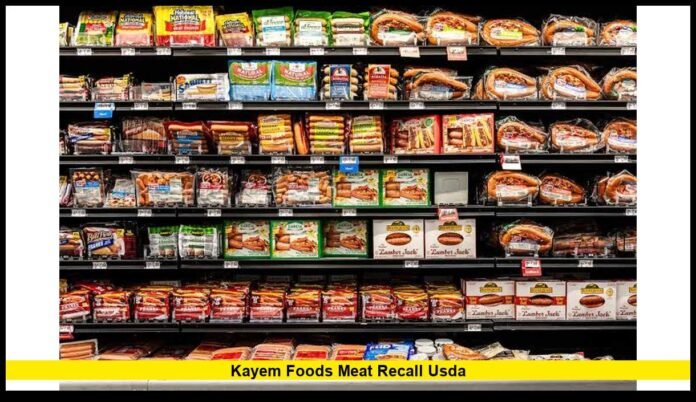

The Kayem Foods meat recall USDA alert covers approximately 1,584,361 pounds of ready-to-eat meat and poultry products that may have been exposed to unsafe storage temperatures. The U.S. Department of Agriculture’s Food Safety and Inspection Service (FSIS) announced the recall on October 17, 2026, after an investigation identified temperature fluctuations in a warehouse cooler used to store affected products.
The recall carries a Class I classification, which the USDA uses for situations involving a reasonable probability of serious adverse health consequences or death. Although officials have reported no confirmed illnesses linked to the recalled products, consumers should take the warning seriously.
The affected products were produced between approximately March 31 and October 7, 2026. They were distributed to retail stores and food service locations across the United States, as well as Hong Kong. Some products may still be in household refrigerators or freezers.
Consumers should check their meat and poultry purchases carefully. Anyone who identifies a matching recalled product should not eat it, even if it looks normal or has no unusual smell.
What Is the Latest USDA Update on the Kayem Foods Recall?
The USDA FSIS announced the recall on October 17, 2026, following a food safety investigation involving Kayem Foods Inc., a meat and poultry producer based in Chelsea, Massachusetts.
The company announced its voluntary recall on October 16 and said it was cooperating with the USDA. The agency subsequently published its recall notice and identified the affected products through establishment numbers printed inside the USDA mark of inspection.
The recall involves approximately 1.58 million pounds of ready-to-eat meat and poultry products. The concern is not a confirmed outbreak or a reported case of illness. Instead, the company discovered that products had been stored in a warehouse cooler that experienced temperature deviations.
The investigation began after a retail customer complained about warm product temperatures at delivery on October 1, 2026. Kayem Foods investigated the complaint and determined that various products had been stored under potentially unsuitable temperature conditions.
The company and federal officials are urging consumers not to eat affected products.
Key confirmed details include:
- Company: Kayem Foods Inc.
- Location: Chelsea, Massachusetts.
- Recall announcement: October 17, 2026, by USDA FSIS.
- Quantity: Approximately 1,584,361 pounds.
- Affected production period: Approximately March 31 through October 7, 2026.
- Reason: Possible temperature abuse during storage.
- Distribution: Retail and food service locations nationwide and in Hong Kong.
- Confirmed illnesses: None reported in the USDA announcement.
- Recall classification: Class I.
The most important step for consumers is to identify products by their labels and identifying codes rather than relying only on the manufacturer’s name.
Why Did Kayem Foods Recall Its Meat and Poultry Products?
The recall stems from potential temperature abuse during storage. Kayem Foods discovered that a warehouse cooler experienced temperature deviations, raising concerns about the safety of products kept inside the facility.
Refrigeration plays an essential role in protecting ready-to-eat meat and poultry. When these products remain at unsuitable temperatures, harmful bacteria may grow under certain conditions.
The concern is particularly important for fully cooked products. Consumers may eat them without additional cooking, so they cannot rely on a final cooking step to address every possible food safety concern.
The USDA has not announced that every recalled item contains harmful bacteria. Instead, the agency is warning consumers because the storage conditions may have compromised product safety.
The investigation followed a complaint about warm products arriving at a retail customer’s location on October 1. Kayem Foods then investigated its storage practices and identified temperature fluctuations affecting products in a warehouse cooler.
The recall aims to remove potentially unsafe food from the supply chain and prevent consumers from eating products that may pose a health risk.
Which Products Are Included in the Kayem Foods Meat Recall?
The recall covers approximately 1,584,361 pounds of ready-to-eat meat and poultry products manufactured by Kayem Foods Inc. The affected products vary in weight, packaging, brand, and product description.
Coverage of the recall includes products such as hot dogs, bacon, sausages, turkey breasts, hams, and other ready-to-eat meat and poultry items.
However, not every product sold by Kayem Foods is automatically subject to the recall. Consumers must match their product’s identifying information against the official recall list.
The USDA identifies three establishment numbers associated with the affected products:
| Identification detail | What consumers should know |
|---|---|
| EST. M/P 7839 | One of the establishment numbers listed in the recall |
| EST. P 20935A | Another establishment number associated with affected products |
| EST. M 9520 | A third establishment number listed in the notice |
| Production period | Approximately March 31–October 7, 2026 |
| Product types | Various ready-to-eat meat and poultry products |
| Recall number | 026-2026 |
These establishment numbers appear inside the USDA mark of inspection on affected packaging.
The numbers can help consumers identify products associated with the recall. However, they should not serve as the only check. The product name, brand, UPC, lot code, and other information must also match the recall details where applicable.
The full product list contains specific identifying details that can help consumers determine whether an item falls within the recall.
If a product’s information is unclear, consumers should avoid eating it until they have confirmed its status with Kayem Foods or the appropriate food safety authority.
How to Check Whether Your Meat Is Recalled
Consumers should inspect their refrigerators, freezers, and any other locations where they store packaged meat or poultry.
Because the recalled products reached retail and food service locations nationwide, shoppers should not assume that the warning applies only to Massachusetts or nearby states.
Follow these steps to check your purchases.
1. Inspect the product packaging.
Look at packages of hot dogs, bacon, sausage, turkey breast, ham, and other ready-to-eat meat or poultry products. Check the manufacturer information and USDA inspection mark.
2. Look for the establishment number.
Check whether the inspection mark contains EST. M/P 7839, EST. P 20935A, or EST. M 9520. These are the establishment numbers identified in the USDA recall announcement.
3. Compare the complete product details.
Check the brand, product description, UPC, lot code, and other identifiers against the affected-product list. A matching establishment number alone does not establish that every item from that facility is recalled.
4. Do not taste a questionable product.
Appearance, odor, and taste cannot reliably establish whether meat is safe to eat. Do not sample food to determine whether it has spoiled.
5. Keep questionable products separate from other food.
Avoid opening or handling the contents unnecessarily. If you need to inspect packaging, wash your hands afterward and clean any surfaces that may have contacted leaking packages or food residue.
6. Follow the recall instructions.
If the product matches the recall, discard it or return it to the place of purchase. Do not consume it.
Consumers who cannot confidently identify their products should contact Kayem Foods customer service for assistance.
What Should Consumers Do With Recalled Meat?
The USDA advises consumers not to eat the affected products. They should either throw them away or return them to the retailer where they purchased them.
Do not donate recalled products, serve them to guests, or give them to someone else. Moving the food to another household would transfer the same potential risk.
If you choose to discard a recalled item, secure it so that other people and animals cannot retrieve or consume it. Avoid allowing the packaging or its contents to contaminate other food.
If the product has leaked or spilled inside a refrigerator, clean the affected area and any surfaces that may have come into contact with it. Wash your hands thoroughly after handling the package.
Consumers should also check whether recalled products were stored in freezers. Freezing does not make an affected product safe simply because it has remained frozen. Follow the official recall instructions even if the package appears unchanged.
If you purchased the product at a grocery store or another retailer, contact the store about its return procedure. The USDA’s public notice also allows consumers to contact Kayem Foods directly.
Keep the product label or a photograph of its identifying information if you need help confirming whether it is affected. Do not keep a recalled item for future consumption while waiting for clarification.
Why Is This a Class I USDA Recall?
The USDA classified the Kayem Foods recall as Class I. This is the agency’s highest recall classification and signals a high health risk.
Under the USDA’s classification system, a Class I recall involves a reasonable probability that consuming the affected product could cause serious adverse health consequences or death.
This classification reflects the potential severity of the hazard. It does not mean that every package is contaminated or that every consumer who ate a recalled product will become ill.
In this case, the concern centers on potentially unsafe storage temperatures. Temperature abuse can create conditions that allow harmful microorganisms to grow, depending on the product and the conditions involved.
The USDA has reported no confirmed illnesses associated with the recalled products in its announcement. That information is important, but it does not remove the need to follow the recall instructions.
Consumers should not interpret the absence of confirmed illnesses as proof that an affected product is safe.
The agency’s priority is to prevent possible exposure before additional health problems occur. Removing potentially unsafe products from refrigerators, freezers, stores, and food service operations helps reduce that risk.
Have Any Illnesses Been Reported?
As of the latest USDA recall announcement available for this article, officials have reported no confirmed illnesses associated with the recalled Kayem Foods products.
The notice does not identify a confirmed outbreak linked to these products. The recall followed a complaint about warm product temperatures at delivery and the company’s subsequent investigation into its warehouse cooling conditions.
Nevertheless, consumers should remain cautious.
Foodborne illness symptoms can vary depending on the organism involved. They may include nausea, vomiting, diarrhea, abdominal cramps, or fever. Some infections can cause more serious complications, particularly in vulnerable individuals.
Anyone who believes they may have become ill after eating a potentially affected product should contact a healthcare professional. Tell the provider what you ate and when you consumed it.
Do not wait for a confirmed outbreak announcement before seeking medical advice if you have concerning symptoms.
The absence of confirmed illnesses is the latest reported status, not a guarantee that no one has been affected. Public health information can change as officials receive and assess new reports.
Where Were the Recalled Products Distributed?
The USDA states that the affected products were shipped to retail and food service locations nationwide and in Hong Kong.
This distribution makes the recall relevant to consumers across the United States. It is not limited to the company’s home state of Massachusetts.
The recall may affect products purchased through different retail channels, depending on the specific item and its distribution. The USDA has identified affected products by their individual labels and UPC codes rather than declaring every product from every retailer subject to the recall.
Consumers should therefore check products already in their homes instead of relying on assumptions about where they live or shop.
Restaurants, cafeterias, and other food service businesses should also review their inventories and follow the applicable recall instructions. Businesses that handle recalled products should prevent them from being served to customers.
The USDA has stated that it conducts recall effectiveness checks to verify that recalling firms notify customers and take steps to ensure recalled products are no longer available to consumers.
These checks form part of the effort to remove affected food from distribution and prevent further exposure.
What Has Kayem Foods Said About the Recall?
Kayem Foods announced a voluntary recall on October 16, 2026, and said it was working closely with the USDA.
The company attributed the recall to a cooling system malfunction at one of its warehouses that resulted in storage temperature deviations. It advised consumers to dispose of affected products rather than consume them.
Kayem Foods also said it was contacting wholesale and retail customers directly with instructions to identify and dispose of recalled products.
The company expressed regret over the situation and said it had taken responsibility for addressing the problem. Its announcement stated that the issue had been corrected.
Consumers who need assistance identifying a recalled item can contact the company’s customer service team.
- Phone: 1-800-426-6100
- Email: info@kayem.com
- Customer service hours: Monday through Friday, 7:30 a.m. to 4 p.m. Eastern Time
When contacting the company, have the product name, brand, UPC, lot code, and establishment number available if possible. This information can help customer service determine whether the item matches the recall.
What Happens Next in the USDA Recall Investigation?
The immediate priority is to identify affected products and prevent consumers from eating them.
The USDA’s recall effectiveness checks help verify whether businesses have received recall instructions and whether the affected products have been removed from sale or otherwise handled appropriately.
Consumers should continue to rely on confirmed recall information when making decisions about their purchases. New details may become available as officials update the product information or distribution details.
For now, the essential instructions remain straightforward: check product identifiers, do not consume matching recalled items, and discard them or return them to the place of purchase.
It is also important to distinguish confirmed information from speculation. The USDA has identified a storage-temperature concern, but its public announcement does not establish that every affected package contains harmful bacteria.
Similarly, no confirmed illnesses were reported in the announcement. Consumers should avoid interpreting that status as evidence that the products are safe.
The recall demonstrates why product identification and proper storage practices matter, particularly for ready-to-eat meat and poultry that consumers may eat without further cooking.
Frequently Asked Questions
What is the latest Kayem Foods meat recall USDA update?
The USDA announced a Class I recall on October 17, 2026, involving approximately 1,584,361 pounds of ready-to-eat meat and poultry products that may have experienced temperature abuse during storage.
Why did Kayem Foods recall its products?
The company identified temperature deviations in a warehouse cooler. The storage conditions raised concerns that the affected products might not be safe to consume.
Which meat products are included in the recall?
The recall covers various ready-to-eat meat and poultry products, including hot dogs, bacon, sausages, turkey breasts, hams, and other items. Consumers must check the official product identifiers to determine whether a particular package is affected.
What USDA establishment numbers should consumers check?
The USDA lists EST. M/P 7839, EST. P 20935A, and EST. M 9520. Consumers should also compare the product name, UPC, lot code, and other identifying information with the recall list.
Have any illnesses been confirmed?
The USDA’s recall announcement reported no confirmed illnesses associated with the recalled products. Consumers should still follow the recall instructions because unsafe storage conditions can pose a health risk.
Can I eat recalled Kayem Foods meat if it smells normal?
No. A normal smell, appearance, or taste cannot reliably establish food safety. Do not eat any product that matches the recall.
Should I throw away recalled meat or return it?
The USDA advises consumers to discard affected products or return them to the place of purchase. Do not donate or serve them to others.
Does the recall affect consumers outside Massachusetts?
Yes. The USDA reported nationwide distribution to retail and food service locations, as well as distribution to Hong Kong. Consumers throughout the United States should check their products.
Where can I get help identifying a recalled product?
Contact Kayem Foods customer service at 1-800-426-6100 or info@kayem.com. Have the product’s identifying information available when possible.
Is every Kayem Foods product recalled?
No. The recall applies to specified products, not automatically to everything the company makes. Consumers should match their product details against the affected-product list.
The Kayem Foods recall remains an important food safety alert for consumers who buy packaged meat and poultry. Checking labels and following the USDA’s instructions can help households avoid potentially unsafe products.
Have you checked your refrigerator and freezer for affected products? Share your questions or experiences in the comments, and stay informed as confirmed recall updates become available.