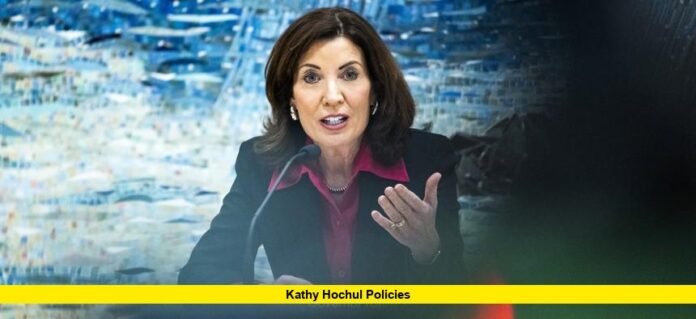

Kathy Hochul’s policies focus on making New York more affordable, strengthening public safety, expanding housing, improving healthcare, and supporting economic growth. As New York’s Democratic governor, Hochul has pursued a range of initiatives addressing the cost of living, education, gun violence, transportation, and environmental protection. Her latest policy agenda also emphasizes affordable childcare, lower utility bills, consumer protections, and infrastructure development.
Understanding Kathy Hochul’s policies helps explain her approach to governing New York and the issues shaping her administration. Her agenda combines state investment and regulatory reforms with efforts to encourage private development, improve essential services, and protect residents’ rights.
Kathy Hochul’s Affordability and Tax Policies
Affordability is one of Hochul’s central political priorities. Her administration has pursued tax relief, expanded family benefits, and initiatives intended to reduce everyday expenses.
New York’s fiscal 2026 budget included proposals and funding measures for middle-class tax relief, inflation refund payments, expanded child tax credits, and free school meals. Her fiscal 2027 budget, signed in May 2026, continued the affordability agenda.
Key priorities include:
- Providing eligible residents with tax relief and inflation refund payments.
- Expanding financial assistance for families raising children.
- Making school breakfast and lunch free for students statewide.
- Reducing vehicle insurance costs by addressing fraud.
- Taking steps to reduce utility bills and improve consumer protections.
Hochul has also advanced a plan to eliminate state income taxes on qualifying tips. The broader goal is to help working households manage rising living expenses, although the financial benefits vary depending on eligibility and the policies implemented.
Housing Policies and Affordable Homes
Housing affordability is another major part of Hochul’s agenda. New York faces challenges involving high rents, limited housing supply, and expensive homeownership, particularly in New York City and surrounding communities.
Hochul has supported policies designed to encourage construction, increase housing availability, and help first-time buyers. Her administration has also promoted local participation in housing development through the Pro-Housing Communities program.
Her fiscal 2026 budget highlighted investments in housing construction, including support for New York City’s City of Yes initiative, development on underused state-owned land, and assistance for eligible first-time homebuyers.
In May 2026, Hochul signed legislation associated with her Let Them Build agenda. The reforms aim to streamline certain environmental reviews and reduce delays for qualifying housing and infrastructure projects.
These measures reflect her position that increasing the housing supply is essential to improving affordability. Their long-term impact will depend on how many homes are built, where development occurs, and whether new units are affordable to households across different income levels.
Kathy Hochul’s Public Safety and Gun Control Policies
Public safety is a major focus of Hochul’s administration. She supports stricter gun regulations, investment in law enforcement, and programs intended to reduce violent crime.
Her approach includes strengthening background checks, expanding the state’s red-flag protections, restricting access to certain firearms, and investing in gun violence prevention. Her administration has also supported measures targeting organized retail theft and improving subway safety.
In 2026, her policy agenda included further action against illegal 3D-printed firearms and proposed technology-based measures to address dangerous driving.
Hochul’s public safety strategy combines enforcement with community-based crime prevention. Supporters emphasize the importance of reducing shootings and improving public confidence, while debates continue over bail reform, policing practices, and the balance between public safety and individual rights.
Healthcare and Mental Health Policies
Hochul supports state investment in healthcare services, hospital systems, and mental health treatment. Her administration has emphasized maintaining access to care, improving affordability, and strengthening healthcare providers that serve vulnerable communities.
Her 2026 policy agenda included proposals to strengthen safety-net hospitals, reduce prescription drug costs, and protect access to medically based vaccination policies.
Mental health is another important priority. Her administration has supported expanding treatment capacity and connecting people experiencing serious mental health crises with appropriate services. These efforts include coordination between healthcare professionals, outreach teams, and public safety agencies.
The broader objective is to improve access to treatment while addressing financial and service-delivery pressures affecting New York’s healthcare system.
Education and Childcare Policies
Education and childcare are central to Hochul’s family affordability agenda. She has supported increased education funding, student assistance, and programs intended to make early childhood care more accessible.
Her fiscal 2027 budget committed an additional $1.7 billion toward a statewide universal childcare pathway, bringing the planned investment in childcare and prekindergarten services to $4.5 billion.
The administration aims to expand access to affordable childcare for more families, with support intended to reach nearly 100,000 additional children.
Other priorities include free school meals, investments in public education, and workforce training through the State University of New York and City University of New York systems.
These policies seek to help parents remain employed, reduce household expenses, and prepare students for future careers.
Climate Change and Environmental Policies
Hochul supports clean energy development, energy efficiency, and environmental infrastructure investment. Her administration has pursued policies intended to reduce emissions, modernize buildings, and improve access to reliable energy.
Her broader environmental agenda includes clean water infrastructure, energy-efficient home improvements, and investments in renewable energy.
At the same time, her administration has promoted faster approval processes for qualifying housing and infrastructure projects. This creates an important policy challenge: balancing environmental protections with the need to build homes, transportation facilities, and other essential infrastructure.
The practical effects of these policies depend on implementation, energy costs, construction timelines, and the state’s ability to meet its environmental goals.
Economic Development and Infrastructure
Hochul’s economic policies emphasize job creation, technological innovation, manufacturing, and transportation improvements.
Her administration has supported investments in semiconductor development, biotechnology, artificial intelligence, and advanced manufacturing. These initiatives are intended to attract businesses, create employment opportunities, and strengthen New York’s long-term economic competitiveness.
Infrastructure priorities include roads, bridges, public transportation, water systems, and housing-related development. Her administration has also backed improvements to New York City’s subway system and other transportation projects.
The overall strategy is to encourage economic growth while improving the public services and infrastructure that residents and businesses depend on.
Latest Updates on Kathy Hochul’s Policies
As of November 4, 2026, Hochul’s policy agenda continues to center on affordability, public safety, housing, healthcare, and economic opportunity.
Her fiscal 2027 budget, signed in May 2026, advanced measures involving childcare, energy rebates, insurance costs, gun safety, and public safety funding. Her 2026 State of the State agenda also emphasized consumer protection, children’s online safety, and reforms intended to accelerate construction.
It is important to distinguish enacted measures from proposals. Some initiatives have received legislative approval or budget funding, while others require additional implementation, regulations, or legislative action before their full effects can be assessed.
Final Thoughts on Kathy Hochul’s Policies
Kathy Hochul’s policies reflect a governing approach that combines financial assistance for families, investments in public services, stronger gun regulations, housing development, and economic modernization.
Her administration’s central challenge is turning these priorities into measurable improvements in affordability, safety, healthcare access, and quality of life. The success of individual policies will depend on implementation, funding, cooperation with lawmakers, and their effects on New Yorkers across different communities.
Share your thoughts in the comments and stay updated for the latest developments in Kathy Hochul’s policies and New York state politics.