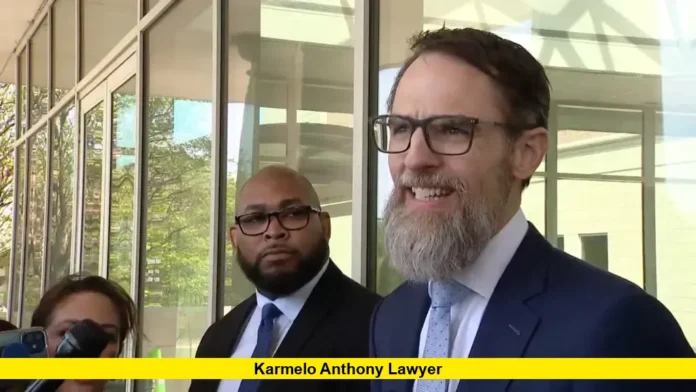

Mike Howard is a Dallas criminal defense attorney representing Karmelo Anthony, and his defense strategy centers on arguing that Anthony acted in self-defense during the fatal confrontation with Austin Metcalf, while also seeking lesser-included charges such as manslaughter if jurors reject a full self-defense claim.
As the murder trial of Karmelo Anthony reaches its most critical phase, all eyes are on the defense team led by attorney Mike Howard. With closing arguments scheduled for Tuesday, June 9, 2026, and the jury poised to begin deliberations, understanding the legal strategy behind Anthony’s defense has never been more relevant. Here is a comprehensive look at Karmelo Anthony’s lawyer, the courtroom battle, and what comes next.
Recent Development: What Prison Is Karmelo Anthony Going To?
Karmelo Anthony has officially entered the Texas prison system and is currently being held at the Wallace Pack Unit, a correctional facility near Navasota, Texas. The transfer followed his sentencing in the widely publicized case involving the death of Austin Metcalf. After being processed by the Texas Department of Criminal Justice, Anthony was assigned to the Pack Unit, where he will begin serving his 35-year prison sentence. The facility houses a variety of inmates and operates under the state’s prison management system. While the Wallace Pack Unit is Anthony’s current location, prison assignments are not always permanent. Inmates can be moved to other facilities based on factors such as security level, housing needs, medical requirements, or administrative decisions. Meanwhile, Anthony’s attorneys have started the appeals process, seeking a review of the conviction and sentence. Until any court rulings change his status, the Wallace Pack Unit remains the prison where he is serving his time in Texas.
Karmelo Anthony Sentenced to 35 Years
Breaking News: Karmelo Anthony has been sentenced to 35 years in prison in connection with the fatal stabbing of fellow student Austin Metcalf during a high school track meet in Frisco, Texas. The closely watched case drew national attention after prosecutors argued that Anthony escalated a confrontation under a team tent before fatally stabbing Metcalf in the chest.
During the trial, jurors heard testimony from eyewitnesses, law enforcement officials, and medical experts who stated that the wound pierced Metcalf’s heart and was not survivable. Anthony’s defense team maintained that he acted in self-defense, but the jury ultimately found him guilty.
The sentencing marks a major development in one of the most widely followed criminal cases involving high school students in recent years.
Who Is Karmelo Anthony?
Karmelo Anthony is a 19-year-old former student in the Frisco Independent School District who faces a murder charge stemming from the death of 17-year-old Austin Metcalf during a high school track meet in Frisco, Texas, on April 2, 2025. The incident occurred at Kuykendall Stadium, where students from multiple schools had gathered for a regional competition. According to investigators, an argument broke out between Anthony and Metcalf over seating arrangements in the stadium stands. Authorities allege that the disagreement escalated into a physical confrontation, during which Anthony used a pocketknife to stab Metcalf in the chest.
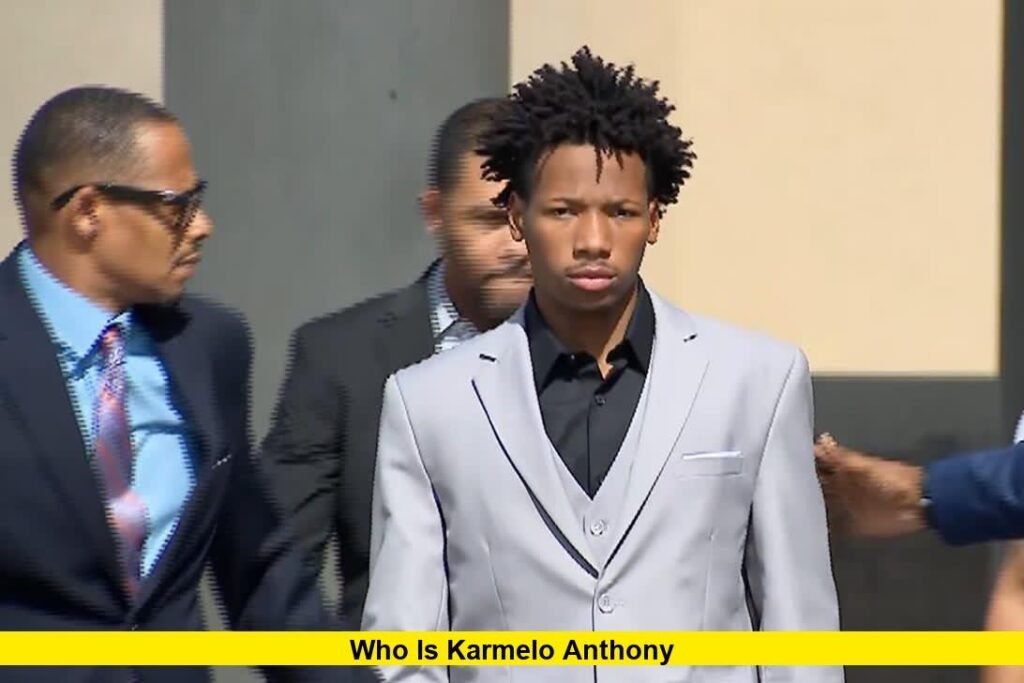
Metcalf, a student at Memorial High School, later died from his injuries. Investigators have stated that the two teenagers did not know each other before the encounter, making the fatal incident a shocking and unexpected tragedy for both families and the wider community. Anthony was arrested shortly after the incident and has maintained that he acted in self-defense, a claim that has become a central focus of his legal defense.
The case attracted nationwide attention due to the circumstances surrounding the confrontation and extensive discussion on social media. Online commentary often framed the case through racial and cultural lenses, contributing to intense public debate even before court proceedings began. As a result, the case has remained one of the most closely watched criminal trials involving a juvenile-turned-adult defendant in recent years.
Who Is Karmelo Anthony’s Lawyer?
Karmelo Anthony’s defense attorney is Mike Howard, a Dallas-area criminal defense lawyer who has represented Anthony throughout the high-profile murder case. Since Anthony was indicted, Howard has consistently argued that the evidence supports a claim of self-defense, maintaining that his client reacted to a perceived threat during the fatal confrontation with Austin Metcalf at a high school track meet in Frisco, Texas.
As the trial began in June 2026 at the Collin County Courthouse in McKinney, Howard outlined the defense’s position during opening statements, portraying Anthony’s actions as a response to fear and a rapidly escalating situation rather than a deliberate or premeditated attack. The defense has focused on convincing jurors that Anthony believed he was in danger when the confrontation occurred.
Howard has also attracted attention for his courtroom tactics. During jury selection, he questioned prospective jurors on a range of issues, including their views on immigration policy. Some jurors reportedly challenged the relevance of those questions to the case, creating notable exchanges during the selection process. Despite the controversy, Howard has continued to emphasize that the trial should focus on the specific circumstances of the incident and whether Anthony’s actions legally qualify as self-defense under Texas law.
What Is Mike Howard’s Defense Strategy?
Mike Howard’s defense strategy centers on establishing that Karmelo Anthony acted in self-defense during the confrontation that led to Austin Metcalf’s death. Throughout the trial, Howard has argued that Anthony was not the aggressor and that his actions were a reaction to what he perceived as an immediate physical threat. Under Texas self-defense law, the defense seeks to persuade jurors that Anthony reasonably believed he needed to protect himself during the encounter.
In his opening statement, Howard contended that Metcalf initiated the physical confrontation by making first contact and shoving Anthony. According to the defense, the situation escalated rapidly, leaving Anthony only moments to react. Howard described the incident as a “split second of fear and chaos,” emphasizing that the confrontation unfolded in a matter of seconds rather than as part of a planned attack.
A key component of the defense’s argument is Anthony’s conduct immediately after the stabbing. Howard has maintained that Anthony used the knife only once, did not continue the confrontation, and fled the scene afterward. The defense argues that these actions are more consistent with a frightened teenager reacting under stress than with someone carrying out a deliberate assault.
Howard has also sought to challenge the prosecution’s portrayal of the weapon involved. During testimony, Frisco police detective Beau Riley stated that the pocketknife Anthony carried was legal to possess in Texas, including at the stadium where the incident occurred. By highlighting this fact, the defense aims to show that Anthony’s possession of the knife was lawful and should not, by itself, be viewed as evidence of criminal intent.
Ultimately, Howard’s strategy is focused on creating reasonable doubt by portraying Anthony’s actions as a spontaneous act of self-preservation rather than murder.
The Prosecution’s Case Against Anthony
The prosecution’s case against Karmelo Anthony has been led by Bill Wirskye, who has firmly rejected the defense’s self-defense argument and instead characterized the incident as an intentional and unjustified killing. Prosecutors contend that Anthony was the aggressor during the confrontation and that his actions cannot be legally justified under Texas law.
In opening statements, Wirskye described the stabbing as a “provoked, unjustified murder,” arguing that Anthony entered a team tent where he was not supposed to be, refused requests to leave, and escalated the confrontation. The prosecution has sought to portray the stabbing as a deliberate act rather than a split-second reaction to danger.
To support its case, prosecutors called 21 witnesses before resting on June 7, 2026. Among the most significant testimony came from Collin County Chief Medical Examiner Dr. Elizabeth Ventura, who detailed the severity of Austin Metcalf’s injuries. Ventura testified that the fatal wound was a deep stab wound that penetrated Metcalf’s heart, causing catastrophic injuries that she described as unsurvivable. Her testimony was intended to highlight the deadly nature of the attack and the force involved.
The prosecution also relied heavily on eyewitness accounts from students who were present during the incident. Several Memorial High School students testified that Anthony appeared confrontational before the stabbing, allegedly using profanity and making threatening remarks. Witnesses told jurors that Anthony challenged Metcalf before the fatal encounter, supporting the prosecution’s claim that he initiated or escalated the conflict.
Throughout the trial, prosecutors have emphasized that the case should be evaluated solely on the evidence. Wirskye told jurors that race is not a factor in the proceedings and insisted that the evidence does not support a claim of self-defense. Instead, the state argues that the facts demonstrate criminal responsibility for Austin Metcalf’s death.
Defense Rests Without Anthony Taking the Stand
One of the most closely scrutinized moments of the trial occurred when Karmelo Anthony’s defense team rested its case on June 8, 2026, without calling Anthony to testify in his own defense. The decision was significant because Anthony’s claim of self-defense is at the center of the case, yet jurors will not hear his version of events directly from the witness stand.
Under the U.S. legal system, criminal defendants have a constitutional right not to testify, and jurors are instructed that they cannot consider a defendant’s silence as evidence of guilt. Anthony’s attorneys relied on witness testimony, cross-examinations, and other evidence rather than exposing their client to questioning from prosecutors.
Legal observers noted that while the decision is common in criminal trials, it can carry strategic implications. Because self-defense often depends on a defendant’s perception of danger at the moment force was used, some jurors may have expected to hear Anthony personally explain what he believed was happening during the confrontation. The defense, however, appeared confident that the existing evidence was sufficient to support its argument.
The final stages of the defense case also included testimony from a 17-year-old student witness whose account was challenged during cross-examination. Prosecutors questioned the witness about inconsistencies regarding whether Anthony was surrounded by other students before or after the stabbing occurred. During testimony, the witness acknowledged uncertainty about the exact sequence of events, giving prosecutors an opportunity to challenge the reliability of portions of the defense narrative.
With both sides having presented their evidence, the trial moved closer to closing arguments and eventual jury deliberations, where jurors will determine whether Anthony acted in self-defense or bears criminal responsibility for Austin Metcalf’s death.
Key Legal Issues in the Case
Self-Defense Under Texas Law
According to legal experts cited by Fox News, Texas self-defense law is considered a “confession and avoidance” defense — meaning a defendant essentially admits to the conduct but argues it was legally justified. Former prosecutor and legal analyst Lou Rosenthal noted: “The crux of the issue is that you cannot provoke the harm and then retreat behind self-defense.”
Race and the Jury
According to Fox News, the trial began amid controversy after jury selection resulted in no Black jurors being seated on the panel. Both the prosecution and defense were each allowed to dismiss 10 people from the pool. The racial dynamics of the case have been a persistent backdrop throughout proceedings.
No Plea Deal
According to Yahoo News/The Dallas Express, no plea agreement was reached between the prosecution and defense, meaning the case will go to a full jury verdict.
What Happens Next: Closing Arguments and Jury Deliberations
As of June 9, 2026, the Karmelo Anthony murder trial has entered its final stage. Closing arguments began Tuesday morning in Collin County, Texas, after both the prosecution and defense rested their cases. Attorneys for both sides are making their final attempts to persuade jurors before the case is handed over for deliberation.
The prosecution, led by District Attorney Bill Wirskye, has argued that the evidence shows an intentional and unjustified killing, describing the stabbing as “murder plain and simple.” Meanwhile, defense attorney Mike Howard has maintained that Anthony acted in self-defense during a rapidly escalating confrontation.
Following closing arguments, the jury is expected to begin deliberations. Judge John Roach Jr. has ordered that jurors be sequestered while considering the evidence, meaning they will remain isolated from outside influences as they review testimony, videos, forensic evidence, and witness accounts presented during the trial.
Jurors have several possible verdict options. They may acquit Anthony if they conclude the state failed to prove its case beyond a reasonable doubt or if they accept the self-defense claim. They may also convict him of murder, a charge that carries a potential sentence ranging from 5 to 99 years or life in prison under Texas law. In a significant development, the judge has also allowed jurors to consider the lesser-included offense of manslaughter, which carries a lighter sentencing range.
As of publication, no verdict has been announced. The jury’s decision is expected to determine whether Anthony is acquitted, convicted of murder, convicted of manslaughter, or whether the case ends in a mistrial if jurors cannot reach a unanimous verdict.
Public Reaction and Outside the Courthouse
The trial has drawn demonstrators on both sides to the Collin County Courthouse. According to Fox News Digital, protestors showed up on the first day of jury selection on June 1, 2026, with some supporting Austin Metcalf and others supporting Anthony. A district court official confirmed that three people were escorted from the courthouse for attempting to take photographs, in violation of a standing decorum order.
According to Fox News, the Next Generation Action Network (NGAN), an activist organization that has publicly supported Anthony’s family since shortly after the stabbing, held a news conference outside the courthouse urging supporters to remain peaceful and respect the judicial process.
FAQs
Q: Who is Karmelo Anthony’s lawyer? A: Karmelo Anthony’s defense attorney is Mike Howard, a Dallas-area criminal defense lawyer who has argued that Anthony acted in self-defense during the fatal confrontation with Austin Metcalf.
Q: What is Karmelo Anthony charged with? A: Karmelo Anthony is charged with first-degree murder in the death of 17-year-old Austin Metcalf, who was stabbed at a Frisco, Texas high school track meet on April 2, 2025.
Q: What is Karmelo Anthony’s defense strategy? A: Attorney Mike Howard has argued self-defense, claiming Metcalf was the physical aggressor who shoved Anthony first, and that Anthony reacted out of fear in a split-second decision.
Q: Did Karmelo Anthony testify at his trial? A: No. According to multiple reports, the defense rested on June 8, 2026, without calling Anthony to the stand. The jury cannot legally hold this decision against him.
Q: What sentence does Karmelo Anthony face if convicted? A: If convicted of murder, Anthony faces between 5 and 99 years in prison under Texas law. He does not face the death penalty.
Q: When will the jury reach a verdict? A: Closing arguments began June 9, 2026. Jury deliberations were expected to start around midday the same day, with a verdict possible at any time after.
Q: Was Karmelo Anthony a minor when the stabbing occurred? A: Anthony was 17 at the time of the stabbing, but under Texas law, 17-year-olds are considered adults and are tried accordingly.
The verdict in the Karmelo Anthony trial could come at any moment — drop your thoughts in the comments below and stay tuned for the latest updates as the jury deliberates.