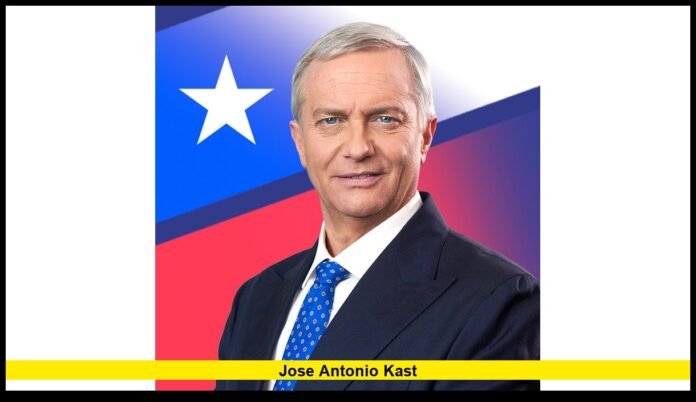

Jose Antonio Kast has secured Chile’s presidency following a decisive 2025 election result, confirming a major political shift driven by voter demands for stronger security, tighter immigration control, and firmer economic management.
The final vote count confirmed Kast’s win in the presidential runoff, defeating left-wing challenger Jeannette Jara by a clear margin. The result reflects a nationwide response to rising concerns about crime, border enforcement, and everyday safety, issues that dominated public debate throughout the campaign.
Election Outcome Signals a Political Realignment
Jose Antonio Kast won close to 58 percent of the national vote, while his opponent received roughly 42 percent. This margin represents one of the strongest performances by a conservative candidate in Chile’s modern democratic era.
Turnout remained solid across the country, with notable participation in urban centers and regional communities alike. Many voters described the election as a referendum on public order and government effectiveness rather than traditional party loyalty.
After the results were confirmed, Kast addressed supporters with a call for unity and institutional stability. His opponent accepted the outcome and emphasized respect for democratic processes.
Jose Antonio Kast’s Rise in Chilean Politics
Jose Antonio Kast is the founder and leader of the Republican Party and has been an influential voice in Chilean politics for more than a decade. He previously served in Congress and became nationally known for his outspoken conservative positions.
Born in Santiago, Kast entered public life through established political movements before forming his own party. His earlier presidential campaigns in 2017 and 2021 helped shape his political profile, even though both attempts fell short.
The 2025 election marked his third presidential bid and the first time his platform secured majority support nationwide.
Core Themes That Defined the Campaign
Throughout the race, Jose Antonio Kast focused on a narrow set of priorities rather than a broad ideological agenda. His messaging remained consistent from the opening weeks of the campaign through the final runoff.
Key campaign pillars included:
- Strengthening public security and law enforcement
- Enforcing stricter border controls
- Reducing government bureaucracy
- Promoting private-sector investment
This disciplined approach allowed Kast to appeal not only to traditional conservatives but also to undecided voters seeking practical solutions to daily concerns.
Public Security Dominates Voter Concerns
Crime played a central role in shaping voter behavior. Reports of violent crime, organized criminal activity, and drug trafficking fueled anxiety across social groups.
Jose Antonio Kast framed security as the foundation of social and economic progress. His proposals emphasized expanding police authority, increasing patrol coverage, and accelerating judicial processes for serious crimes.
Supporters viewed these measures as overdue corrections. Critics warned about the need to preserve civil rights, but the security message resonated strongly during the election.
Immigration as a Defining Issue
Immigration policy also influenced the election outcome, particularly in northern regions where migration pressures have been most visible. Local governments and residents reported strain on housing, healthcare, and public services.
Kast promised tougher border enforcement and faster deportation procedures for undocumented migrants involved in criminal activity. He positioned immigration enforcement as a matter of state responsibility rather than ideological conflict.
This stance attracted voters who felt previous governments failed to manage border challenges effectively.
Economic Direction and Fiscal Policy
Beyond security and immigration, Jose Antonio Kast emphasized economic discipline. His campaign highlighted concerns about public spending growth and regulatory complexity.
He argued that restoring investor confidence and simplifying regulations would support job creation and long-term growth. Kast also stressed the importance of fiscal responsibility to prevent inflationary pressure and budget instability.
While business groups expressed cautious optimism, labor organizations indicated they would monitor policy changes closely.
Who Supported Jose Antonio Kast
Kast’s voter base expanded significantly compared to previous elections. He performed well among middle-class voters, older demographics, and individuals who identified security as their top concern.
He also gained ground in smaller cities and rural communities, where economic stability and public safety ranked high on voter priorities. Younger voters remained divided, though Kast improved his share among this group compared to past campaigns.
This broader coalition helped secure his runoff victory.
Reactions Across the Political Spectrum
Supporters celebrated the election outcome as a turning point, arguing it reflected public demand for decisive leadership. Many expressed hope that the new administration would move quickly to deliver visible improvements in safety and governance.
Opposition leaders acknowledged the result while raising concerns about social cohesion and institutional safeguards. Civil society groups said they would remain attentive to policy changes affecting rights and democratic oversight.
Despite tensions, the transition period began peacefully, reinforcing confidence in Chile’s democratic framework.
Transition to Power and Early Priorities
Jose Antonio Kast is scheduled to assume office on March 11, 2026, beginning a four-year presidential term. His transition team has outlined early priorities focused on security, border enforcement, and administrative reform.
Immediate challenges include coordinating with Congress, managing public expectations, and implementing policies without disrupting institutional balance.
Although conservative parties made gains in legislative races, Kast does not command a clear majority, making negotiation essential.
Chile’s Place in the Regional Landscape
Kast’s victory is part of a broader regional pattern in which voters are turning toward conservative leaders amid frustration with crime and economic pressures.
In the United States, policymakers are closely watching developments due to Chile’s role as a key regional partner. While political styles may differ, continuity in trade and diplomatic relations is expected.
The election highlights how domestic concerns increasingly shape political outcomes across Latin America.
A New Chapter Begins
As Jose Antonio Kast prepares to take office, Chile faces a period of transition marked by high expectations and intense scrutiny. Supporters anticipate swift action, while critics remain cautious about the direction of policy changes.
The success of the new administration will depend on its ability to balance firm leadership with institutional stability and social cohesion.
What impact do you believe Jose Antonio Kast’s presidency will have on Chile’s future? Share your views and stay engaged as events continue to unfold.