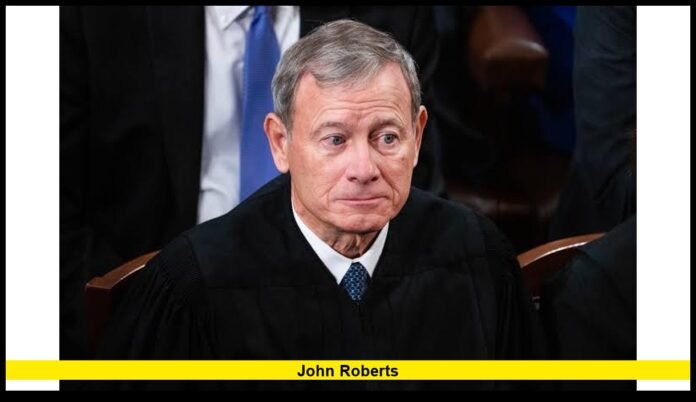

John Roberts White House dissent has become a major Supreme Court development after the chief justice broke with the court’s conservative majority over President Donald Trump’s White House ballroom project. On August 31, 2026, the Supreme Court voted 5-4 to allow construction of the project to continue while the legal dispute moves forward. Roberts joined Justices Sonia Sotomayor, Elena Kagan and Ketanji Brown Jackson in dissent.
The ruling did not determine whether Trump’s East Wing project is ultimately lawful. Instead, the majority concluded that the National Trust for Historic Preservation was likely unable to establish Article III standing to challenge the project in federal court. The court also found that the government had shown sufficient grounds for a stay of a lower-court injunction that would have substantially halted above-ground construction.
Roberts took a different view. In his six-page dissent, he argued that the ballroom construction is “likely unlawful” because Congress has not expressly authorized the project. He also rejected the majority’s treatment of the preservation group’s alleged injury and warned that the ruling allows an executive action that may infringe on Congress’s constitutional authority over federal property in Washington, D.C.
Why John Roberts Dissented From the White House Ballroom Ruling
The dispute centers on Trump’s plan to replace the White House’s former East Wing with a new structure featuring a large ballroom and underground facilities.
Federal officials began the East Wing replacement project in October 2025. The existing East Wing was demolished in December 2025. The next phase involves constructing the new East Wing, including both an underground military installation and an above-ground ballroom.
The National Trust for Historic Preservation challenged the project in federal court. The organization sought to stop construction while arguing that the administration had failed to satisfy legal requirements involving federal property, environmental review and congressional authorization.
The litigation produced conflicting decisions in the lower courts. On March 31, 2026, a federal district judge issued a preliminary injunction that essentially allowed underground work to continue but blocked most above-ground construction. The U.S. Court of Appeals for the D.C. Circuit later stayed that injunction while considering the administration’s appeal. On August 7, the appeals court upheld the injunction and indicated that its existing stay would expire on August 21.
The Trump administration then asked the Supreme Court to intervene.
Chief Justice Roberts initially issued an administrative stay to give the justices time to consider the government’s request. That temporary action allowed construction to continue while the Supreme Court reviewed the emergency application.
The August 31 ruling went further by formally staying the lower-court injunction. That decision permits above-ground construction to proceed while the case continues through the federal courts.
Roberts, however, concluded that the court should not have granted the stay.
What Roberts Said About the Project’s Legality
The central issue in Roberts’ dissent is congressional authority.
Roberts pointed to federal law governing construction on federal government property in the District of Columbia. He cited 40 U.S.C. §8106, which prohibits construction of a building or structure on federal reservations, parks or public grounds in Washington without express congressional authority.
Roberts argued that the ballroom falls within that restriction.
His reasoning was straightforward: the new structure is being built on federal grounds in Washington, and Congress has not enacted a law expressly authorizing the construction of the ballroom.
The administration has relied on existing statutory authority involving the care, maintenance, repair, alteration, refurbishing and improvement of the Executive Residence. Roberts argued that this authority does not provide the necessary permission for constructing an entirely new ballroom structure on federal property.
That distinction matters.
Routine maintenance of the White House is fundamentally different from demolishing an existing East Wing and replacing it with a major new structure. Roberts treated that difference as central to the separation-of-powers question.
His dissent therefore did not simply focus on architecture or preservation. It focused on who has the constitutional authority to approve major changes to federal property in the nation’s capital.
Roberts’ Separation-of-Powers Warning
The most significant constitutional concern in the dissent involves the balance of power between the president and Congress.
Roberts argued that Congress possesses broad constitutional authority over federal property in Washington, D.C. He also emphasized Congress’s power over federal spending and property regulation.
In his view, allowing the project to continue despite the absence of express congressional authorization could permit the executive branch to exercise authority that belongs to the legislative branch.
That concern explains the unusual alignment in the case.
Roberts is a conservative chief justice. Sotomayor, Kagan and Jackson are the court’s three liberal members. Yet all four joined the same dissent.
The 5-4 split therefore placed Roberts on the opposite side of the court’s other conservative justices for this particular dispute.
Roberts ended his argument with a warning about separation of powers. He wrote that the ruling was “no victory for the separation of powers.”
The statement reflects the broader importance Roberts attached to congressional authority. His dissent suggests that the case is not merely about whether a preservation organization can stop a construction project. It is also about the limits of presidential power when federal property and congressional authority intersect.
Why the Supreme Court Majority Allowed Construction to Continue
The majority took a narrower approach.
The unsigned Supreme Court ruling expressly stated that the justices were not deciding the ultimate legality of the East Wing project. Instead, the majority focused on whether the National Trust had standing to bring the lawsuit and whether the government had met the requirements for a stay.
The court concluded that the government was likely to succeed in showing that the Trust lacked Article III standing.
Standing is a threshold requirement in federal court. A plaintiff generally must demonstrate a concrete and particularized injury that gives the plaintiff a sufficient connection to the challenged government action.
The Trust relied in part on a declaration from Alison K. Hoagland, a member associated with the organization. Hoagland lives in Washington, D.C., and said she expects to visit the area around the White House roughly once a month.
She argued that the planned ballroom would cause aesthetic, cultural and historical injury because of its scale, height and design.
The majority concluded that those allegations did not establish the type of concrete and particularized injury required under Article III.
The justices emphasized that disagreement, offense or distaste about government conduct does not by itself establish standing. The majority therefore determined that the Trust was likely to lose on the standing question.
That conclusion allowed the court to grant the government’s emergency request without deciding the larger question of whether Trump has legal authority to construct the ballroom.
Why Roberts Disagreed on Standing
Roberts rejected the majority’s treatment of Hoagland’s alleged injury.
His dissent placed unusual emphasis on the significance of the White House and the historic nature of the property.
Roberts argued that the White House is different from an ordinary federal building. He maintained that its architectural and historical importance gives greater significance to a member’s claimed injury from the proposed changes.
He also challenged the majority’s characterization of the alleged injury as insufficient under Article III.
The disagreement over standing is important because it determines whether the lawsuit can meaningfully proceed.
If the National Trust lacks standing, the federal courts may be unable to reach the organization’s substantive claims about congressional authorization, environmental requirements and historic preservation.
Roberts believed the Trust had presented a sufficient basis for judicial review.
In his view, preventing the case from moving forward would allow the executive branch’s potentially unlawful action to continue without a judicial determination of the underlying constitutional and statutory questions.
What the Supreme Court Actually Decided
The August 31 decision should not be described as a Supreme Court ruling that declared Trump’s ballroom project legal.
That distinction is critical.
The majority explicitly said it was not passing on the legality of the government’s East Wing project. Instead, the court determined that the government was likely to prevail in showing that the National Trust lacked standing and that the other factors supported granting the stay.
The court’s order stayed the preliminary injunction issued by the U.S. District Court for the District of Columbia.
The stay remains connected to the administration’s forthcoming petition for a writ of certiorari. The Supreme Court’s order states that the stay will terminate automatically if certiorari is denied. If the court grants review, the stay will terminate when the court sends down its judgment.
For now, that means construction can continue.
The underlying legal dispute has not been resolved in the way a final ruling on the merits would resolve it.
The Timeline Behind the John Roberts Dissent
The sequence of events helps explain why the August 31 ruling became so significant.
- October 2025: The federal government began the East Wing replacement project.
- December 2025: Demolition of the existing East Wing was completed.
- December 2025: The National Trust for Historic Preservation filed its lawsuit challenging the project.
- March 31, 2026: A federal district judge issued a preliminary injunction restricting above-ground construction.
- April 17, 2026: The D.C. Circuit stayed that injunction while considering the government’s appeal.
- August 7, 2026: The appeals court upheld the lower court’s injunction.
- August 21, 2026: The Supreme Court allowed construction to continue temporarily through an administrative stay issued by Roberts.
- August 31, 2026: The Supreme Court voted 5-4 to stay the lower-court injunction, allowing construction to continue.
- August 31, 2026: Roberts issued a dissent joined by Sotomayor, Kagan and Jackson.
The timeline shows why the chief justice’s dissent is particularly notable.
Roberts had initially taken procedural action that kept construction moving while the Supreme Court considered the case. Yet when the full court issued its August 31 decision, he rejected the majority’s reasoning and concluded that the project was likely unlawful.
Why the Dissent Is Drawing Attention
The dissent stands out because Roberts rarely finds himself aligned with all three liberal justices on a major dispute involving presidential authority.
The issue also involves the White House itself, making the legal dispute unusually symbolic.
Roberts’ opinion emphasized the historical importance of the building and the constitutional role of Congress. He argued that government officials must follow the rules governing federal property even when the project involves the president’s official residence.
The dissent also illustrates a distinction between the legality of an action and whether a particular plaintiff can challenge it.
Roberts believed the construction was likely unlawful. The majority did not decide that question.
Instead, the majority concluded that the plaintiff likely lacked standing and that the government had demonstrated enough potential harm to justify allowing construction to continue.
That means the August 31 decision does not end the controversy.
What Happens to the White House Ballroom Case Next
The legal fight can continue despite the Supreme Court’s decision.
The government is expected to pursue the next stage of the Supreme Court process through its petition for a writ of certiorari. The future of the case will depend on whether the court accepts the matter for full review.
If the Supreme Court ultimately declines review, the August 31 stay will automatically terminate under the terms of the order. If the court accepts the case, further proceedings could determine how the dispute develops.
Meanwhile, the August 31 order allows construction to proceed.
That creates an important practical issue. Construction can advance while the legal questions remain unresolved.
The longer construction continues, the more difficult it could become to reverse completed work if a later court determines that the project violated federal law.
Roberts’ dissent directly reflects that concern. His position was that the courts should not allow construction to continue when the project is likely unlawful and when Congress may not have authorized the executive branch to undertake it.
What the John Roberts White House Dissent Means
The significance of the dissent extends beyond the ballroom itself.
At its core, Roberts’ argument concerns the constitutional structure of the federal government.
The chief justice’s position is that Congress has authority over federal property in Washington and that the executive branch cannot simply rely on broad administrative powers to undertake a major construction project without the required legislative authorization.
The majority took a different procedural path. It did not resolve that underlying dispute. Instead, it focused on standing and the requirements for emergency relief.
That difference explains why the court could simultaneously allow construction to continue while Roberts could describe the project as likely unlawful.
Both sides were addressing different questions.
The majority asked whether the government had shown enough to justify staying the lower court’s injunction.
Roberts focused on whether the project itself appeared legally authorized and whether the plaintiff had presented enough injury to bring those issues before a federal court.
The result is a ruling that permits construction to continue without definitively settling the central legal controversy.
A Rare Break From the Supreme Court’s Conservative Majority
Roberts’ dissent is also notable because of his role as chief justice.
The chief justice frequently emphasizes institutional stability, judicial restraint and the importance of constitutional boundaries. In this case, he used those principles to oppose a ruling supported by the court’s other conservative members.
His disagreement does not mean that Roberts has broadly rejected the administration’s legal positions.
Instead, the dissent is specific to the White House ballroom dispute and the statutory and constitutional questions raised by the project.
The case therefore should not be interpreted as a wholesale change in Roberts’ approach to presidential authority.
What it does demonstrate is that the chief justice was willing to separate himself from the conservative majority when he believed the executive branch had likely crossed a legal boundary involving congressional power over federal property.
The Bottom Line on John Roberts and the White House Ballroom
The latest Supreme Court action gives the Trump administration an immediate legal victory by allowing construction of the White House ballroom project to continue.
But the ruling did not establish that the project is lawful.
Chief Justice John Roberts, joined by the court’s three liberal justices, took the opposite position. His dissent argued that the construction is likely unlawful because Congress has not expressly authorized the project under the federal law governing construction on federal grounds in Washington, D.C.
The majority instead concluded that the National Trust for Historic Preservation was likely unable to establish standing and that the government had demonstrated sufficient reasons for the injunction to be stayed.
That distinction will remain central as the legal dispute develops.
For Roberts, the case represents a question about more than the White House’s architecture. It raises the issue of whether the president can undertake a major transformation of federal property without explicit congressional approval.
The Supreme Court has allowed the construction to proceed for now, but the ultimate legal questions surrounding the project remain unresolved.
What do you think about John Roberts’ dissent and the Supreme Court’s decision to let the White House ballroom construction continue? Stay updated as the legal battle develops.