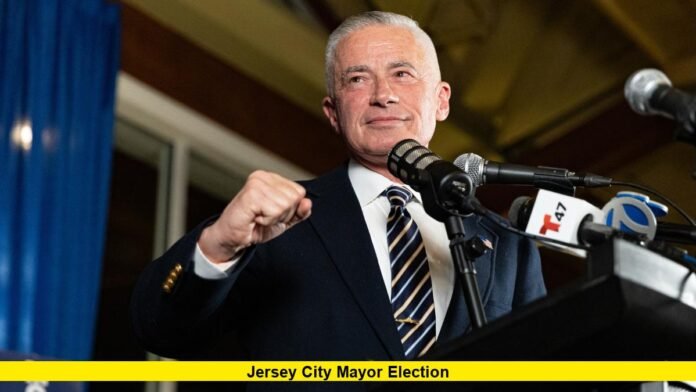

In a dramatic conclusion to the 2025 jersey city mayor election, Councilman James Solomon has been elected mayor of Jersey City, defeating former New Jersey Governor Jim McGreevey in a decisive December 2 runoff. Solomon’s victory marks a sweeping shift toward progressive leadership for the city, with a campaign rooted in housing affordability, tenant protections, and community-centered reforms.
Solomon, 41, emerged from the initial November election — which included seven candidates — as the frontrunner with 29.2% of the vote. McGreevey — 68 and seeking a political comeback decades after his resignation as governor — came in second with 25.1%. Because no candidate secured a majority, the race moved to a runoff, where Solomon secured an overwhelming 68.7% of the vote compared to McGreevey’s 31.3%. Solomon will succeed outgoing Mayor Steven Fulop, who chose not to run for re-election after pursuing a failed bid for governor.
A Voter Mandate After a Crowded Field
The November 4 general election was marked by a wide field of contenders including former Hudson County Commissioner Bill O’Dea, former school-board president Mussab Ali, and other local hopefuls. With no candidate reaching the required majority, the top two advanced to the December runoff — Solomon and McGreevey.
In that first round, the narrow margin between Solomon and McGreevey left many observers anticipating a tight runoff contest. But turnout and consolidation of progressive support behind Solomon reshaped the dynamic entirely.
By election night on December 2, Solomon’s decisive win — more than double McGreevey’s share — turned what many expected to be a close race into a clear rejection of the establishment comeback attempt.
Solomon’s Platform Strikes a Chord: Affordable Housing, Tenant Rights, and Reform
Throughout the campaign, Solomon emphasized affordability as the defining crisis for modern Jersey City. He pledged to
- enforce rent stabilization and stop excessive rent hikes,
- ban “rent-hiking algorithms” that inflated housing costs overnight,
- guarantee legal representation for tenants facing eviction or unfair rental practices.
He also promised to hold developers accountable: Solomon pledged to scrutinize tax breaks and mandates many developers received under previous administrations. He argued that too often, development created luxury units that priced out longtime residents, undermining the city’s working-class fabric.
On public safety and civic reform, Solomon committed to hiring 100 new police officers and instituting a civilian complaint review board — a move aimed at enhancing transparency, accountability, and community trust in law enforcement. He also pledged collaboration with the independent school board to improve education and support local journalism and civic engagement.
This platform resonated strongly in both downtown and waterfront neighborhoods — typically impacted by development — and across working-class wards. Analysts note that Solomon’s success reflects growing appetite among voters for leaders prioritizing equity, accountability, and residents’ livelihoods over rapid gentrification and real-estate profits.
McGreevey’s Comeback Bid Falters Despite Name Recognition
For many, the name recognition and political experience of former Governor Jim McGreevey made him a serious contender. Once a rising star in New Jersey politics, McGreevey won the governorship in 2001, but resigning in 2004 amid scandal derailed his career. Two decades later, he sought redemption in Jersey City.
McGreevey campaigned on expanding affordable housing through new construction, including a proposed set-aside of a portion of new developments as affordable or senior-rental units. He pitched a fiscally conservative governance style, promising “zero-based” budgeting and broader economic opportunity.
Despite those arguments and a well-funded campaign, McGreevey failed to shake off the stigma of past controversy. Voters showed little appetite for returning to what many viewed as old-school pol itics. The landslide margin against him in the runoff underscored a determined choice by Jersey City voters — they opted for fresh leadership and a forward-looking vision over the familiarity of a political comeback.
The Broader Context: Why This Election Matters
Jersey City — New Jersey’s second-largest city, long shaped by surging rents, rapid development, and shifting demographics — has been grappling with deep affordability and equity challenges. Over the past decade, luxury high rises reshaped the downtown skyline, but many longtime residents found themselves priced out or marginalized.
Solomon’s win signals a political shift in response to those pressures. It reflects growing fatigue among working families over rising rents, displacement, and lack of affordability in housing. It also echoes a broader trend seen in metropolitan areas across the U.S., where younger, more progressive leaders are emerging in response to inequality, cost-of-living pressures, and demands for reform.
Analysts note that this election may serve as a template for other mid-sized cities wrestling with growth, development, and rising housing costs. If Solomon’s administration delivers on his promises, it could reshape not only Jersey City’s trajectory, but influence urban politics across the region.
What’s Next: What to Expect Under Mayor-Elect Solomon
As Solomon prepares to take office, Jersey City residents should anticipate swift action on several fronts. Housing and tenant rights are likely to dominate early in his agenda. Expect moves to implement rent stabilization, audit developer tax breaks, and expand legal protections for renters.
On policing and public safety, the planned increase in law enforcement staffing combined with a civilian review board aims to balance enforcement with accountability. This dual approach could reshape relationships between law enforcement and communities — especially in neighborhoods where policing and housing inequality intersect.
Education, civic engagement, and local journalism also feature in Solomon’s vision. He has promised collaboration with the independent school board, support for mental-health crisis response infrastructure, and initiatives to support grassroots civic participation.
Solomon’s rise edges Jersey City into a new chapter — one where development, affordability, and community voice may carry equal weight.
What challenges or priorities do you hope the new mayor tackles first? Feel free to share your thoughts or what you expect to see next.