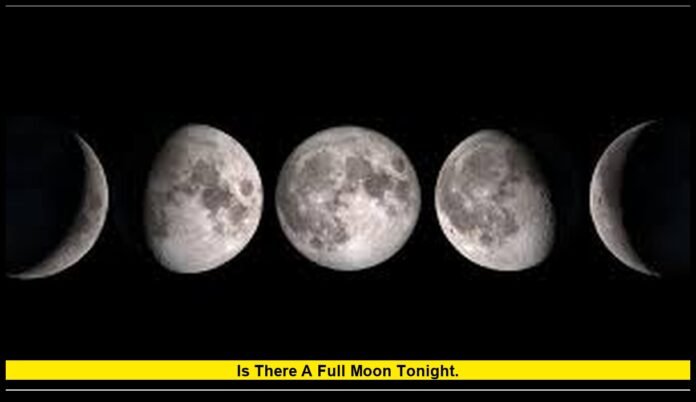

Is there a full moon tonight? As of May 1, 2026, the Moon visible across the United States is not at full phase. It has just moved past peak illumination and is now in a waning gibbous stage, following the full moon that occurred on April 30, 2026.
For most observers, the Moon will still look nearly full. Its brightness remains intense, and it dominates the night sky after sunset. However, from an astronomical standpoint, the moment of full illumination has already passed.
Current Moon Phase Tonight Across the United States
On May 1, 2026, the Moon is in the early part of the waning gibbous phase. This stage begins immediately after a full moon and continues for several days as the illuminated portion gradually decreases.
Key Details for Tonight
- Phase: Waning Gibbous
- Illumination: Approximately 98–99%
- Previous Full Moon: April 30, 2026
- Next Full Moon: May 29, 2026
Even though the Moon is no longer at 100% illumination, the difference is minimal. To the naked eye, it still appears round and brilliantly lit.
Why the Moon Still Looks Full Tonight
The human eye cannot easily detect slight changes in lunar illumination. When the Moon remains above 97% illuminated, it appears nearly identical to a full moon.
Reasons for This Visual Effect
- The decrease in illumination occurs gradually
- The Moon’s outline remains almost perfectly circular
- Brightness levels stay extremely high
Because of these factors, many people assume it is still a full moon, even though the peak occurred the night before.
When the Last Full Moon Occurred
The most recent full moon reached its peak on April 30, 2026. This event was notable because it was the second full moon within the same calendar month.
This rare timing is commonly referred to as a Blue Moon. Despite the name, the Moon does not appear blue. The term simply reflects the occurrence of two full moons in a single month.
April 2026 Full Moon Highlights
- First full moon: April 1
- Second full moon: April 30
- Event type: Blue Moon
Such events happen every few years and attract significant public interest.
Understanding the Waning Gibbous Phase
The waning gibbous phase follows immediately after a full moon. During this period, the illuminated portion of the Moon slowly decreases each night.
Characteristics of This Phase
- The Moon rises later in the evening
- A subtle shadow appears along one edge
- Surface features become easier to observe
This phase is often favored by astronomers because shadows on the lunar surface enhance visibility of craters and ridges.
Why the Exact Full Moon Timing Matters
A full moon is defined by a precise alignment between Earth, the Moon, and the Sun. At that exact moment, the Moon’s face is completely illuminated.
This alignment is brief and occurs at a specific time, not throughout an entire night.
Important Points
- A full moon is a moment, not a full-night event
- Illumination begins to decrease immediately after
- The visual appearance can remain nearly unchanged for a short period
That exact alignment occurred on April 30, which is why May 1 is no longer classified as a full moon.
Next Full Moon Date in 2026
If you missed the peak full moon, the next opportunity is approaching.
- Next Full Moon: May 29, 2026
This will be the next time the Moon reaches complete illumination as seen from Earth.
Moonrise and Visibility Tonight
Across the United States, the Moon will rise shortly after sunset on May 1. Exact timing depends on your location, but it will be visible in the early evening.
Viewing Conditions
- Bright and easy to spot
- Visible even in urban areas
- Best seen shortly after sunset and later at night
Because of its brightness, the Moon will remain the most prominent object in the sky.
How Bright the Moon Is Right Now
Even after the full phase, the Moon continues to reflect a large amount of sunlight.
Effects of High Brightness
- Nighttime landscapes appear illuminated
- Outdoor visibility improves without artificial lighting
- Faint stars become harder to see
This level of brightness makes the Moon ideal for casual viewing but less ideal for deep-sky observation.
Common Misunderstandings About Full Moons
Many people believe that a full moon lasts for several nights. While it may look that way, the actual definition is more precise.
Clarifying the Facts
- The full moon occurs at one exact moment
- The Moon may appear full for one to two nights
- Slight changes are difficult to detect visually
This explains why the question “is there a full moon tonight” often leads to confusion.
The Lunar Cycle Explained
The Moon follows a repeating cycle that lasts about 29.5 days. Each phase represents a different angle of sunlight reflecting off its surface.
Eight Phases of the Moon
- New Moon
- Waxing Crescent
- First Quarter
- Waxing Gibbous
- Full Moon
- Waning Gibbous
- Third Quarter
- Waning Crescent
On May 1, 2026, the Moon is in the sixth phase of this cycle.
Why This Question Trends Frequently
People across the United States often search for updates about the Moon’s phase. The night sky plays a role in many activities and traditions.
Common Reasons People Check
- Planning outdoor events
- Capturing night photography
- Observing celestial events
- Personal interest in astronomy
Since the Moon changes daily, real-time information remains important.
How the Moon Affects Stargazing Tonight
The brightness of the Moon can impact visibility of other celestial objects.
Effects on the Night Sky
- Fainter stars are less visible
- Constellations appear dimmer
- Deep-sky objects become harder to observe
Despite this, the Moon itself becomes the main focus for observers.
Regional Viewing Conditions in the U.S.
From coast to coast, the Moon will be visible under similar conditions tonight.
What to Expect by Region
- West Coast: Early evening visibility with clear skies in many areas
- Central U.S.: Bright moonlight dominating the sky
- East Coast: Slightly later moonrise but equally strong visibility
Weather conditions may vary, but the Moon’s brightness ensures it remains visible in most areas.
Full Moon Names and Cultural Meaning
Each full moon carries a traditional name tied to seasonal changes.
The April full moon is often called the Pink Moon, associated with springtime flowers. The name reflects seasonal patterns rather than the Moon’s color.
Upcoming Full Moon Dates for 2026
Here is a quick look at upcoming full moons:
| Month | Date |
|---|---|
| May | May 29 |
| June | June 28 |
| July | July 27 |
| August | August 26 |
These dates allow skywatchers to plan future observations.
Why Tonight’s Moon Is Still Worth Seeing
Even though it is not a full moon, tonight offers a bright and impressive lunar display.
The Moon remains nearly complete in shape and shines strongly across the sky. Its glow creates a calm and visually striking nighttime atmosphere.
For many people, it will look just as impressive as the night of the full moon itself.
Final Answer: Is There a Full Moon Tonight?
There is no full moon tonight on May 1, 2026. The Moon has already passed its peak and is now gradually decreasing in illumination.
Even so, it remains bright and highly visible across the United States.
Looking Ahead
The Moon will continue its cycle over the coming days, moving through several phases before reaching full illumination again on May 29.
Each night brings subtle changes, offering new opportunities to observe and appreciate the night sky.
Take a moment to look up tonight and see the nearly full Moon for yourself—what do you notice about its shape and brightness? Share your thoughts and keep watching the sky.