
Dementia is a growing concern for families, particularly when a parent or close relative has experienced memory loss, confusion, or changes in behavior. One of the most common questions people ask is is dementia inherited from mother or father, and whether having an affected parent means they will eventually develop the same condition. The answer depends on the type of dementia, the genes involved, family medical history, and other health factors. Although genetics can influence a person’s risk, most dementia cases are not caused by a single inherited gene. Understanding the difference between genetic susceptibility and directly inherited disease can help families make informed decisions about brain health, medical evaluations, and genetic counseling.
Does Dementia Come From the Mother’s Side or the Father’s Side?
Dementia can be associated with genetic factors inherited from either biological parent. There is no universal rule that dementia is passed down more frequently through mothers or fathers.
Each parent contributes genetic material that can influence how the brain functions and how susceptible a person may be to certain neurological conditions. Some genetic variations increase the likelihood of developing dementia without making the condition inevitable. Other, much rarer genetic mutations can directly cause particular forms of dementia.
The distinction matters because family history does not always indicate a straightforward inheritance pattern. A person may have several relatives with dementia because of shared genetic susceptibility, common health conditions, environmental influences, or a combination of these factors.
For example, a person whose mother developed Alzheimer’s disease in her late 80s may have a different risk profile from someone whose parent and several other close relatives developed dementia before age 60.
The age when symptoms first appeared, the number of affected relatives, and the specific diagnosis can help healthcare professionals determine whether a family pattern deserves further investigation.
How Genetics Influences the Risk of Dementia
Dementia is not a single disease. It describes a group of conditions that impair memory, reasoning, communication, judgment, or the ability to manage everyday activities.
Genetics influences these conditions in different ways. Some genes affect the likelihood of developing a disease, while specific disease-causing mutations can produce a much more direct hereditary pattern.
Most people who develop dementia have a combination of risk factors rather than one identifiable genetic cause. Age is an important risk factor, particularly for Alzheimer’s disease, although dementia is not an inevitable part of getting older.
Other influences include cardiovascular health, diabetes, smoking, physical inactivity, hearing loss, and certain neurological conditions.
Family history can therefore provide useful information, but it cannot predict an individual’s future with complete accuracy.
Can Alzheimer’s Disease Be Inherited From Either Parent?
Alzheimer’s disease is the most common cause of dementia, and genetics plays different roles in its early-onset and late-onset forms.
Late-Onset Alzheimer’s Disease
Late-onset Alzheimer’s generally develops after age 65 and accounts for most Alzheimer’s cases. It usually does not follow a simple inheritance pattern in which one gene determines whether a person will develop the disease.
Instead, several genetic and non-genetic factors can influence risk.
One of the best-known genetic factors is the apolipoprotein E gene, commonly called APOE. This gene has several versions, including APOE ε2, APOE ε3, and APOE ε4.
The APOE ε4 variant is associated with an increased risk of Alzheimer’s disease. A person can inherit this variant from their mother, father, or both.
However, carrying APOE ε4 does not mean a person will definitely develop Alzheimer’s. Likewise, someone without this variant can still develop the condition.
The APOE gene is therefore a risk factor rather than a reliable prediction of an individual’s future health.
Early-Onset Familial Alzheimer’s Disease
A small proportion of Alzheimer’s cases are associated with rare genetic mutations that can directly cause the disease. These cases may develop before age 65 and sometimes much earlier.
Three genes commonly associated with these rare inherited forms are APP, PSEN1, and PSEN2.
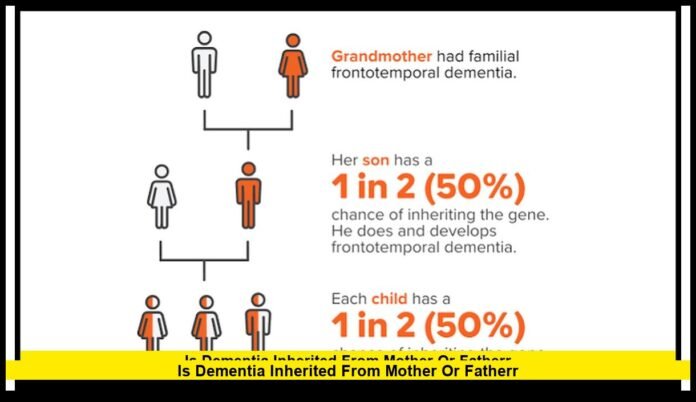
Certain disease-causing mutations in these genes follow an autosomal dominant inheritance pattern. When a parent carries one of these mutations, each biological child generally has a 50% chance of inheriting it.
This inheritance pattern is different from the more complex genetic susceptibility associated with most late-onset Alzheimer’s cases.
Families with several relatives who developed Alzheimer’s at relatively young ages may benefit from genetic counseling to determine whether testing is appropriate.
What If Your Mother Has Dementia?
Having a mother with dementia can raise questions about your own future, but it does not mean you will necessarily develop the condition.
The implications depend on the type of dementia she has, when symptoms began, and whether other relatives have experienced similar problems.
If your mother developed Alzheimer’s disease at an advanced age, her diagnosis alone does not establish that your family carries a disease-causing mutation.
However, if she developed symptoms unusually early or multiple relatives on her side of the family have similar diagnoses, a more detailed assessment may be helpful.
It is also important to establish whether your mother’s symptoms were caused by Alzheimer’s disease, vascular dementia, Lewy body dementia, or another condition. These disorders have different causes and genetic associations.
If you are concerned, consider collecting information about your mother’s diagnosis, the approximate age when symptoms began, and any other affected relatives. Sharing these details with a healthcare professional can help clarify your risk factors.
Can Dementia Be Passed Down From Your Father?
Yes. A father can pass genetic variants associated with dementia risk to his children, just as a mother can.
The inheritance pattern depends on the particular gene involved. For example, a father carrying a disease-causing mutation associated with a rare inherited form of Alzheimer’s disease may pass that mutation to a child.
Other genetic variants influence susceptibility without guaranteeing that dementia will develop.
A family history on the father’s side should not be dismissed simply because some people associate inherited dementia primarily with mothers.
When several paternal relatives have experienced dementia, especially before age 65, it is worth discussing the pattern with a healthcare professional.
It is also important to remember that shared family health conditions can influence risk. High blood pressure, diabetes, high cholesterol, and cardiovascular disease can run in families and contribute to conditions that affect brain health.
Which Types of Dementia Have a Stronger Genetic Connection?
Different forms of dementia have different relationships with inherited risk.
Alzheimer’s Disease
Alzheimer’s disease can involve inherited risk variants or, rarely, mutations that directly cause the condition. Most cases are not explained by a single disease-causing gene.
Frontotemporal Dementia
Frontotemporal dementia, or FTD, affects areas of the brain responsible for personality, behavior, language, and decision-making.
Some forms have a strong hereditary component. Mutations in genes such as C9orf72, GRN, and MAPT are associated with inherited forms of FTD.
A family history involving multiple relatives with early behavioral changes, language difficulties, or dementia may warrant genetic evaluation.
Vascular Dementia
Vascular dementia develops when reduced blood flow or damage to blood vessels in the brain contributes to cognitive impairment.
Most cases do not follow a simple inheritance pattern. Nevertheless, genetic tendencies toward high blood pressure, diabetes, and cardiovascular disease can indirectly influence a person’s risk.
Lewy Body Dementia
Lewy body dementia is associated with abnormal deposits of a protein called alpha-synuclein in the brain.
Genetic factors can influence susceptibility, but most cases do not follow a straightforward pattern in which a single inherited mutation determines whether someone develops the disease.
Understanding the specific diagnosis is essential when evaluating whether dementia may run in a family.
What Are the Early Warning Signs of Dementia?
People with a family history of dementia may pay closer attention to changes in memory and thinking. However, occasional forgetfulness does not automatically indicate a neurological disease.
Possible warning signs include:
- Repeatedly forgetting recently learned information.
- Asking the same questions multiple times.
- Getting lost in familiar places.
- Having increasing difficulty managing money, medications, or household responsibilities.
- Struggling to follow conversations or find familiar words.
- Experiencing significant changes in judgment, personality, or behavior.
- Finding familiar daily activities increasingly difficult.
Dementia generally involves cognitive changes that interfere with independent functioning and may worsen over time.
Other conditions, including medication side effects, sleep disorders, depression, vitamin deficiencies, and certain infections, can also affect memory or thinking.
Persistent or progressive symptoms should be evaluated by a healthcare professional rather than attributed automatically to family history. Sudden confusion or abrupt neurological changes require urgent medical attention.
How Can You Lower Your Risk if Dementia Runs in Your Family?
There is currently no guaranteed way to prevent every form of dementia. However, research supports taking steps to protect cardiovascular health, address modifiable risk factors, and maintain overall well-being.
1. Control Blood Pressure and Cholesterol
High blood pressure and unhealthy cholesterol levels can damage blood vessels and contribute to cardiovascular problems associated with cognitive decline.
Regular health checks, appropriate medication when prescribed, and healthy daily habits can help manage these risks.
2. Exercise Regularly
Physical activity supports circulation, cardiovascular health, mobility, and general well-being.
Walking, cycling, swimming, and other suitable activities can be incorporated into a routine according to individual abilities and medical needs.
3. Follow a Balanced Diet
A nutritious eating pattern that includes vegetables, fruits, whole grains, legumes, healthy fats, and suitable protein sources can support overall health.
No individual food, supplement, or diet has been established as a guaranteed method of preventing dementia.
4. Avoid Smoking and Limit Excessive Alcohol Consumption
Smoking increases the risk of cardiovascular disease and other conditions that can affect brain health. Excessive alcohol consumption can also damage the brain.
Avoiding tobacco and discussing alcohol use with a healthcare professional are practical ways to address preventable health risks.
5. Address Hearing and Vision Problems
Hearing loss has been associated with an increased risk of cognitive decline. Hearing assessments and appropriate treatment may help people maintain communication and daily functioning.
Vision care is also important for preserving independence and quality of life.
6. Stay Mentally and Socially Active
Reading, learning new skills, pursuing hobbies, and maintaining social relationships can support cognitive and emotional well-being.
These activities are valuable parts of a healthy lifestyle, although they cannot guarantee protection against dementia.
7. Manage Diabetes and Other Chronic Conditions
Diabetes, obesity, and cardiovascular disease can contribute to health problems associated with cognitive decline.
Regular medical care can help identify and manage these conditions before complications develop.
Should You Get Genetic Testing for Dementia?
Genetic testing is not routinely recommended for every person who has a parent with dementia. Its usefulness depends on the family history, the suspected condition, and whether a specific genetic mutation is known.
Testing for APOE ε4 may reveal information about Alzheimer’s susceptibility, but it cannot determine with certainty whether an individual will develop the disease.
Testing for a disease-causing mutation associated with a rare inherited dementia may provide more direct information, particularly when a known mutation has already been identified in the family.
Before undergoing testing, consider speaking with a genetic counselor or specialist. They can explain what a result may mean, its limitations, and its potential implications for relatives.
A negative genetic test does not eliminate all dementia risk, and a positive result does not always mean the same thing across different genes.
For families with multiple cases of early-onset dementia, genetic counseling can help clarify whether testing is appropriate and how to interpret the results.
Frequently Asked Questions About Inherited Dementia
Is dementia inherited from mother or father?
Dementia-related genetic risk can come from either biological parent. The inheritance pattern depends on the type of dementia and whether the genes involved increase susceptibility or directly cause the disease.
Does dementia skip a generation?
Dementia can appear to skip a generation because genetic susceptibility does not always result in disease. In some inherited conditions, a mutation may be passed down even when the family pattern is not immediately obvious.
If one parent has Alzheimer’s, what are my chances of developing it?
There is no single percentage that applies to everyone. Your risk depends on your parent’s diagnosis, age when symptoms began, genetic factors, age, and other health influences.
Can dementia start before age 65?
Yes. Some forms of dementia develop before age 65. Early-onset Alzheimer’s disease and frontotemporal dementia are examples. A family pattern of unusually early diagnoses may warrant specialist assessment.
Can a blood test tell me whether I will develop dementia?
No routine genetic blood test can reliably predict whether every person will develop dementia. Some tests identify genetic risk factors or specific disease-causing mutations, but results must be interpreted in the context of the individual’s family history and medical circumstances.
Does a healthy lifestyle eliminate inherited dementia risk?
No. Healthy habits cannot remove inherited genetic variants or guarantee that dementia will not develop. They can, however, support overall health and help address certain modifiable risk factors associated with cognitive decline.
Final Thoughts: Understanding Your Family History Matters
Genetics can play an important role in dementia, but an affected parent does not determine a person’s future. Most dementia cases involve a combination of age, genetic susceptibility, medical conditions, and other influences rather than a single inherited mutation.
Learning about your family’s medical history, recognizing persistent cognitive changes, managing chronic health conditions, and seeking appropriate medical advice can help you make informed decisions.
If dementia affects several relatives or symptoms began unusually early, genetic counseling may provide valuable guidance about inherited risk and available testing options.
Has dementia affected someone in your family? Share your experience or questions in the comments, and stay informed about the latest developments in dementia research and brain health.