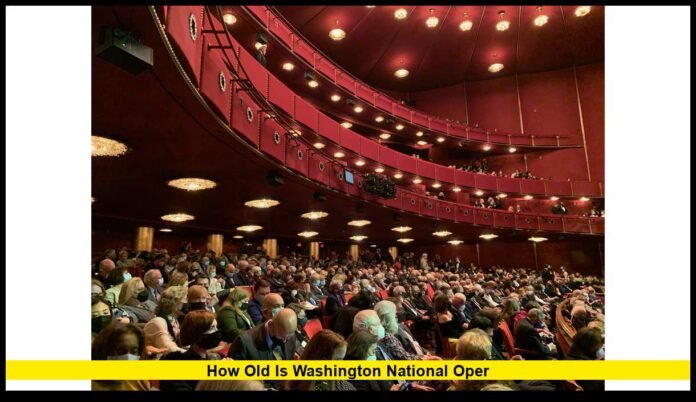

How old is Washington National Opera? In 2026, the renowned Washington National Opera (WNO) celebrates its 69th year of continuous performance and cultural influence. Since its founding in 1957, this iconic company has evolved from a small, passionate collective into a leading national institution, reflecting the artistic heartbeat of Washington, D.C. and the broader American opera landscape.
Origins of a Cultural Institution (1957–1969)
The story of the Washington National Opera begins in 1957, when conductor Day Thorpe and pianist Lila Edwards established the Opera Society of Washington. At the time, the nation’s capital lacked a permanent opera company—a surprising absence given the city’s stature as a center of politics and global diplomacy.
The founders envisioned an opera organization that would be both artistically ambitious and accessible to the public. The early productions were staged in smaller venues, including Lisner Auditorium at George Washington University. Despite modest budgets and limited resources, these early performances stood out for their musical excellence and innovative spirit.
In its first decade, the company developed a dedicated following. Local audiences embraced the Opera Society’s daring repertoire choices, which included both beloved classics and lesser-known European works. It was during this period that Washington, D.C. began to establish itself as a serious cultural hub, and the Opera Society played a key role in that transformation.
Growth and Professional Recognition (1970–1980)
The 1970s brought profound growth for the Opera Society. The opening of the John F. Kennedy Center for the Performing Arts in 1971 provided a world-class stage that transformed the company’s future. The Opera Society became one of the Kennedy Center’s resident companies, offering consistent access to a prestigious venue and broader audiences.
By 1974, the company officially changed its name to the Washington Opera, reflecting its professional maturity and expanding artistic ambitions. The rebranding coincided with the company’s first large-scale productions, featuring celebrated international singers and conductors.
Under the direction of Martin Feinstein, who took leadership in 1978, the Washington Opera expanded its repertoire and improved its financial foundation. Feinstein’s tenure marked the beginning of the company’s modern identity—balancing grand European operas with new works that reflected American stories and voices.
A National Stage and International Acclaim (1980–1999)
The 1980s and 1990s represented a period of artistic excellence and global recognition. The company staged critically acclaimed productions that solidified its status as one of the premier opera organizations in the United States.
A defining moment arrived in 1996 when world-renowned tenor Plácido Domingo became Artistic Director. His leadership elevated the company’s global profile and drew attention from major artists and audiences around the world. Domingo brought a deep understanding of both performance and management, introducing bold new productions and creating training opportunities for young talent.
Under his direction, the Washington Opera presented ambitious works such as Wagner’s Ring Cycle and Verdi’s Otello. Domingo’s era was marked by innovation, high production values, and a growing international reputation.
The company also began to emphasize education and outreach, laying the foundation for programs that would later become central to its mission.
Becoming the Washington National Opera (2000–2010)
The year 2000 was a milestone: the U.S. Congress officially approved the name Washington National Opera. This honor recognized the company’s decades of excellence and its national significance in promoting operatic art across the country.
The “National” title came at a moment of great artistic momentum. Under Domingo’s continued leadership, the WNO expanded its repertoire to include both traditional European masterpieces and new American works. The company embraced creative collaborations, contemporary themes, and large-scale productions that pushed the boundaries of opera presentation.
A high point of this era came in 2006 when WNO staged Wagner’s complete Ring Cycle—a monumental four-opera production that received international praise for its technical brilliance and artistic scope. This achievement solidified WNO’s standing as a top-tier opera company capable of rivaling the greatest houses in Europe.
Integration with the Kennedy Center and a New Direction (2011–2020)
In 2011, the Washington National Opera officially became a full affiliate of the Kennedy Center, ensuring greater administrative and financial stability. This integration strengthened the organization’s infrastructure and deepened its artistic partnerships.
Leadership passed to Francesca Zambello, an acclaimed director known for her bold vision and commitment to inclusivity. Under her artistic guidance, WNO embraced fresh storytelling perspectives, diverse casting, and new American compositions.
Zambello also launched the American Opera Initiative (AOI) in 2012, a program designed to nurture emerging U.S. composers and librettists. The initiative produced dozens of original short operas, expanding the repertoire and giving voice to contemporary American stories.
Another of Zambello’s priorities was accessibility. She spearheaded Opera in the Outfield, a beloved tradition that broadcasts live performances to thousands of spectators at Nationals Park, creating a festival-like community atmosphere.
Through these efforts, the WNO solidified its position not only as a performance institution but as a cultural educator and innovator.
Modern Innovation and Resilience (2020–2026)
The 2020s introduced new challenges and opportunities. Like many performing arts organizations, the WNO adapted to changing audience habits through digital innovation. When live performances were temporarily disrupted, the company responded with streaming productions and virtual education programs. These adaptations expanded WNO’s reach far beyond the Kennedy Center’s walls, bringing opera to homes across the nation.
Under General Director Timothy O’Leary, who continues to lead as of 2026, the company has embraced a balanced approach that honors tradition while pursuing modernization. WNO’s recent seasons have featured beloved classics such as La Traviata, Madama Butterfly, and The Marriage of Figaro, alongside new works exploring themes of identity, social change, and technology.
The Cafritz Young Artists Program, a long-standing training initiative, continues to be a cornerstone of the company’s educational mission. It provides mentorship and stage experience for emerging performers, conductors, and directors. Many alumni have gone on to achieve international acclaim, reflecting the program’s impact on the future of American opera.
Today, the Washington National Opera operates at the intersection of heritage and innovation. It remains dedicated to nurturing talent, championing new voices, and expanding the definition of opera for the 21st century.
Community Impact and Educational Legacy
Few American opera companies have demonstrated WNO’s commitment to education and outreach. Through programs like Opera in the Outfield, school partnerships, and student matinees, thousands of young people are introduced to opera each year.
The WNO’s partnerships with local schools and community organizations ensure that the art form remains inclusive and relevant. Beyond performances, the company provides behind-the-scenes learning experiences, workshops, and mentorship opportunities for aspiring musicians and stage technicians.
The company’s approach emphasizes the idea that opera is not an elitist art form, but a storytelling medium that speaks to everyone. This philosophy has helped build a diverse and loyal audience that spans generations.
How Old Is Washington National Opera in 2026?
In 2026, the Washington National Opera marks its 69th anniversary—a significant milestone for one of America’s most prestigious performing arts institutions. Founded in 1957, the company has continuously evolved, balancing the preservation of classical opera with the introduction of bold contemporary works.
Over nearly seven decades, WNO has weathered economic shifts, technological changes, and cultural transformations, always emerging stronger. Its ability to adapt without losing artistic integrity has made it a model for performing arts organizations nationwide.
Today, the company stands as a testament to the enduring power of opera to unite people through emotion, storytelling, and shared experience.
Cultural Significance and Artistic Vision for the Future
The Washington National Opera’s legacy is deeply intertwined with that of the nation’s capital. As Washington, D.C. grew into a global center of politics and culture, WNO mirrored that evolution in the arts. It became a symbol of American creativity, excellence, and resilience.
Looking toward the future, WNO’s leadership has made clear commitments to sustainability, innovation, and inclusion. Plans for upcoming seasons include new American operas that address modern social issues, collaborations with diverse artists, and continued investment in digital accessibility.
These efforts ensure that the company remains relevant to contemporary audiences while honoring its historical roots. As it approaches its 70th anniversary in 2027, the Washington National Opera continues to shape the story of American opera—one that celebrates both the past and the promise of what lies ahead.
Washington National Opera’s Enduring Influence
The longevity of the Washington National Opera reflects its unwavering commitment to excellence. Few institutions can claim such a consistent record of artistic achievement, community service, and cultural leadership.
Its productions have entertained presidents, inspired young artists, and captivated international audiences. Its educational programs have opened doors for countless aspiring musicians. And its partnerships have helped elevate Washington, D.C., as one of the world’s great cultural capitals.
At 69 years old, the WNO stands as a living institution—one that honors the grandeur of opera’s past while embracing the evolving rhythm of modern America. Its story is not just one of music, but of resilience, innovation, and the enduring belief that art can shape the soul of a nation.
For nearly 70 years, the Washington National Opera has proven that art endures, inspires, and connects. What’s your favorite WNO memory or performance? Share your thoughts below