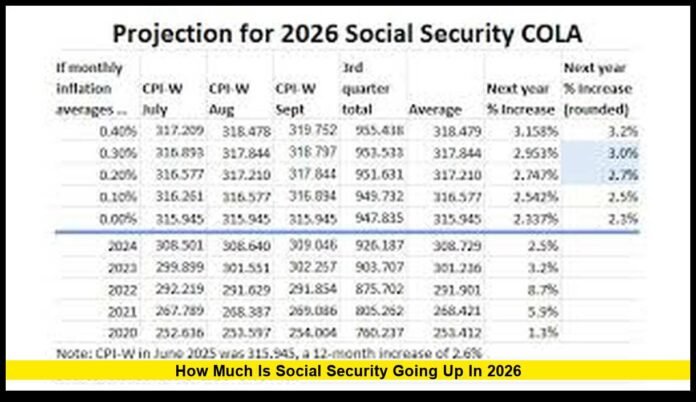

In 2026, how much is social security going up in 2026 is a question shaping financial decisions for millions of Americans. Retirees, people with disabilities, survivors, and Supplemental Security Income recipients are all affected by this year’s adjustment. The increase is official, active, and already reflected in benefit payments. While the boost brings meaningful relief, the real-world impact depends on several important factors that every beneficiary should understand.
This article explains exactly how much benefits increased, how the change affects different groups, why some people feel little difference, and what it means for household budgets in 2026.
The Official Social Security Increase for 2026
Social Security benefits rose by 2.8% in 2026 through the annual cost-of-living adjustment. This increase applies to retirement benefits, Social Security Disability Insurance, survivors benefits, and Supplemental Security Income. The adjustment began with payments issued in January 2026.
The purpose of this increase is to help benefits keep pace with inflation. As the cost of everyday items such as groceries, housing, utilities, and medical care rises, Social Security payments are adjusted automatically to preserve purchasing power.
Read also-When does the no tax on social security start
What the 2.8% Increase Means in Real Dollars
The dollar impact of the increase depends on each person’s existing benefit amount. Because benefits are individualized, there is no single increase that applies to everyone. However, averages help illustrate what most beneficiaries experienced.
The average retired worker saw their monthly benefit rise by roughly $56, bringing the typical payment to just over $2,070 per month in 2026. Married couples receiving benefits together saw a higher combined increase.
Disability beneficiaries also received higher payments. The average disability benefit rose by about $44 per month, providing additional support for individuals who rely on fixed incomes due to long-term health conditions.
Supplemental Security Income recipients received increases as well. The maximum federal payment for individuals rose by $27 per month, while eligible couples received an increase of about $41 per month. These changes help low-income seniors and disabled individuals manage essential expenses.
Why Some Beneficiaries Feel the Increase Is Smaller
Although benefits increased on paper, many recipients report that their take-home payments feel nearly unchanged. The most common reason is higher healthcare costs.
Medicare premiums increased in 2026, and for many beneficiaries, these premiums are automatically deducted from Social Security checks. As a result, a portion of the benefit increase is absorbed before the payment reaches a bank account.
For some retirees, more than a quarter of the cost-of-living increase is offset by higher Medicare Part B premiums alone. Prescription drug coverage costs also rose for many people, further reducing the impact of the benefit adjustment.
How Taxes Can Reduce the Net Increase
Federal taxes also affect how much of the increase beneficiaries actually keep.
Depending on total income, Social Security benefits may be partially taxable. Combined income includes adjusted gross income, non-taxable interest, and half of Social Security benefits. When combined income exceeds certain thresholds, up to 85% of Social Security benefits may be subject to federal income tax.
As benefit amounts rise, some beneficiaries find that a larger portion of their income becomes taxable, reducing the net effect of the increase. This is especially common for retirees who also receive pensions, investment income, or wages from part-time work.
When the Increased Payments Began
The higher benefit amounts took effect at the beginning of the year.
Most Social Security beneficiaries began receiving increased payments in January 2026, with payment dates determined by birth date. Individuals born earlier in the month generally receive payments earlier, while those born later receive payments toward the end of the month.
Supplemental Security Income recipients received their adjusted payments at the end of December 2025, since the January payment date fell on a holiday.
Higher Maximum Social Security Benefits in 2026
The annual adjustment also raised the maximum Social Security benefit for individuals who retire at full retirement age.
In 2026, the maximum monthly benefit at full retirement age increased to approximately $4,150. This maximum applies only to workers who earned at or near the taxable maximum for most of their careers and waited until full retirement age to claim benefits.
Most beneficiaries receive less than the maximum, but the increase highlights how continued earnings and delayed claiming can significantly affect lifetime benefits.
Changes for People Working While Receiving Benefits
For individuals who receive Social Security while still working and have not yet reached full retirement age, earnings limits also changed in 2026.
The annual earnings limit increased to $24,480. If earnings exceed this amount, benefits may be temporarily withheld. For individuals reaching full retirement age during 2026, a higher earnings limit applies before benefits are reduced.
Once full retirement age is reached, there is no limit on earnings, and withheld benefits are recalculated into future payments.
How the Increase Affects Retirement Planning
Understanding how much is social security going up in 2026 is essential for budgeting and long-term planning. For many households, Social Security represents a primary source of guaranteed income.
While the 2.8% increase provides added stability, rising healthcare costs and taxes continue to challenge retirees. The adjustment helps protect purchasing power, but it does not fully eliminate the impact of inflation, particularly in areas like medical care and housing.
Financial planning in retirement increasingly requires careful coordination between Social Security, savings, healthcare coverage, and tax strategy.
What Beneficiaries Should Review This Year
Beneficiaries are encouraged to review their benefit statements and monthly deposits to understand how the increase affects their personal situation. Changes in deductions, taxes, or Medicare premiums can all influence net income.
Keeping track of these adjustments helps avoid surprises and supports better financial decision-making throughout the year.
Looking Ahead Beyond 2026
Social Security adjustments are reviewed annually, and future increases will depend on inflation trends. While the 2026 increase provides steady growth, beneficiaries should remain attentive to future changes that may affect income and expenses.
Staying informed allows individuals to adapt their budgets and retirement strategies as conditions evolve.
How has the 2026 Social Security increase affected your finances? Join the conversation and stay tuned for future updates.