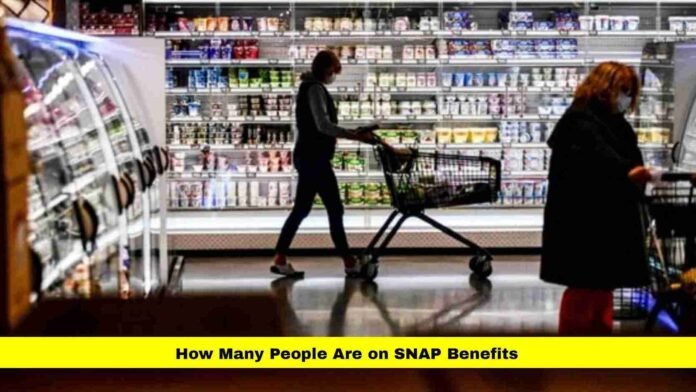

The question how many people are on SNAP benefits continues to draw national attention, especially as millions of Americans rely on the program for daily food support. As of October 2025, an estimated 41.7 million people across the United States receive monthly assistance through the Supplemental Nutrition Assistance Program (SNAP). That’s about 12% of the total U.S. population, underscoring how vital the program remains for low-income households navigating inflation and economic uncertainty.
The Current Participation Landscape
Across the United States, participation in SNAP remains high, reflecting continued economic strain, rising living costs, and the broad need for nutritional assistance. In fiscal year 2024, the program served an average of over 41 million people per month, representing millions of households who rely on SNAP to help cover a portion of their grocery expenses. Total federal spending on the program exceeded $99 billion, and the typical benefit averaged around $187 per person per month, though actual allotments vary based on income, household size, and other eligibility factors. For many families and individuals, these benefits provide a vital cushion that helps them maintain access to nutritious food even when wages or other income sources fall short.
SNAP serves a diverse group of participants. It supports working families with low wages, seniors living on fixed incomes, individuals with disabilities, and children in households facing financial uncertainty. Participation levels tend to rise when economic conditions are difficult, job markets fluctuate, or living costs increase. Because food costs form a consistent, non-negotiable part of a household budget, SNAP acts as a stabilizer during periods when other expenses—like rent, utilities, transportation, and medical care—consume more of a family’s income.
Participation rates differ significantly across states and regions. Rural and economically distressed states generally see higher percentages of their populations enrolled. In some states, SNAP participation can exceed 20% of all residents, especially where job opportunities are limited or average wages are lower than national levels. Meanwhile, states with higher average incomes and stronger employment markets may see participation rates closer to 5% or less. These differences are shaped not only by economic factors, but also by state-specific eligibility rules, outreach efforts, and application processes, which can make participation either easier or more difficult for qualified individuals.
Overall, the current SNAP participation landscape reflects both ongoing financial challenges and the essential role the program plays in supporting household stability. For many communities, SNAP is more than a temporary benefit; it is a core piece of how families stay fed, maintain their health, and weather the shifting costs of everyday life.
Key Points Summary
- Around 41.7 million Americans receive SNAP benefits each month.
- Participation equals about 12% of the U.S. population.
- Average monthly benefit: roughly $187 per person.
- Total annual program cost: about $99 billion.
- Current funding concerns threaten November 2025 payments.
State-by-State Participation Trends
SNAP participation varies significantly across the country, shaped by differences in demographics, job availability, living costs, and how each state administers the program. While SNAP is federally funded, states manage enrollment and distribution, which means local policies play a major role in determining how widely the program is utilized.
In Texas, more than 3.4 million residents rely on SNAP benefits each month. This represents about one in nine people in the state, a reflection of the large working-class population and the continued challenges many families face with rising food and housing expenses. Both urban centers and rural communities show strong reliance on assistance.
In Illinois, approximately 1.9 million people receive SNAP benefits, making up around 15% of the state’s total population. Participation remains especially high in densely populated areas such as Chicago and surrounding regions, where the cost of living has increased steadily and wages have not always kept pace.
Florida has over 2.8 million participants, illustrating the ongoing financial pressures facing both long-term residents and the state’s growing population. Many households include workers in tourism, hospitality, retail, healthcare, and service jobs where wages can fluctuate seasonally or remain below the cost of living.
California has the largest total number of SNAP recipients in the country, supporting more than 4.3 million individuals. The high cost of groceries, housing, transportation, and childcare in many California cities means that even households with employment may struggle to meet monthly expenses without supplemental food assistance.
Beyond these states, participation levels fluctuate widely across the nation. States with strong community outreach, streamlined digital applications, and accessible enrollment offices tend to have higher participation among eligible households. In contrast, states that use more complex documentation requirements or stricter verification systems often see lower enrollment rates, even when many residents qualify.
Additionally, rural states with limited economic diversification and fewer large employers often have a greater share of their population depending on SNAP, while states with higher median incomes and more job opportunities generally see smaller proportional enrollment.
Overall, the state-by-state differences reveal how both local economies and policy choices influence access to nutrition assistance. While the program is national in scale, its impact is very much shaped by the needs and conditions of each community.
Who Relies on SNAP Benefits
SNAP is used by a broad and diverse cross-section of the U.S. population. The program is not limited to any one age group or demographic. Instead, it functions as a lifeline for people at different stages of life and in a wide range of personal circumstances. In many cases, SNAP supports households that are working hard to make ends meet but struggle due to rising living costs, limited wages, or unexpected financial setbacks.
Children: Nearly 43% of SNAP participants are under the age of 18, making children the single largest group served by the program. These benefits ensure that families with young children can keep nutritious food on the table, supporting healthy growth, learning, and development. For many households, SNAP fills the gap when school meals are not available or when budgets tighten toward the end of the month.
Seniors: About 10% of recipients are age 60 or older, many of whom rely on fixed incomes from Social Security or retirement savings. As medical expenses, rent, and utility costs rise, SNAP often helps seniors afford balanced meals, maintain their health, and remain independent longer.
People with Disabilities: Roughly one in five SNAP participants lives with a disability. Some work part-time, while others are unable to work at all due to physical or cognitive limitations. SNAP provides stability for those who may face high medical or care-related expenses and reduced income.
Working Adults: A significant portion of SNAP recipients are employed. Many work in essential but lower-wage fields such as retail, healthcare support, childcare, transportation, agriculture, and food service. These sectors often involve inconsistent hours, seasonal schedules, or wages that do not fully match the cost of living. SNAP helps supplement income during months when earnings fluctuate, hours are cut, or unexpected bills arise.
Overall, SNAP plays a critical role in preventing food insecurity for millions of Americans. It ensures that households can purchase groceries at authorized stores, supermarkets, and farmers’ markets, helping individuals and families maintain access to the food they need to stay healthy and stable. The program supports not only nutrition, but also dignity, community well-being, and economic resilience.
Read Also-When Do SNAP Benefits Expire? Latest Overview & What You Should Know
What’s Driving the Current Numbers
SNAP participation remains higher than it was before the pandemic, and this trend is driven by a combination of economic and social factors that continue to shape household finances across the country. While some expected participation to drop significantly after emergency benefits ended, the reality has been more complicated, with many families still navigating financial uncertainty and rising living expenses.
Economic Uncertainty:
Even as employment levels have improved in many regions, inflation has steadily reduced the value of wages. Groceries, transportation, utilities, and everyday essentials cost more than they did just a few years ago. Many working households find that their paychecks do not stretch as far as they once did, especially when unexpected expenses arise. As a result, more families qualify for SNAP or rely on it more consistently.
Pandemic Aftereffects:
The economic disruption of the pandemic created lasting financial challenges. Job losses, reduced work hours, medical expenses, and disrupted childcare systems placed long-term strain on many households. Although emergency SNAP allotments have ended, many families have not fully recovered. Income levels may be higher than during the height of the pandemic, but costs have risen even faster, leaving many still in need of assistance.
Housing and Healthcare Costs:
The cost of living has grown sharply, especially in areas where housing shortages have pushed rent upward. For many households, rent or mortgage payments consume the largest portion of monthly income. At the same time, healthcare costs — including insurance premiums, prescriptions, and medical visits — continue to rise. When essential expenses claim most of a paycheck, there is often less left over for groceries. This pushes more households toward SNAP to help cover basic nutrition needs.
Policy Adjustments:
Both federal and state-level policy decisions influence SNAP enrollment. Changes to income guidelines, deductions, work requirements, or certification periods can make it easier or more difficult to participate. Some states have invested in simplified application systems and public outreach, which increases enrollment among eligible households. Others have added additional verification steps that can slow the process. These policy differences play a key role in determining who receives benefits and for how long.
Taken together, these factors have contributed to steady SNAP enrollment, even in a period where many expected numbers to decline. Rather than acting as a temporary emergency measure, SNAP remains a crucial support system that helps households maintain stability and access nutritious food while navigating the ongoing pressures of the economy.
SNAP and the Ongoing Government Shutdown
As of late October 2025, the federal government shutdown has created significant uncertainty for SNAP benefits that could ripple through millions of households. Should Congress fail to pass new appropriations, funding delays may prevent benefit distribution in November for over 42 million Americans who rely on monthly food assistance. In advance of this possibility, several states have issued warnings to recipients, asking them to budget carefully, exhausting available funds on their electronic benefit cards and monitoring the situation closely in case payments are delayed or suspended entirely. Without new federal funding or authorization, the federal agency responsible for SNAP may lack the necessary resources to cover the full month’s benefits, leaving households at risk of hungry gaps. The looming halt in benefits has raised alarm among the public and advocacy groups, prompting calls for immediate legislative action to protect vulnerable households and ensure continuity of food support during this critical period.
Economic and Social Impact of SNAP
The Supplemental Nutrition Assistance Program does more than help individual households purchase food—it plays a vital role in supporting communities, stabilizing local economies, and improving public health. Because SNAP benefits are spent directly in neighborhood grocery stores, supermarkets, corner markets, and farmers’ markets, the program circulates money back into the economy almost immediately.
Economic Ripple Effect:
Every SNAP dollar spent tends to move quickly through local businesses. When families use their benefits at the store, that purchase supports grocery suppliers, transportation networks, warehouse jobs, and even agricultural producers. It is estimated that every $1 in SNAP spending can generate up to $1.50 in overall economic activity, due to this chain reaction. This means that the program not only helps those who receive benefits, but also sustains jobs and revenue in communities nationwide. In many small towns and rural areas, SNAP spending is a key part of keeping local grocery stores open and accessible.
Food Security:
SNAP plays a direct role in reducing hunger. Households with children, seniors, and individuals with disabilities are among those most likely to benefit. In areas where a significant share of the population participates in SNAP, rates of food insecurity can decrease by as much as 30%. This translates into fewer skipped meals, less reliance on food pantries, and more stability for families trying to manage tight budgets. By ensuring consistent access to groceries, SNAP helps families avoid the stress and instability that come from not knowing where the next meal will come from.
Health Outcomes:
The program also has a measurable effect on health and wellness. When families can purchase enough food each month, they are better able to maintain stable nutrition. For children, consistent access to meals supports healthy development, better concentration in school, and improved long-term educational outcomes. Seniors benefit as well, as reliable nutrition helps manage chronic conditions such as diabetes and heart disease. Because poor nutrition often leads to costly medical issues, SNAP’s support can help reduce long-term healthcare expenses for individuals and the broader healthcare system.
In this way, SNAP is not only a safety net for those facing economic hardship—it is an investment in healthier families, stronger communities, and a more resilient economy.
The Changing Face of SNAP Policy
SNAP policy is continuously evolving, shaped by economic conditions, political debates, and shifting views on the role of government assistance. In recent years, much of the discussion has centered on work requirements for certain groups of recipients, particularly adults without dependents. These individuals are often referred to as “able-bodied adults” under program guidelines.
Supporters of stricter work requirements argue that tying benefits to employment encourages people to enter the workforce, increases self-sufficiency, and reduces reliance on government support. They contend that SNAP should serve as a temporary bridge during financial hardship, not a long-term income supplement. From this perspective, expanding job-related expectations can help individuals gain experience, secure better-paying jobs, and ultimately move off benefits.
However, critics raise concerns that tightening these requirements may unintentionally penalize individuals who are actively trying to work, but who face barriers such as irregular job schedules, lack of transportation, limited childcare options, or unstable employment markets. In many communities, part-time or seasonal jobs are common, and workers can find themselves losing benefits simply because their hours fluctuate from month to month. Critics argue that policies too tightly focused on work rules risk reducing food access for people who need support the most, rather than helping them toward stability.
Alongside these federal-level debates, several states are testing new pilot programs designed to take a more holistic approach. These initiatives often combine SNAP benefits with services such as:
- Nutrition education, to help families make the most of their benefits.
- Career coaching and job placement support.
- Access to training programs that align with in-demand local industries.
- Partnerships with community colleges and workforce agencies.
The goal of these state-led efforts is to address the underlying challenges that keep individuals in low-wage or unstable jobs, rather than simply requiring work participation. By integrating food assistance with skill-building and economic opportunity, these programs aim to create long-term pathways to independence while still ensuring that families have enough to eat.
In this environment, SNAP policy continues to balance two core priorities: immediate nutrition support and the broader goal of economic mobility. The direction of future policy will likely depend on how lawmakers, states, and communities weigh these priorities in the years to come.
Looking Ahead: What to Expect
As policymakers debate the future of SNAP, several trends are emerging:
- Technological modernization: States are upgrading online application systems and digital benefit cards for smoother access.
- Outreach expansion: Efforts are underway to reach under-enrolled groups like college students, veterans, and rural populations.
- Inflation monitoring: Adjustments to benefit amounts will continue to track food price changes to maintain purchasing power.
- Public health integration: More states are linking SNAP data with healthcare initiatives to improve nutrition outcomes.
These efforts aim to ensure that SNAP remains both sustainable and effective amid shifting economic conditions.
Why It Matters to Know How Many People Are on SNAP Benefits
Understanding how many people rely on SNAP benefits is more than just tracking a number—it provides insight into the broader economic and social landscape of the country. The size of the program reflects how many households are struggling to meet basic needs and how effectively the economy is supporting everyday Americans.
The number of SNAP participants offers a clear measure of how many families and individuals cannot reliably afford groceries, even when working or receiving other forms of income. It highlights where wages are not keeping up with the cost of living and where economic opportunities may be limited.
For policymakers, these participation figures are a key tool in evaluating the state of poverty and shaping future decisions. Knowing how many people depend on food assistance helps guide discussions about minimum wage laws, tax credits, job training initiatives, healthcare affordability, and housing support. It also influences decisions about how much funding is needed to maintain or improve the program.
SNAP participation levels also reveal how inflation, employment trends, and income levels intersect in real communities. When food costs rise or job markets tighten, participation tends to increase. When wages grow or living expenses stabilize, enrollment may decline. Monitoring these patterns helps identify where communities are struggling and where additional support may be necessary.
In short, understanding how many people are on SNAP provides a window into both progress and ongoing challenges. It shows the country’s efforts to address hunger and inequality, while also indicating where families continue to face financial pressure. The data is not just about numbers—it reflects the lived realities of millions of households working to stay secure, healthy, and stable.
Frequently Asked Questions
Q1. How many people are currently receiving SNAP benefits?
Approximately 41.7 million Americans are enrolled in the program as of fiscal year 2024, representing about 12% of the population.
Q2. Do SNAP benefits vary by state?
Yes, benefit amounts and eligibility guidelines can differ slightly by state, although all follow federal income and asset rules.
Q3. Can SNAP benefits be used for non-food items?
No. Benefits are limited to eligible food and grocery products; items like cleaning supplies, paper goods, and vitamins are excluded.
Disclaimer: This article provides general information on current SNAP participation and related policies. Figures and circumstances may change as government actions and economic conditions evolve.