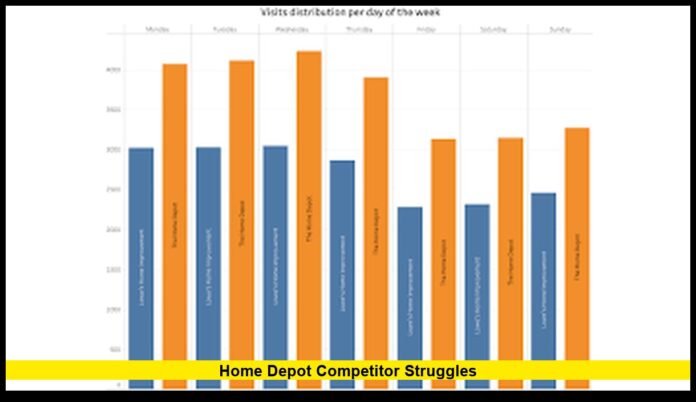

Home depot competitor struggles continue to intensify in 2026 as major home improvement retailers and smaller hardware chains across the United States deal with slowing demand, declining profits, and increasing store closures.
The latest confirmed developments show that competitors to Home Depot, including Lowe’s and independent operators, are navigating a difficult environment shaped by high interest rates, reduced housing activity, and cautious consumer spending.
Housing Slowdown Remains the Core Challenge
The U.S. housing market continues to weigh heavily on the home improvement sector. Elevated mortgage rates and limited housing inventory have slowed home sales, which directly impacts renovation demand.
As fewer people move into new homes, fewer large-scale projects begin. That shift has reduced demand for tools, materials, and home upgrades.
Retailers across the sector are reporting:
- Lower customer traffic for big-ticket purchases
- Reduced demand for renovation-related products
- Continued hesitation from homeowners to invest in upgrades
Even industry leaders are feeling the strain, signaling that the problem is widespread.
Lowe’s Navigates Uneven Growth and Profit Pressure
Lowe’s remains Home Depot’s closest rival, but its recent performance highlights the broader industry challenges.
Recent updates show:
- Comparable sales posted a modest increase of about 1%
- Profit margins declined as costs remained elevated
- The company implemented workforce reductions to control expenses
- Executives warned that market conditions remain uncertain
Despite occasional gains in daily trading, the company’s stock continues to fluctuate and sits below previous highs. This reflects investor concern about long-term growth in the home improvement sector.
Independent Hardware Stores Continue to Close
While large chains face pressure, smaller hardware stores are experiencing more severe consequences.
Recent closures across North America include long-standing, family-owned businesses that had operated for decades. Many of these stores were unable to compete with big-box retailers on pricing, inventory, and convenience.
Key factors driving closures include:
- Rising rent and operational costs
- Increased competition from national chains
- Limited access to large-scale supply networks
- Lack of succession planning for aging owners
These closures are reshaping local communities, where independent hardware stores once served as essential neighborhood hubs.
Shift From DIY Customers to Professional Buyers
Another major trend behind home depot competitor struggles is the changing customer base.
Retailers are seeing a noticeable shift:
- DIY customers are spending less on large projects
- Homeowners are delaying discretionary upgrades
- Professional contractors are becoming the primary revenue drivers
In response, companies are adjusting their strategies.
Lowe’s and Home Depot are investing more heavily in:
- Contractor loyalty programs
- Bulk pricing and supply chain improvements
- Job site delivery services
This shift toward professional customers reflects a long-term change in how revenue is generated in the industry.
Economic Conditions Continue to Weigh on the Sector
Several macroeconomic factors are contributing to ongoing difficulties:
- Inflation continues to impact material costs
- Interest rates remain high, limiting borrowing
- Consumer spending is focused more on essentials
- Housing supply remains tight in many regions
These conditions have created a challenging environment where growth is limited and competition is increasing.
Retailers expect these pressures to persist through much of 2026, with only gradual improvement possible.
Stock Performance Signals Caution
Stock market trends provide another clear indicator of industry struggles.
Recent movements show:
- Lowe’s shares remain below their 52-week peak
- Home Depot’s growth has slowed compared to previous years
- Other industrial and supply competitors have experienced declines
Even when stocks show short-term gains, volatility remains high. Investors are closely watching housing trends and consumer spending patterns before committing to long-term optimism.
Why These Struggles Are Not Temporary
The current challenges are not just short-term disruptions. Several structural changes suggest that pressure on competitors will continue:
- The housing market recovery is expected to be gradual
- Consumer behavior has shifted toward cautious spending
- Large retailers continue to dominate pricing and logistics
- Smaller competitors lack the scale to adapt quickly
These factors make it difficult for many companies to regain strong growth in the near term.
Impact on the U.S. Home Improvement Industry
The ongoing home depot competitor struggles are reshaping the entire retail landscape.
Key impacts include:
- Increased dominance of large national chains
- Decline of independent and regional hardware stores
- Greater focus on professional contractors
- Slower overall growth in the home improvement market
This transformation is changing how Americans shop for home improvement products and services.
Looking Ahead
Retailers are adapting where they can, but the path forward remains uncertain. Companies that can adjust to changing demand, invest in professional services, and manage costs effectively are more likely to stay competitive.
At the same time, smaller businesses face mounting pressure, and more closures may occur if conditions do not improve.
The home improvement sector is entering a critical phase—what’s your take on where it’s headed next? Share your thoughts below.