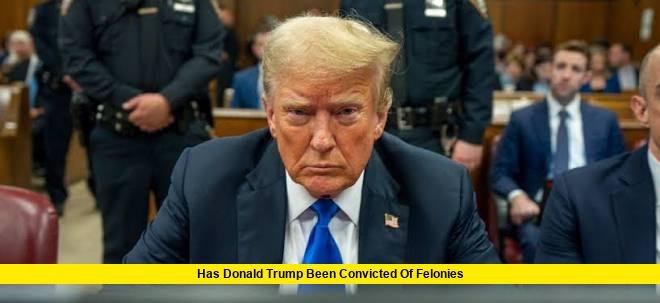

Has Donald Trump been convicted of felonies? Yes. Donald Trump was convicted of 34 felony counts of falsifying business records in New York in May 2024, making him the first former U.S. president to be convicted of felony crimes. The verdict came after a criminal trial involving payments made to adult-film actress Stormy Daniels before the 2016 presidential election.
As of the latest available legal updates, Trump’s 34 felony convictions remain in place while he continues to challenge the outcome through the courts. In the latest significant development, a federal judge rejected another attempt to move the New York criminal case into federal court in August 2026, leaving his legal fight unresolved.
The case continues to attract national attention because of its historic significance, the legal arguments surrounding presidential immunity, and the questions it raises about accountability for people who hold the country’s highest office.
Has Donald Trump Been Convicted of Felonies?
Yes. Donald Trump was found guilty of 34 felony counts of falsifying business records by a Manhattan jury on May 30, 2024.
The jury determined that Trump was guilty on all 34 counts presented at trial. The charges concerned business records connected to payments made to keep Stormy Daniels from publicly discussing an alleged sexual encounter before the 2016 election.
Prosecutors argued that the records were falsified to conceal the true nature of the payments and protect Trump’s political interests during the election campaign. Trump denied wrongdoing and maintained that the prosecution was politically motivated.
The conviction was historic because no other former or sitting U.S. president had previously been found guilty of felony crimes in a criminal trial.
What Were the 34 Felony Charges Against Donald Trump?
Donald Trump was convicted of 34 felony counts of falsifying business records in the first degree under New York law on May 30, 2024. The charges stemmed from financial records associated with reimbursements to his former attorney, Michael Cohen, who paid $130,000 to adult-film actress Stormy Daniels shortly before the 2016 presidential election.
The payment was intended to prevent Daniels from publicly discussing an alleged sexual encounter with Trump. Trump denied the alleged encounter and maintained that the criminal prosecution was politically motivated.
According to prosecutors, Cohen initially paid Daniels using his own funds and was later reimbursed through a series of payments. These reimbursements were recorded in Trump’s business records as legal expenses. Prosecutors argued that the descriptions did not accurately reflect the underlying transactions and that the records were falsified to conceal the payments’ true purpose and protect Trump’s presidential campaign.
The 34 counts represented individual business records, including invoices, ledger entries, and checks associated with the reimbursement arrangement. They were not 34 separate schemes or unrelated criminal incidents. Each count concerned a specific record that prosecutors alleged had been falsified.
Under New York law, falsifying business records becomes a felony when the conduct is committed with the intent to commit, aid, or conceal another crime. Prosecutors argued that the records were falsified as part of a broader effort to influence the 2016 election.
Trump’s defense challenged the prosecution’s interpretation of the evidence and disputed the allegations. However, after hearing testimony and reviewing the evidence presented at trial, the Manhattan jury found Trump guilty on all 34 counts.
The verdict made Trump the first former U.S. president convicted of felony crimes in a criminal trial. He subsequently received an unconditional discharge, meaning no jail time, probation, or fine was imposed.
When Was Donald Trump Convicted of Felonies?
The key dates in the case help explain how the conviction developed and why it remains relevant.
- April 2024: Trump’s criminal trial began in Manhattan.
- May 30, 2024: The jury returned guilty verdicts on all 34 felony counts.
- January 10, 2025: Trump was sentenced to an unconditional discharge, meaning he received no jail time, probation, or monetary penalty in the criminal case.
- August 2026: A federal judge again rejected Trump’s attempt to transfer the criminal case from state court to federal court.
The original jury verdict established Trump’s criminal conviction. His later legal challenges have focused on whether the verdict should remain in place, including arguments concerning presidential immunity and the handling of evidence during the trial.
What Was Donald Trump’s Sentence for the 34 Felony Convictions?
Donald Trump received an unconditional discharge on January 10, 2025, following his conviction on 34 felony counts of falsifying business records in New York. The sentence allowed the court to formally conclude the sentencing process without imposing imprisonment, probation, a fine, or other criminal penalties.
An unconditional discharge does not mean that a defendant has been acquitted or that the guilty verdict has been overturned. In Trump’s case, the Manhattan jury found him guilty on all 34 counts on May 30, 2024. The subsequent sentence left those convictions intact while allowing him to avoid additional punishment in the case.
The sentencing decision was significant because it followed the first felony conviction of a former U.S. president. Before sentencing, Trump’s legal team sought to challenge the verdict and argued that presidential immunity and other legal issues affected the proceedings. The court nevertheless proceeded with sentencing in January 2025.
It is important to distinguish between a criminal conviction and the punishment imposed. A defendant can be convicted of a felony even when the judge determines that incarceration, probation, or financial penalties are unnecessary. Therefore, Trump’s lack of jail time did not erase his criminal conviction.
The sentence also did not automatically end the legal dispute. Trump continued pursuing legal challenges aimed at overturning the verdict. The outcome of those proceedings determines whether the convictions remain legally effective or are changed by a subsequent court ruling.
For readers following the case, the key point is that Trump received no jail time, but the unconditional discharge did not itself cancel his 34 felony convictions. His sentencing outcome and his efforts to challenge the verdict are separate aspects of the case.
Has Donald Trump Appealed His Felony Convictions?
Yes. Trump has pursued multiple legal avenues to challenge the New York conviction.
His arguments have included questions about presidential immunity, the treatment of evidence involving his official presidential conduct, and whether the case should be handled in federal rather than state court.
In August 2026, a federal judge rejected Trump’s renewed attempt to transfer the criminal case to federal court. The judge concluded that the grounds presented were insufficient to justify another transfer. Trump’s legal team indicated that it intended to continue challenging the decision.
The distinction matters: a judge’s rejection of a transfer request is not the same as a final decision on every argument in Trump’s appeal of the underlying conviction.
The central question remains whether a court will ultimately overturn or otherwise change the 34-count verdict. Until an effective court ruling changes the conviction, it remains accurate to say that Trump was convicted of 34 felonies.
Does Donald Trump Still Have a Felony Conviction?
Donald Trump was convicted of 34 felony counts of falsifying business records in New York on May 30, 2024. To determine whether the conviction remains legally effective, it is important to distinguish between the original jury verdict, the sentence imposed, and any subsequent court rulings.
Trump received an unconditional discharge on January 10, 2025. This meant he did not receive jail time, probation, or a fine. However, the sentence did not erase the jury’s guilty verdict or amount to an acquittal. An unconditional discharge is a sentencing outcome, not a declaration that the defendant was innocent.
Following the verdict, Trump’s legal team pursued challenges involving presidential immunity, the handling of evidence, and attempts to move the case from New York state court to federal court. These legal arguments sought to obtain relief from the conviction, but filing an appeal or requesting a transfer does not automatically invalidate a jury’s decision.
The legal status of the conviction ultimately depends on whether a court with the appropriate authority issues a ruling that reverses or otherwise changes it. A procedural decision concerning where a case should be heard is not necessarily a ruling on the validity of the underlying conviction.
The key distinction is that a felony conviction can remain in place even when the defendant receives no jail time and continues challenging the verdict. Trump’s unconditional discharge did not, by itself, remove the 34 convictions.
For readers following this case, any claim that the conviction has been overturned should be evaluated against an actual court ruling rather than an appeal filing, a legal argument, or a request for a different court to hear the case. The latest verified judicial decisions are essential to establishing its current legal status.
Were Donald Trump’s Other Criminal Cases Also Convictions?
No. Trump’s 34 felony convictions in New York must be distinguished from the other major criminal prosecutions brought against him.
Several criminal cases involving Trump were dismissed or otherwise ended without a conviction. Those outcomes do not erase the New York verdict, but they also should not be described as additional felony convictions.
Federal Election Interference Case
Federal prosecutors charged Trump over efforts to overturn the 2020 presidential election results. The prosecution was dismissed after he returned to the presidency in 2025, following the Justice Department’s longstanding position against prosecuting a sitting president.
The dismissal did not result in a guilty verdict or a felony conviction in that case.
Federal Classified Documents Case
Trump also faced federal charges involving classified documents retained after his first presidency and alleged obstruction of efforts to recover them. The federal prosecution ended without a criminal conviction after the case was dismissed.
These charges should not be counted as additional felony convictions against Trump.
Georgia Election Interference Case
Trump faced a state prosecution in Georgia concerning alleged efforts to overturn the 2020 presidential election results. The case was dismissed in late 2025 without a criminal conviction.
Consequently, the New York hush-money case remains the central criminal case when answering whether Trump has been convicted of felonies.
Is Donald Trump the First U.S. President Convicted of a Felony?
Yes. Donald Trump became the first former U.S. president to be convicted of felony crimes when a Manhattan jury found him guilty of 34 counts of falsifying business records on May 30, 2024. The verdict established an unprecedented milestone in American legal history because no previous U.S. president had been convicted of felonies in a criminal trial.
Before Trump’s conviction, former presidents had faced various legal and political controversies, including investigations, impeachment proceedings, civil lawsuits, and allegations of misconduct. However, none had received a felony conviction through a criminal jury trial while serving as or after leaving the presidency.
Trump’s case centered on business records associated with reimbursements to his former attorney, Michael Cohen, following a $130,000 payment to adult-film actress Stormy Daniels before the 2016 presidential election. Prosecutors argued that the records had been falsified to conceal the true purpose of the payments. Trump denied wrongdoing, but the jury found him guilty on all 34 counts.
On January 10, 2025, Trump received an unconditional discharge, meaning the court imposed no jail time, probation, or fine. This sentence did not erase the guilty verdict, although Trump continued pursuing legal challenges to the conviction.
Importantly, the conviction did not automatically prevent Trump from seeking or holding the presidency. The U.S. Constitution’s basic presidential eligibility requirements do not establish a general prohibition against candidates with felony convictions. Trump won the November 2024 presidential election and returned to office on January 20, 2025.
His case continues to raise legal questions about presidential immunity, criminal accountability, and the relationship between the justice system and the presidency. The distinction between a conviction, a sentence, and the outcome of an appeal remains essential when assessing the case’s legal significance.
Does a Felony Conviction Prevent Donald Trump From Being President?
A felony conviction does not, by itself, automatically prevent someone from serving as U.S. president under the Constitution’s basic eligibility requirements.
The Constitution generally requires a president to be a natural-born U.S. citizen, at least 35 years old, and a U.S. resident for at least 14 years. It does not establish a general rule that anyone convicted of a felony is automatically barred from the presidency.
Trump’s election and return to office demonstrated that the New York conviction did not prevent him from assuming the presidency.
However, the legal consequences of a particular conviction can depend on the relevant law and circumstances. Questions concerning appeals, civil rights, and other legal consequences should be assessed separately rather than assuming that every felony conviction has the same effect.
What Is the Latest Update on Donald Trump’s Felony Conviction?
The latest significant development identified in the available reporting is the August 2026 rejection of Trump’s renewed effort to move his New York criminal case to federal court.
Trump’s legal team has argued that the Supreme Court’s presidential-immunity ruling affects how certain evidence and testimony should have been treated in the case. The renewed transfer effort was intended to pursue a legal route that could potentially lead to the conviction being vacated.
The federal judge rejected the request, concluding that the arguments did not provide a sufficient basis for transferring the case. Trump indicated that he would continue challenging the decision.
This development did not create a new conviction, impose a new sentence, or erase the existing verdict. Instead, it represented another step in the continuing legal dispute over the 2024 conviction.
Readers should distinguish between a pending appeal, a procedural ruling, and a final decision overturning a conviction. They are legally different events, and reporting about one should not be interpreted as proof that another has occurred.
FAQs
Has Donald Trump Been Convicted of Felonies?
Yes. A Manhattan jury found Donald Trump guilty of 34 felony counts of falsifying business records on May 30, 2024. The convictions remain in place based on the latest available legal updates.
How Many Felonies Was Donald Trump Convicted Of?
Trump was convicted of 34 felony counts in the New York hush-money case. Each count involved a separate business record connected to reimbursements for a $130,000 payment to Stormy Daniels.
Did Donald Trump Go to Jail for His Felony Convictions?
No. Trump received an unconditional discharge in January 2025. He was not sentenced to jail, probation, or a monetary penalty in the case.
Can Donald Trump’s Felony Convictions Be Overturned?
Yes. A court with the appropriate authority could reverse the convictions or grant other relief through the legal process. However, filing an appeal or requesting a transfer does not itself overturn a verdict.
Was Donald Trump Convicted in the Classified Documents Case?
No. The federal classified-documents prosecution ended without a criminal conviction after the case was dismissed.
Was Donald Trump Convicted in the Georgia Election Case?
No. The Georgia criminal prosecution was dismissed without a conviction in late 2025.
Does Donald Trump’s Conviction Mean He Cannot Serve as President?
No. A felony conviction does not automatically disqualify a person from the presidency under the Constitution’s basic eligibility requirements. Trump returned to office in January 2025 after winning the 2024 election.
Is Donald Trump Still Considered a Felon?
Based on the latest available legal status, Trump has a felony conviction arising from the New York case. His ongoing legal challenges do not automatically remove that conviction from the record.
Conclusion
So, has Donald Trump been convicted of felonies? Yes. Donald Trump was convicted of 34 felony counts of falsifying business records in New York in May 2024. Although he received an unconditional discharge and has continued challenging the verdict, the conviction remains in place according to the latest available updates. His other major criminal cases ended without additional felony convictions, making the New York case the key legal development behind his criminal record.
What do you think about the legal battle surrounding Donald Trump’s 34 felony convictions? Share your thoughts in the comments and stay tuned for the latest verified updates.