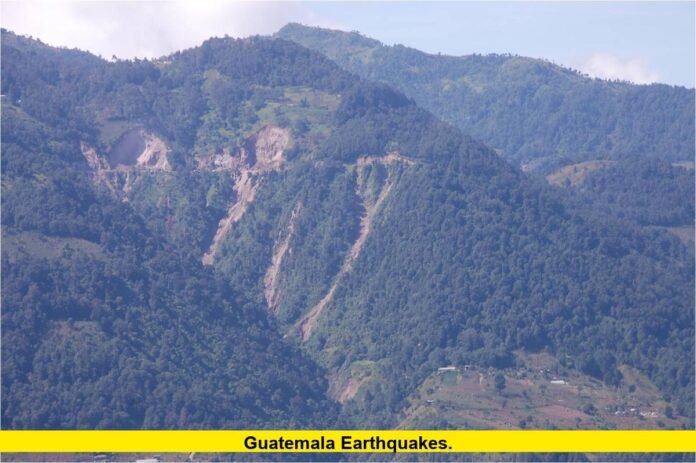

In a concerning escalation of seismic activity, Guatemala earthquakes have struck the region repeatedly over the past 24 hours, shaking homes, triggering emergency protocols, and raising fears of more aftershocks. On Tuesday, July 8, multiple strong quakes, including a magnitude 5.2 and a stronger 5.6, were recorded near the departments of Escuintla and Amatitlán, sending shockwaves across Guatemala City and neighboring areas.
Emergency alerts were issued swiftly, schools and businesses suspended operations, and thousands were evacuated from high-risk buildings. Although no fatalities have been reported so far, structural damage has been confirmed in several cities, and the risk of landslides remains high in mountainous zones.
Major Guatemala Earthquakes Recorded in July 2025
Seismologists have confirmed a cluster of tremors beginning Tuesday afternoon. The first major Guatemala earthquake occurred at approximately 3:11 PM local time, with a 5.2 magnitude epicenter near Escuintla. Not long after, a second, more powerful 5.6 magnitude quake struck the region near Amatitlán at a depth of 10 kilometers. Tremors were felt as far away as Chimaltenango, Antigua, and Guatemala City.
Residents reported intense shaking, with walls cracking, household items crashing to the floor, and panic spreading across residential zones. Authorities have since confirmed several aftershocks, the largest registering at 4.7 magnitude, continuing well into the early hours of Wednesday.
Key Details of Recent Guatemala Earthquakes
| Location | Magnitude | Time (Local) | Depth |
|---|---|---|---|
| Escuintla | 5.2 | 3:11 PM | Shallow |
| Amatitlán | 5.6 | Afternoon | 10 km |
| Chimaltenango | 4.7 | Evening | Moderate |
These tremors are the strongest Guatemala earthquakes reported so far in 2025. Geologists warn that these events could signal a larger shift along the region’s active fault lines.
Government and Emergency Services Spring Into Action
In response to the powerful Guatemala earthquakes, the government activated national emergency protocols. Temporary shelter facilities have been opened for displaced residents, while geotechnical engineers are inspecting bridges, hospitals, and schools for damage.
Public schools in the affected areas have been closed until further notice, and all mass gatherings have been suspended. Local emergency personnel are also conducting readiness drills, distributing emergency kits, and advising citizens on what to do during continued aftershocks.
The national disaster agency has urged people to:
- Stay away from cracked buildings
- Keep an emergency backpack ready
- Remain in open spaces during further tremors
- Report visible damage through emergency hotlines
Public Reactions and Community Preparedness
On social media, Guatemalans are sharing videos of shaking chandeliers, cracked roads, and scared pets. Although terrified by the suddenness of the tremors, many expressed relief that no fatalities were reported.
In rural zones, communities gathered in parks and fields, preferring open spaces to sleep through the night. Many residents are proactively assembling 72-hour emergency kits and reviewing earthquake safety tips shared by local media and community leaders.
The resilience of Guatemalans shines through in moments like this. Volunteers have stepped up, offering water, blankets, and even mobile phone charging stations to neighbors in need.
Historical Context: Guatemala’s Long Seismic History
Guatemala lies along the converging boundaries of the Caribbean and North American tectonic plates, making it one of Central America’s most earthquake-prone nations. The country’s last devastating quake occurred in 1976, with a magnitude of 7.5 that left over 20,000 dead.
While the recent Guatemala earthquakes were less intense, their shallow depths and proximity to urban centers elevated the threat of destruction. Experts emphasize that early warning systems and public awareness have improved drastically, contributing to the low casualty rate in this latest sequence.
What Comes Next: Ongoing Risk of Aftershocks
Seismologists continue to monitor the region closely. Aftershocks are likely to continue over the next few days, with potential magnitudes ranging between 3.5 and 5.0. The public is urged to remain calm but alert.
If you’re in Guatemala or have loved ones there, now is the time to stay prepared, follow local advisories, and avoid unnecessary travel in high-risk zones.
Key Points Summary:
- Multiple Guatemala earthquakes struck on July 8, including a 5.2 and 5.6 magnitude quake.
- Epicenters near Escuintla and Amatitlán led to widespread shaking across central Guatemala.
- Schools were closed, buildings evacuated, and no fatalities reported.
- Aftershocks continue as emergency services monitor the situation.
Stay safe. If you’re in an affected area, follow emergency protocols, avoid damaged buildings, and support local safety efforts. Share updates responsibly to keep your community informed and alert.