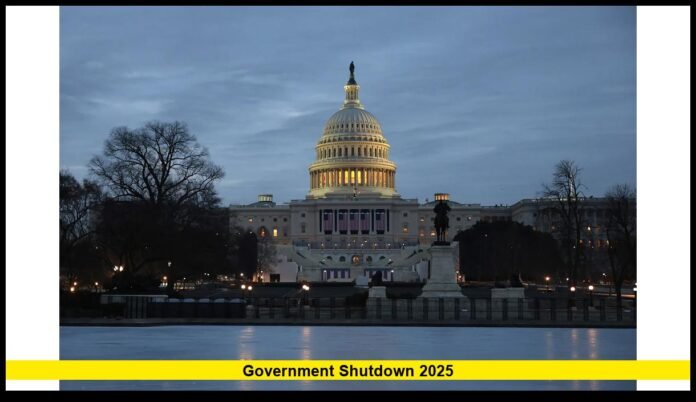

WASHINGTON, D.C. — The government shutdown 2025 crisis has officially been averted after a dramatic weekend of high-stakes negotiations on Capitol Hill. Lawmakers reached a bipartisan spending agreement late Sunday night, just hours before federal funding was set to expire. The deal ensures that all government operations will continue through early 2026, marking a crucial moment of unity in an otherwise divided political landscape.
The Senate passed the funding bill by an overwhelming 78–21 vote, and the House swiftly followed suit on Monday morning. The measure now heads to President Joe Biden, who has pledged to sign it into law immediately. The agreement prevents what would have been the first government shutdown in nearly two years, bringing relief to millions of federal workers, contractors, and citizens dependent on public programs.
How the Government Shutdown 2025 Threat Unfolded
The threat of a government shutdown 2025 loomed large for weeks as Democrats and Republicans clashed over spending priorities. At the center of the dispute were disagreements on border security, defense funding, and domestic investments in healthcare and education.
Negotiations intensified in late October after budget talks stalled in the House of Representatives. Hardline conservatives pushed for deep cuts to nondefense spending, while Democrats argued for protecting social safety nets and maintaining stable funding for infrastructure and climate programs.
As the November 9 deadline approached, federal agencies began preparing contingency plans. Workers across the country braced for potential furloughs, and markets grew uneasy amid fears of a prolonged political standoff.
The breakthrough finally came during a closed-door meeting between Senate Majority Leader Chuck Schumer and Minority Leader Mitch McConnell. Both leaders agreed to a framework that funds the government through March 1, 2026, while setting the stage for future discussions on long-term fiscal reform.
Inside the Deal: What the Funding Bill Covers
The bipartisan funding bill totals roughly $1.66 trillion, striking a balance between fiscal restraint and continued investment in essential services.
Key Funding Highlights:
- $886 billion for defense spending, maintaining parity with previous years and supporting military readiness.
- $773 billion for domestic programs, including healthcare, housing, and transportation.
- $14 billion for border security, focusing on technology upgrades, asylum processing improvements, and personnel hiring.
- $10 billion in disaster relief, directed to communities recovering from hurricanes, floods, and wildfires in 2025.
- $3 billion for cybersecurity, reflecting growing concern over digital threats and infrastructure vulnerabilities.
Notably, the agreement protects core entitlement programs such as Social Security, Medicare, and Medicaid. It also provides funding boosts for the Department of Education, Veterans Affairs, and FEMA, which had warned of resource shortages if a shutdown occurred.
Political Dynamics Behind the Compromise
While Washington is known for its partisan gridlock, the resolution of the government shutdown 2025 crisis demonstrated that cooperation is still possible when the stakes are high.
Schumer described the agreement as “a responsible compromise that keeps America running and puts the people’s interests above political games.” McConnell echoed that sentiment, calling it “a demonstration of what functional governance can look like in divided times.”
The deal came after weeks of intense back-and-forth within both chambers. Speaker Mike Johnson, under pressure from both moderates and hardliners, ultimately chose to bring the bipartisan measure to the floor, avoiding a repeat of earlier shutdowns that had damaged the Republican Party’s public image.
The White House also played a key role, with senior advisers coordinating with both parties to ensure the bill addressed top priorities without escalating partisan divisions. President Biden praised the outcome, stating, “When we put people over politics, we find solutions that strengthen our country.”
Impact on Federal Workers and Services
Had the government shutdown 2025 occurred, it would have disrupted the lives of more than 2 million federal employees and countless contractors. Essential services—such as military operations, air traffic control, and Social Security processing—would have faced delays or temporary closures.
Thanks to the new agreement, all federal agencies will continue operating without interruption. Employees can expect regular paychecks, and previously planned programs will move forward.
Here’s a snapshot of what the deal means for key areas:
- Federal Employees: No furloughs or pay delays.
- Military Personnel: Guaranteed pay continuity and funding for operations.
- National Parks: Remain open to visitors throughout the holiday season.
- Public Services: Uninterrupted access to Social Security, Medicare, and veterans’ benefits.
The Office of Management and Budget (OMB) confirmed that all shutdown contingency plans have been lifted.
Economic and Market Reactions
The swift resolution of the government shutdown 2025 threat brought immediate relief to financial markets. On Monday morning, the Dow Jones Industrial Average climbed 0.4%, and the S&P 500 opened higher, signaling investor confidence.
Economists say avoiding a shutdown helps sustain steady economic growth heading into 2026. A prolonged closure could have cost billions in lost productivity, delayed contracts, and reduced consumer confidence.
“The fact that Washington avoided another self-inflicted wound is a positive sign,” said Laura Tyson, a senior economist and former White House adviser. “Businesses and households can now plan with more certainty.”
The deal also aligns with the Federal Reserve’s cautious monetary stance. With inflation easing and interest rates stabilizing, fiscal stability from Congress supports a smoother economic trajectory into the next year.
Public Reaction: Relief and Renewed Frustration
Across the country, reactions to the averted shutdown were mixed—relief blended with frustration over the recurring nature of such crises.
A recent Reuters/Ipsos survey found that 64% of Americans were relieved the government remained open but felt that Congress should do more to prevent these last-minute battles.
Federal workers in Washington, D.C., celebrated the deal but called for structural reforms to stop shutdown threats from becoming annual events. “We’re relieved,” said one U.S. Park Service employee, “but we’re also tired of being political hostages every year.”
Public policy experts are now urging lawmakers to consider automatic funding mechanisms that would keep the government running even when budget negotiations stall.
Historical Context: Lessons From Past Shutdowns
The tension surrounding the government shutdown 2025 echoes similar crises in recent memory. The longest shutdown in U.S. history occurred between December 2018 and January 2019, lasting 35 days and costing the economy billions.
Subsequent standoffs in 2023 and 2024 further eroded public trust in Congress. Each episode underscored how partisan brinkmanship can harm not just federal workers but also small businesses, local economies, and the country’s global reputation.
By 2025, lawmakers across party lines had grown wary of repeating those mistakes. This year’s outcome shows a shift toward pragmatic governance, at least temporarily.
What Happens Next
While the immediate crisis is over, the broader fiscal debate remains unresolved. The current deal funds the government through March 1, 2026, giving Congress a few months to negotiate a long-term spending plan.
Upcoming discussions are expected to center on:
- Entitlement reform — exploring adjustments to Social Security and Medicare to ensure long-term solvency.
- Tax policy — revisiting provisions from the 2017 tax law set to expire in 2026.
- Debt management — addressing the federal debt, which now exceeds $35 trillion.
- Defense priorities — balancing military readiness with domestic investments.
Lawmakers from both parties have expressed cautious optimism about tackling these issues collaboratively. However, political analysts warn that the approaching 2026 midterm elections could complicate the atmosphere for bipartisan cooperation.
A Moment of Stability in a Divided Era
The resolution of the government shutdown 2025 crisis provides a rare moment of calm in Washington’s turbulent political environment. For many Americans, it is a reminder that compromise—though difficult—remains the foundation of effective governance.
The deal delivers short-term stability for the federal government and the economy while highlighting the need for deeper, structural reforms to prevent future shutdown threats. It also offers President Biden and congressional leaders a much-needed political win as they prepare for another challenging legislative year.
In the end, the message from voters, workers, and businesses is clear: Americans expect leadership, not chaos. Whether this spirit of cooperation endures will define the political tone of 2026.
Do you think this bipartisan deal marks a turning point for Washington—or will Congress find itself back in another budget showdown next year? Share your thoughts below.