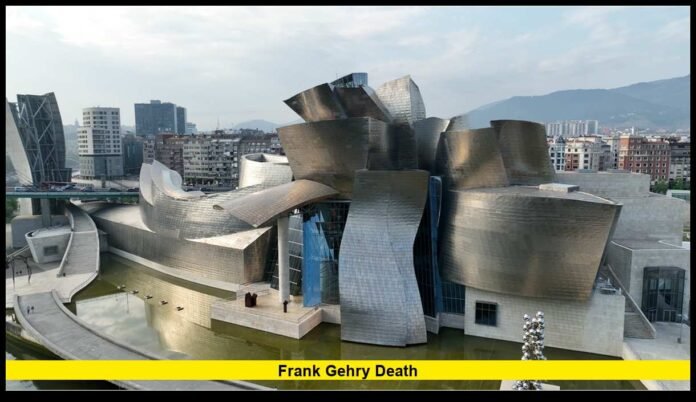

The news of frank gehry death on December 5, 2025, marked a defining moment in global architecture, design, and culture. The legendary architect, known for reshaping skylines with fluid forms and bold materials, passed away at 96 in Santa Monica, California, following a brief respiratory illness. His death generated a wave of reflection across the United States and beyond, as artists, architects, and institutions honored a man whose influence reached far outside the realm of traditional design.
Frank Gehry’s career spanned more than sixty years. His work broke conventions and introduced new ways of thinking about the built environment. To many Americans, his buildings became cultural landmarks long before they became architectural studies. His passing invites a deeper look at his life, motivations, projects, and the legacy that continues to transform cities around the world.
A Childhood Filled With Imagination
Frank Owen Goldberg, who later became Frank Gehry, was born in 1929 to a working-class family. His childhood creativity stood out early. He often built miniature cities from discarded wood, cardboard, or objects lying around his grandparents’ hardware store. Those imaginative constructions reflected his instinct for form and composition long before he studied architecture.
His family moved to Los Angeles when he was a teenager. The city’s urban energy, cultural diversity, and artistic community exposed him to ideas that later shaped his style. Southern California played a lifelong role in his growth; it served as a canvas, inspiration point, and professional home for most of his career.
Gehry studied architecture at the University of Southern California. After college, he served in the U.S. Army before continuing his education and entering the profession with a determination to build differently. Even in his earliest commissions, he showed a desire to push boundaries instead of repeating the architectural trends of the mid-century.
Career Beginnings and the Rise of a Distinctive Voice
Gehry started his own practice in the early 1960s. While many young architects at the time adhered to clean lines and minimalist boxes, he felt drawn to more expressive shapes. He experimented with materials like plywood, cardboard, chain-link fencing, and corrugated metal—items that other designers rarely used in prominent ways.
His early residential works reflected this uncommon experimentation. He built homes that challenged expectations and encouraged observers to think more deeply about structure, composition, and movement. Over time, his willingness to treat architecture as a form of artistic expression gained him attention from the design community.
The added visibility helped him secure larger commissions. Museums, concert halls, educational institutions, and cultural organizations increasingly sought his help to create buildings that stood out rather than blended in.
The Santa Monica House: A Turning Point
One project that shifted Gehry’s career was the redesign of his own home in Santa Monica. He began transforming the modest house in the late 1970s, wrapping it in unconventional materials and reshaping the structure in ways that many found bold or puzzling.
The house startled traditionalists but thrilled younger architects and artists. It introduced the public to the sculptural direction Gehry would take in future years. Many historians now consider the Santa Monica residence one of the most influential residential designs of the late 20th century.
Breakthrough into Global Recognition
By the 1980s and 1990s, Gehry’s name became synonymous with innovation. He often used computer-aided design tools that allowed him to bend forms into shapes previously considered impossible for large buildings. His style evolved into sweeping curves, metallic surfaces, and fluid geometries that made his buildings instantly identifiable.
The most widely recognized breakthrough arrived in 1997 with a project that transformed not only his career but the reputation of modern architecture worldwide.
The Guggenheim Museum Bilbao: A Global Turning Point
The Guggenheim Museum Bilbao in Spain became one of Gehry’s most celebrated accomplishments. Its titanium panels curved like waves, reflecting light differently through each hour of the day. The structure became a symbol of how architecture can influence tourism, culture, and economic growth.
The museum helped revive the city, attracting millions of visitors and earning international praise. Many analysts later referred to the building’s impact as a turning point in modern architectural design. It solidified Gehry’s place among the most influential architects in history.
Walt Disney Concert Hall: A California Icon
In 2003, Los Angeles unveiled the Walt Disney Concert Hall, another masterpiece in Gehry’s portfolio. The building’s sweeping polished steel forms became one of the most recognizable structures in the city. Inside, the hall offered acoustics considered among the finest in the world.
The project strengthened Gehry’s legacy in California and cemented his connection to the arts community. It remains one of the most beloved cultural spaces in the United States and stands as a testament to his deep understanding of design’s emotional impact.
Fondation Louis Vuitton and Later Works
Gehry’s work continued well into his later years. The 2014 Fondation Louis Vuitton in Paris demonstrated his ability to design structures that felt light despite their monumental size. Its layered glass forms evoked sails catching the wind, and the building quickly became a destination for global travelers.
Throughout the 2000s and 2010s, Gehry accepted commissions for museums, university buildings, arts centers, and urban developments. Even as he entered his 90s, he remained active in design, showing a remarkable level of energy and imagination.
A Legacy Built on Risk and Creativity
Frank Gehry gained admiration not only for what he built but for how he thought. He believed architecture should inspire emotion, curiosity, and connection. He rejected the idea that all buildings should conform to practical expectations. Instead, he argued that they could serve as public art as well as functional spaces.
His approach influenced generations of architects. Students studied his techniques. Cities sought his vision. Critics debated whether his bold designs complemented or challenged their surroundings. Despite disagreements, few denied the significance of his role in shaping modern architecture.
Frank Gehry Death: Public Reaction Across the United States
News of his death prompted a powerful response from architects, educators, museum directors, civic leaders, and followers of his work. Many Americans connected with his buildings on a personal level. They attended performances at the Walt Disney Concert Hall, toured museums he designed, or viewed his public installations in numerous cities.
Statements honoring him highlighted several key themes:
- His fearless creativity
- His ability to fuse engineering and art
- His influence on city development
- His mentorship of younger architects
- His contributions to cultural identity in the United States
Communities near his most famous structures reflected on how his work shaped their local environment. His buildings became more than architectural achievements—they became emotional landmarks.
Personal Character and Life Beyond Architecture
Outside his professional accomplishments, Gehry was known for his candid personality, dry humor, and loyalty to family and friends. He rarely softened his views on design. He defended his choices with conviction, which sometimes surprised audiences but also earned him respect for honesty.
Gehry married twice and had several children and grandchildren. His family remained central to his life, even as he traveled the world for projects and collaborations. Those who worked with him described him as demanding but inspiring, always pushing for originality.
He spoke often about his upbringing, his Jewish heritage, and the importance of creative freedom. These personal influences shaped his work more deeply than many realized.
How His Work Redefined Urban Identity
Gehry’s influence extended beyond individual buildings. His approach changed the way cities thought about architecture as a cultural investment. Leaders saw how a distinct building could transform tourism, spark business growth, and attract creative industries.
This effect can be seen in:
- Bilbao, Spain
- Los Angeles, California
- Paris, France
- Prague, Czech Republic
- Seattle, Washington
These cities, and many others, built stronger global identities through his contributions.
Innovation Through Technology
Gehry adopted digital design tools long before they became industry standards. His firm developed advanced modeling software capable of translating sculptural forms into precise construction instructions. This revolutionized the collaboration between architects, engineers, and fabricators.
Today, countless architectural studios rely on tools that trace their roots to Gehry’s technological advancements.
His Work in the Cultural Imagination
Even people who never studied architecture can identify a Gehry building. His designs appeared in movies, documentaries, photography books, and public art discussions. His structures became gestural landmarks that captured the imagination of people around the world.
Many Americans experienced his work not through textbooks, but by simply walking past one of his buildings or attending an event inside one.
What His Passing Means for the Future of Architecture
The loss of Frank Gehry represents the end of an era defined by bold experimentation. His influence will continue through his built works, his firm, and the many architects he inspired.
Universities and museums will continue to teach his methods. His designs will remain subjects of study for decades. Most importantly, his philosophy—creativity without apology—will guide future generations who want to see architecture evolve beyond conventional expectations.
The Legacy That Lives On
Frank Gehry leaves behind a body of work that redefined what buildings can express. His structures stand as symbols of imagination, courage, and artistic freedom. As cities continue to grow and design trends shift, his contributions remain a reminder that architecture can be both functional and deeply emotional.
His death closes one chapter but opens another, as people revisit his achievements and continue exploring the impact of his ideas.
Frank Gehry’s life reshaped the landscape of modern design, and his influence will continue guiding architects and inspiring communities long after his passing.