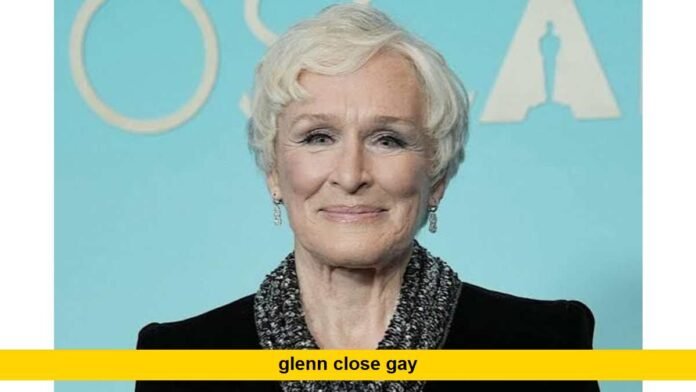

The search for glenn close gay reflects growing curiosity about the acclaimed actress’s personal identity, public statements, and connection with LGBTQ+ audiences. Glenn Close has spent decades building a reputation as one of Hollywood’s most respected performers, appearing in films, television productions, and theater roles that have challenged conventional expectations. Although she has portrayed characters connected to gender identity and LGBTQ+ themes, Close has not publicly identified herself as gay.
Her long career, distinctive performances, and support for LGBTQ+ representation have helped make her a familiar and appreciated figure among many members of the community. Understanding the interest surrounding Close requires separating her professional roles, public advocacy, and personal identity.
A Red-Carpet Comment Brings Renewed Attention
Close recently drew attention for her lighthearted comments about the way LGBTQ+ fans celebrate her most theatrical characters. At the Governors Awards in Hollywood, where she received an honorary Academy Award, she joked that creating characters for gay Halloween parades had become a fitting description of her career.
The remark reflected the affection she has for fans who transform her characters into elaborate costumes and drag-inspired performances. Close particularly acknowledged the theatrical appeal of characters whose identities are built around extravagant styling, dramatic expressions, and distinctive visual details.
She mentioned characters such as Cruella de Vil and Norma Desmond as examples of roles that become especially recognizable when recreated through costume and performance. Her comments were playful and appreciative, highlighting a relationship between an actress and an audience that has developed over many years.
Why Her Characters Resonate With LGBTQ+ Culture
Certain Glenn Close performances have become recognizable within LGBTQ+ pop culture because of their dramatic intensity and visual style. Characters that feature powerful personalities, memorable dialogue, extravagant costumes, or exaggerated emotional expressions often become popular subjects for drag performers and Halloween celebrations.
Cruella de Vil, for example, is known for her striking black-and-white appearance, sharp attitude, and theatrical personality. Norma Desmond represents another memorable character whose dramatic presence and distinctive style have made her a favorite for impersonations.
These performances allow fans to interpret and recreate characters in their own way. For many, the appeal is not simply copying an actress’s appearance but celebrating confidence, creativity, humor, and theatrical transformation.
Close has appeared to appreciate this fan culture rather than distance herself from it, making her comments particularly meaningful to audiences who have followed her work.
Her Work Has Explored Identity and Social Expectations
Close’s filmography includes performances that examine how people navigate social pressures, personal identity, and the expectations placed upon them. One of the most discussed examples is Albert Nobbs, in which she portrays a character living as a man in order to survive in a society where women have few opportunities for independence.
The story focuses on the difficulties of maintaining a concealed identity while attempting to create a secure life. It also examines loneliness, social restrictions, and the consequences of living under circumstances that limit personal freedom.
Another significant production was Serving in Silence: The Margarethe Cammermeyer Story. The television film centers on the experiences of a military officer affected by policies that discriminated against lesbian service members. The story brought attention to institutional barriers and the personal cost of being forced to conceal one’s identity.
These projects demonstrate Close’s willingness to take on material involving complicated social issues. They also explain why her career has attracted interest from viewers who value stories about representation and equality.
A Career Defined by Dramatic Transformations
Glenn Close’s reputation extends far beyond LGBTQ+-related performances. She has played a wide variety of characters, from psychologically complex figures to villains, historical personalities, and emotionally vulnerable women.
Her film credits include Fatal Attraction, Dangerous Liaisons, The World According to Garp, The Wife, and the live-action 101 Dalmatians movies. Her television work, including the acclaimed series Damages, further demonstrated her ability to sustain powerful performances over multiple episodes and seasons.
Close’s success comes partly from her willingness to make characters distinctive. Whether through physical appearance, voice, posture, facial expressions, or emotional intensity, she often creates performances that audiences remember long after a film ends.
That approach has helped make her characters particularly appealing to fans interested in costume, performance, impersonation, and theatrical expression.
What Is Known About Glenn Close’s Personal Life?
Close has maintained a distinction between her professional work and private identity. Public information about her personal life includes her relationships, marriages, and family, including her daughter, actress Annie Starke.
Although her personal history has been discussed in interviews and entertainment coverage, Close has not publicly identified herself as gay. The search interest surrounding her sexuality should not be treated as confirmation of an identity she has not publicly claimed.
Her support for LGBTQ+ audiences, her participation in productions involving LGBTQ+ themes, and her appreciation for drag and costume culture are all part of her public profile. They should be understood independently of assumptions about her private sexuality.
Glenn Close Receives an Honorary Oscar
Close’s recent career milestone has also brought renewed attention to her work. She received an honorary Academy Award at the 2026 Governors Awards, recognizing her lasting contributions to the film industry after a career featuring numerous competitive Oscar nominations.
The recognition marked an important moment for an actress whose performances have influenced generations of moviegoers. Close has continued taking on new projects, demonstrating that her career remains active and that she is still interested in challenging roles.
Her upcoming appearance in The Hunger Games: Sunrise on the Reaping is another example of her continued involvement in major entertainment projects. Her character, Drusilla Sickle, has a highly distinctive visual style, and Close has discussed the creative process behind the character’s appearance.
The role is also likely to generate additional discussion among fans who enjoy elaborate costumes, dramatic transformations, and memorable character designs.
Frequently Asked Questions
Is Glenn Close gay?
Glenn Close has not publicly identified herself as gay. Her support for LGBTQ+ audiences and her performances in productions involving LGBTQ+ themes do not establish her personal sexual orientation.
Why do LGBTQ+ fans admire Glenn Close?
Many fans appreciate her theatrical performances, memorable characters, willingness to explore complicated social issues, and positive attitude toward fans who recreate her characters through drag and costume.
Has Glenn Close played LGBTQ+-related roles?
Yes. Her work includes Serving in Silence: The Margarethe Cammermeyer Story, which explores discrimination against lesbian military personnel, and Albert Nobbs, which examines gender identity and social restrictions.
What did Glenn Close recently say about gay Halloween parades?
Close joked that her career has been about creating characters for gay Halloween parades. She was referring to the popularity of her theatrical characters among fans who recreate them through costumes and drag performances.
What is Glenn Close doing now?
Close continues to work in film and television. Her recent projects include The Hunger Games: Sunrise on the Reaping, in which she plays Drusilla Sickle, and she recently received an honorary Academy Award recognizing her contributions to cinema.
Conclusion
Glenn Close’s connection with LGBTQ+ audiences is rooted in her memorable performances, theatrical characters, and appreciation for fans who celebrate her work through creative expression. While questions about glenn close gay continue to attract online attention, she has not publicly identified herself as gay. Her lasting influence comes from her extraordinary acting career, her willingness to explore complex stories, and her ability to create characters that continue to inspire audiences well beyond the screen.