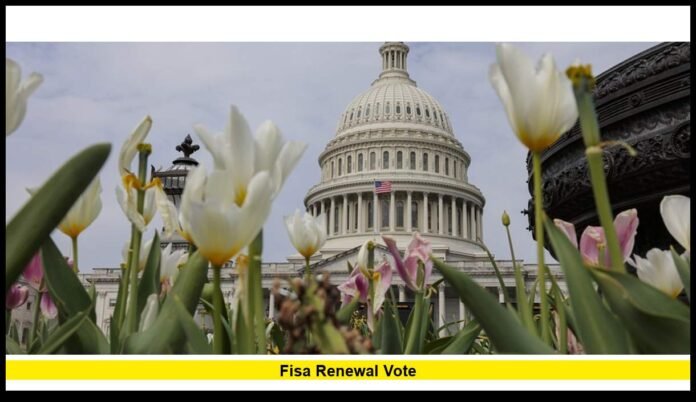

The FISA renewal vote dominated headlines on April 17, 2026, as Congress approved a short-term extension of Section 702 just days before its scheduled expiration, avoiding an immediate lapse but leaving long-term uncertainty unresolved.
Congress Moves at the Last Minute
Lawmakers acted under intense pressure as the April 20 deadline approached. After multiple failed attempts to secure a long-term agreement, the House of Representatives passed a temporary extension pushing the expiration to April 30, 2026.
The Senate quickly followed, approving the same measure and clearing it for the president’s signature. The move ensures that surveillance operations under Section 702 continue without interruption—for now.
However, the narrow extension highlights deep divisions within Congress that remain far from settled.
What Section 702 Allows
Section 702 of the Foreign Intelligence Surveillance Act gives U.S. intelligence agencies authority to collect communications of foreign individuals located outside the United States.
These operations rely heavily on data from U.S.-based technology platforms. While the law targets non-U.S. persons, it can incidentally capture communications involving Americans.
That overlap has made Section 702 one of the most debated surveillance tools in modern U.S. policy.
Why Officials Support It
National security leaders continue to defend the program, pointing to its role in:
- Disrupting terrorist plots
- Tracking foreign intelligence threats
- Supporting military and cybersecurity operations
They argue that losing access—even temporarily—could weaken the country’s intelligence capabilities.
Why Critics Oppose It
Civil liberties advocates and some lawmakers raise serious concerns, including:
- Warrantless searches involving Americans
- Broad data collection powers
- Past compliance and misuse issues
For these critics, any renewal must include stricter safeguards.
Why the FISA Renewal Vote Stalled
The failure to pass a long-term extension during the FISA renewal vote reflects a rare and complex split across party lines.
Key Points of Conflict
1. Internal Divisions in the House
A group of lawmakers refused to support renewal without stronger privacy protections, blocking consensus.
2. Disagreement Over Warrants
One of the biggest sticking points involves whether agencies should need a warrant to access communications involving U.S. citizens.
3. Competing Proposals Fell Short
Congress considered several options:
- A multi-year reauthorization
- A shorter clean extension
- Reform-focused legislation
None gained enough support to pass both chambers.
4. Deadline Pressure Forced Action
With time running out, leaders opted for a temporary fix instead of risking expiration.
Timeline of Events Leading to the Vote
- April 2024: Section 702 extended for two years
- Early April 2026: Urgent calls for renewal intensify
- Mid-April 2026: Multiple proposals fail in the House
- April 17, 2026: Short-term extension passes both chambers
This sequence shows how quickly negotiations broke down—and how close the law came to expiring.
What Happens Before April 30
The new deadline creates a narrow window for lawmakers to revisit negotiations.
Several major questions remain unresolved:
- Should warrants be required for U.S.-related data searches?
- What new oversight mechanisms should be added?
- How long should the next extension last?
These issues will shape the next version of the legislation.
If Congress fails again, it could face another last-minute scramble—or allow the authority to lapse.
Political Fallout and Reactions
The FISA renewal vote has triggered strong reactions from both sides of the aisle.
Supporters emphasize:
- The urgency of maintaining intelligence tools
- The risks of disruption to national security
- The importance of continuity for ongoing operations
Opponents highlight:
- The need for stronger constitutional protections
- Concerns over surveillance scope
- Lack of sufficient reforms in current proposals
This unusual coalition of critics includes lawmakers from both major parties, underscoring how the issue cuts across traditional political lines.
Why This Matters Nationwide
Although Section 702 focuses on foreign intelligence, its impact extends to everyday Americans.
The outcome of the FISA renewal vote could influence:
- How personal data is accessed and stored
- The legal standards for government surveillance
- Future debates around digital privacy and civil liberties
As technology evolves, these questions are becoming more urgent—and more complex.
A Narrow Path Forward
Congress now faces a tight timeline and high stakes. Lawmakers must find common ground between national security needs and privacy protections before the new deadline arrives.
The next phase of negotiations will determine whether a long-term solution is possible—or whether temporary extensions will continue to define the future of U.S. surveillance policy.
Where do you stand on the FISA renewal vote—should lawmakers focus on security, privacy, or both equally? Share your thoughts below.