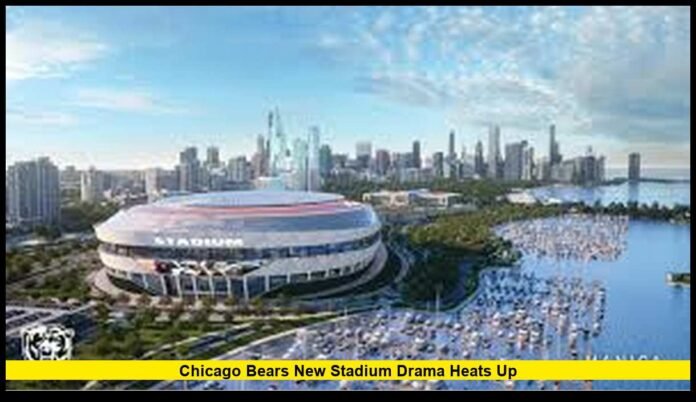

The race to secure the chicago bears new stadium has reached a critical point in 2026, as two states—Illinois and Indiana—continue to compete for one of the most valuable franchises in the NFL. What was once a long-running discussion has now evolved into a fast-moving, high-pressure decision process that could reshape the future of professional football in the Midwest.
With a clear decision timeline emerging and major political and financial interests at play, the coming months are expected to deliver one of the most significant developments in modern franchise history.
If you’re following where the Bears will call home next and what it means for fans, now is the moment to pay attention as events accelerate.
Momentum Builds Toward a Final Decision
After years of uncertainty, the Bears organization has shifted into a more decisive phase. Team leadership is actively evaluating final proposals and working toward a firm decision expected in 2026.
This marks a turning point. Instead of exploring multiple possibilities, the process has narrowed into a focused comparison between two viable paths. Internal planning, financial modeling, and coordination with league officials have all intensified as the timeline tightens.
The NFL’s role has also become more visible. League leadership is expected to review the Bears’ stadium plans as part of a formal approval process. That step is essential, as any new stadium project—especially one involving potential relocation—must align with league-wide priorities.
Arlington Heights: A Vision Years in the Making
Arlington Heights has long been considered the frontrunner, largely because the Bears already control the land.
The 326-acre property, once home to a historic horse racing venue, offers a rare opportunity to build a stadium and surrounding district from the ground up. Few NFL teams have access to this scale of land within a major metropolitan area, making it a uniquely attractive option.
Plans for the site go far beyond a traditional stadium. The concept includes:
- A fully enclosed stadium designed for year-round use
- A large entertainment district with restaurants, retail, and hotels
- Residential developments that could create a live-work-play environment
- Open spaces and infrastructure improvements to support long-term growth
This approach reflects a broader trend across professional sports, where teams are investing in mixed-use developments that generate revenue beyond game days.
However, despite these advantages, the Arlington Heights plan still faces a significant challenge: financial structure. Local and state officials are working through property tax considerations that will determine the long-term cost of the project.
Without a clear and sustainable tax framework, the Bears have remained cautious about committing fully to the site.
Indiana’s Aggressive Play Changes the Landscape
While Arlington Heights has been in discussion for years, Indiana has quickly emerged as a serious competitor.
State leaders moved swiftly in 2026 to position northwest Indiana as a viable destination for the Bears. The proposed site near Hammond offers proximity to Chicago while introducing a different financial and political environment.
Indiana’s approach has focused on speed and clarity. Lawmakers have already advanced legislation aimed at supporting a stadium project, creating a more predictable path forward.
Key elements of the Indiana proposal include:
- A structured financing plan that blends public and private investment
- Infrastructure support designed to handle increased traffic and tourism
- Strategic location near major highways and population centers
- A streamlined approval process intended to reduce delays
This level of coordination has put pressure on Illinois to match or exceed the incentives being offered.
The emergence of Indiana as a legitimate option has transformed what once seemed like a local development issue into a regional competition.
Why the Bears Are Pushing for a New Stadium
The push for a new stadium is rooted in both financial realities and evolving expectations across the NFL.
Soldier Field, while historic and deeply tied to the Bears’ identity, no longer meets the demands of a modern sports venue. Compared to newer stadiums across the league, it falls short in several areas that directly impact revenue and fan experience.
Challenges with the current stadium include:
- Limited seating capacity compared to newer NFL facilities
- Fewer premium seating options such as suites and club sections
- Lack of a roof, which restricts event scheduling
- Structural limitations that prevent large-scale expansion
Modern NFL stadiums are designed to serve as year-round destinations. They host concerts, conventions, and major sporting events beyond football, creating multiple revenue streams.
A new facility would allow the Bears to compete at that level while also enhancing the game-day experience.
A Domed Stadium Is Central to the Plan
One of the most important features under consideration is a domed or fixed-roof stadium.
This design would fundamentally change how the venue is used. Instead of being limited by weather conditions, the stadium could host events throughout the year, including during Chicago’s harsh winters.
Benefits of a domed stadium include:
- Ability to host high-profile events like the Super Bowl
- Increased scheduling flexibility for concerts and conventions
- Improved comfort for fans attending late-season games
- Greater overall revenue potential
This shift aligns with broader league trends, as more teams invest in enclosed or retractable-roof stadiums to maximize usage.
Economic Stakes Are Massive
The financial impact of the stadium decision extends far beyond the team itself.
Both Illinois and Indiana recognize that landing the project would bring substantial economic benefits. Construction alone would generate thousands of jobs, while long-term operations would support employment across multiple industries.
Potential economic outcomes include:
- Billions of dollars in construction and development activity
- Growth in tourism tied to major events
- Increased tax revenue from surrounding businesses
- Expansion of local infrastructure and public services
For Arlington Heights, the development could redefine the suburb’s economic profile. For northwest Indiana, it could represent a transformative investment that elevates the region’s national visibility.
Political Pressure Reaches New Levels
As the decision approaches, political leaders on both sides are intensifying their efforts.
In Illinois, lawmakers are working to finalize policies that would make the Arlington Heights project financially viable. These discussions involve balancing public investment with taxpayer concerns, a process that has proven complex.
In Indiana, officials have taken a more direct approach by advancing supportive legislation quickly. This has allowed the state to present a unified front and position itself as ready for immediate action.
The competition between the two states has created urgency, pushing negotiations forward at a faster pace than previously expected.
Timeline Points Toward a 2030 Opening
While the final site has not yet been selected, the Bears are targeting a stadium opening around 2030.
This timeline reflects the scale of the project. Once a decision is made, several phases must follow:
- Detailed architectural design
- Environmental and regulatory approvals
- Infrastructure planning
- Multi-year construction
Large stadium projects typically require several years to complete, especially when combined with surrounding developments.
Setting a target date helps align planning efforts and keeps the process on track.
What This Means for Fans
For fans, the stadium decision is about more than location—it’s about the future of the game-day experience.
A new stadium would bring:
- Improved seating and sightlines
- Expanded food and beverage options
- Enhanced technology and connectivity
- Greater comfort in all weather conditions
At the same time, the possibility of moving outside Illinois raises emotional questions about the team’s identity.
The Bears have been deeply connected to Chicago for generations. Any shift in location, even a relatively short distance, would mark a historic change.
The Role of the NFL in the Final Decision
The NFL’s approval process remains a key step.
League owners will evaluate the proposed stadium plan to ensure it meets financial, operational, and market standards. This review is especially important if the project involves crossing state lines.
Approval requires a majority vote among team owners, making league support essential.
This layer of oversight ensures that the final decision aligns with the broader interests of the NFL.
A Defining Moment for the Franchise
The decision surrounding the chicago bears new stadium represents a defining chapter in the team’s history.
For decades, Soldier Field has been a symbol of Bears football. But as the league evolves, so too must the facilities that support it.
The outcome of this process will shape how the franchise operates, how fans experience games, and how the team competes financially with others across the league.
Few decisions carry this level of long-term impact.
What Happens Next
As 2026 progresses, several key developments are expected to unfold:
- Final policy decisions in Illinois
- Continued advancement of Indiana’s proposal
- Formal presentations to NFL leadership
- A definitive announcement from the Bears organization
Each step will bring the process closer to resolution.
For now, both states remain firmly in contention, and the outcome is still undecided.
Final Outlook
The path forward is becoming clearer, but the final answer has yet to arrive.
With competing proposals, rising political pressure, and a firm timeline in place, the Bears are approaching one of the most important decisions in franchise history.
The result will not only determine where the team plays but also influence the economic and cultural landscape of the region for years to come.
Do you think the Bears should stay rooted in Illinois or take a bold step into Indiana? Share your take and keep checking back as this story continues to develop.