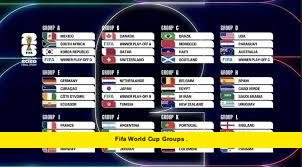

The fifa world cup groups for the 2026 tournament are now officially set, completing a months-long qualification journey and defining the path for 48 national teams preparing to compete across North America. With every slot filled and all playoff outcomes decided, the competition now shifts from qualification drama to tactical preparation and anticipation.
Set to unfold across the United States, Canada, and Mexico from June 11 to July 19, 2026, the tournament introduces a format that reshapes the opening stage of the world’s biggest sporting event. The group phase is no longer a simple filter—it is now one of the most decisive and unpredictable stages in the entire competition.
A Tournament Redefined by Scale and Structure
The 2026 edition marks a major shift in international football. A total of 48 teams have been divided into 12 groups of four, creating a broader and more inclusive competition.
Each nation will play three matches in the group stage. The top two teams from each group will automatically advance, while the eight best third-place finishers will also move into the knockout rounds. This creates a 32-team elimination phase, doubling the intensity once the group stage concludes.
This format increases the total number of matches and places greater emphasis on goal margins, discipline, and consistency across all three fixtures.
Full Group Stage Landscape Takes Shape
With qualification now complete, all groups from A through L feature confirmed teams. The final lineup includes a mix of global powerhouses, regional champions, and emerging nations making their mark on the world stage.
Traditional contenders such as Brazil, France, Argentina, Germany, and Spain headline the field, while teams like Morocco, Senegal, and Japan bring momentum from recent international performances.
Several nations are entering the tournament with renewed confidence after strong qualifying campaigns, while others arrive determined to reassert their status among football’s elite.
Host Nations Step Into the Spotlight
The United States, Canada, and Mexico will each play a central role—not only as hosts but also as competitors under intense scrutiny.
The United States is expected to draw massive crowds across major stadiums, with matches scheduled in cities known for their growing soccer culture. Canada enters with a young and evolving squad, while Mexico carries the expectations of a nation deeply rooted in football tradition.
Home advantage can be powerful, but it also brings pressure. Early results in the group stage could shape the narrative for all three host nations.
Competitive Balance Across All Groups
The draw has created a balanced distribution of talent across the tournament. While some groups feature clear favorites, others are far more unpredictable.
There are groups where two or even three teams appear evenly matched, setting the stage for tight contests where a single goal or moment of brilliance could decide advancement.
This balance ensures that no team can afford complacency. Even historically dominant nations must navigate carefully through opponents capable of delivering disciplined and organized performances.
Emerging Nations Ready to Make an Impact
One of the defining features of this tournament is the increased representation from across the football world.
Nations from Africa, Asia, and smaller confederations have secured places and arrive with growing confidence. Teams such as Senegal and Morocco have already demonstrated their ability to challenge elite opponents, while others are eager to seize the opportunity provided by a larger field.
The group stage offers these teams a realistic pathway to the knockout rounds, and early performances could reshape global perceptions of football power.
Tactical Shifts Driven by the New Format
The structure of the competition introduces new strategic considerations for coaches and players.
Managing Risk and Reward
With three matches determining progression, teams must balance attacking ambition with defensive discipline. A heavy defeat could significantly damage a team’s chances, even if they recover in later games.
Monitoring Other Groups
Because third-place teams can advance, results across all groups become interconnected. Teams must not only focus on their own matches but also stay aware of standings elsewhere.
Squad Rotation and Fitness
The travel demands of a tournament spread across three countries will test squad depth. Coaches must rotate players effectively to maintain performance levels throughout the group stage.
Key Fixtures Expected to Shape the Tournament
Several early matchups are already drawing attention due to their potential impact on group standings.
Clashes between established European and South American teams are expected to deliver high-level competition, while encounters involving African and Asian sides could produce fast-paced and tactically diverse games.
These matches are likely to influence not only which teams advance but also how the knockout bracket is formed.
North America Prepares for a Global Audience
The 2026 tournament will span 16 host cities, making it one of the most geographically diverse World Cups ever staged.
Iconic venues and modern stadiums will host matches across the continent, with the final scheduled to take place at MetLife Stadium in New Jersey. Mexico City will host the opening match, continuing its historic connection to the tournament.
This wide distribution allows millions of fans to experience the event in person while also highlighting the sport’s rapid growth in North America.
Favorites, Challengers, and Dark Horses
Leading Contenders
Teams with strong international pedigrees remain at the forefront. Brazil, France, and Argentina are expected to enter the tournament as leading contenders, supported by deep talent pools and recent success.
Strong Challengers
Countries like England, Portugal, and the Netherlands bring balanced squads capable of competing at the highest level. Their performances in the group stage will set the tone for potential deep runs.
Potential Surprise Teams
Underdog nations often thrive in World Cup settings, and the 2026 format increases the likelihood of unexpected breakthroughs. Teams that adapt quickly to the structure could emerge as standout performers.
Why the Group Stage Carries More Weight Than Ever
The fifa world cup groups phase is now central to the tournament’s identity rather than just a preliminary step.
With more teams advancing but greater competition across the board, every match carries significance. A draw, a late goal, or even disciplinary records could determine whether a team progresses or exits early.
This dynamic ensures that fans will see meaningful, high-stakes football from the very first matchday.
Knockout Stage Awaits the Best 32 Teams
After the group stage concludes, 32 teams will advance to the knockout rounds. From that point forward, the tournament follows a single-elimination format.
Each round increases the pressure, with no margin for error. Teams must maintain consistency and composure as they move closer to the final.
The expanded knockout bracket adds more opportunities for dramatic moments and historic achievements.
Anticipation Builds Ahead of Kickoff
With all groups confirmed, attention now turns to preparation. National teams are evaluating player form, finalizing rosters, and analyzing opponents in detail.
Fans around the world are beginning to plan their viewing schedules and travel arrangements, while excitement continues to grow across host cities.
The 2026 World Cup is positioned to deliver a unique blend of tradition and innovation, combining established rivalries with new opportunities for emerging nations.
The global stage is set, and every group carries its own narrative—now it’s only a matter of time before the first whistle signals the start of a tournament that could redefine international football.