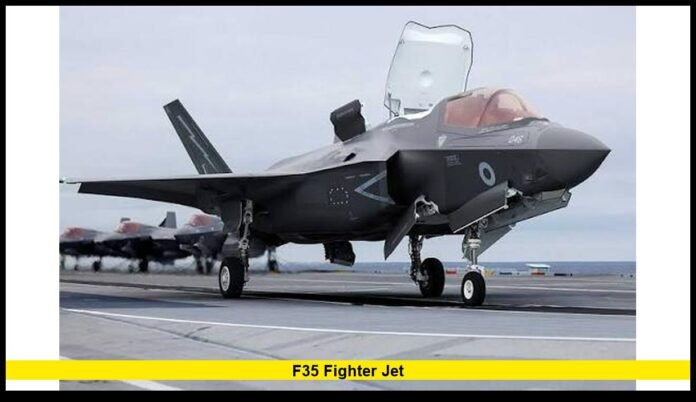

The F35 fighter jet remains the centerpiece of U.S. tactical air power in 2026, with major progress in aircraft deliveries, modernization, and global expansion. The fifth-generation stealth aircraft continues to receive advanced Technology Refresh 3 (TR-3) upgrades that pave the way for the highly anticipated Block 4 capabilities, while new international operators join the growing fleet. At the same time, the Pentagon and defense leaders continue working to improve mission readiness and sustainment across one of the world’s largest military aviation programs.
The F-35 Lightning II has evolved far beyond a traditional fighter aircraft. It combines stealth, advanced computing, powerful sensors, and secure communications into a single combat platform capable of performing multiple missions. Whether operating from conventional runways, aircraft carriers, or amphibious assault ships, the aircraft has become a critical asset for the United States and allied nations.
What Makes the F-35 Different?
The F-35 Lightning II was developed to replace several older combat aircraft with one highly capable platform. Rather than specializing in a single mission, it performs a wide range of military operations.
Its primary missions include:
- Air superiority
- Precision strike
- Intelligence gathering
- Electronic warfare
- Close air support
- Suppression of enemy air defenses
- Maritime strike
- Surveillance and reconnaissance
Unlike previous generations of fighters, the F-35 processes enormous amounts of battlefield information in real time. It then shares that information with friendly aircraft, ships, and ground forces, allowing commanders to make faster and better-informed decisions.
Three Variants Built for Different Missions
The aircraft is produced in three distinct versions.
| Variant | Primary Operator | Primary Feature |
|---|---|---|
| F-35A | U.S. Air Force | Conventional takeoff and landing |
| F-35B | U.S. Marine Corps | Short takeoff and vertical landing |
| F-35C | U.S. Navy | Carrier operations with larger wings and strengthened landing gear |
Although they share many common systems, each version is optimized for the specific requirements of its service branch.
Latest Program Updates in 2026
The F-35 program continues moving forward with several important developments during 2026.
One of the biggest milestones has been the continued rollout of Technology Refresh 3 upgrades. TR-3 introduces significantly improved computing power, expanded memory, updated cockpit displays, and the hardware foundation required for future Block 4 software enhancements.
Another major achievement followed Lockheed Martin’s record delivery performance in 2025. The company delivered 191 F-35 aircraft, the highest annual total in program history after clearing a backlog created during earlier TR-3 delays.
Maintenance centers have also begun upgrading operational aircraft with TR-3 hardware, allowing more frontline jets to receive future software capabilities as modernization continues.
Technology Refresh 3 Is Transforming the Aircraft
Technology Refresh 3 represents one of the most significant upgrades since the aircraft entered service.
The improvements include:
- More powerful mission computers
- Expanded memory capacity
- Faster processing speed
- Larger panoramic cockpit displays
- Improved data handling
- Better support for future electronic warfare systems
These upgrades allow the aircraft to process far more information during combat while supporting the advanced software required for Block 4 modernization.
What Block 4 Will Bring
Block 4 is not a single software release.
Instead, it is a long-term modernization effort that gradually adds new capabilities throughout the coming years.
Expected improvements include:
- Additional precision-guided weapons
- Enhanced electronic warfare
- Improved sensor fusion
- Better communications
- Expanded networking
- Increased survivability
- New mission software
- Greater processing efficiency
These upgrades ensure the aircraft remains competitive against evolving threats for decades.
Why Stealth Still Matters
One of the defining characteristics of the F-35 remains its stealth design.
Engineers reduced the aircraft’s radar signature using:
- Carefully shaped airframe surfaces
- Internal weapon storage
- Radar-absorbing materials
- Reduced infrared emissions
Stealth does not make the aircraft invisible.
Instead, it allows pilots to operate much closer to enemy defenses before detection, increasing mission effectiveness and survivability.
Advanced Sensor Fusion Gives Pilots an Advantage
Traditional fighter aircraft often display radar, infrared, targeting, and navigation information separately.
The F-35 combines every sensor into one integrated tactical picture.
This process, known as sensor fusion, helps pilots:
- Detect threats earlier
- Track multiple targets
- Reduce workload
- Improve decision-making
- Share battlefield information instantly
Many defense experts consider this capability one of the aircraft’s greatest strengths.
Helmet Display Replaces Traditional Instruments
The pilot’s helmet functions as one of the aircraft’s most advanced systems.
Instead of using a conventional head-up display, important flight information appears directly on the helmet visor.
Distributed cameras positioned around the aircraft also allow pilots to see imagery from nearly every direction, creating exceptional situational awareness during combat missions.
Combat-Proven Performance
The F-35 has participated in numerous real-world military operations since entering service.
Its missions have included:
- Air defense
- Precision strikes
- Intelligence collection
- Close air support
- Maritime operations
- Electronic warfare
Military planners continue expanding its operational role because of its ability to operate effectively in heavily defended environments.
Growing Global Fleet
The aircraft continues gaining international customers.
Current operators or customers include:
- United States
- United Kingdom
- Australia
- Italy
- Norway
- Netherlands
- Denmark
- Belgium
- Poland
- Finland
- Germany
- Switzerland
- Czech Republic
- Canada
- Japan
- South Korea
- Israel
- Singapore
- Romania
- Greece
The growing international fleet improves interoperability between allied air forces during multinational operations.
Training Continues to Evolve
Modern F-35 pilot training combines live flying with sophisticated simulation technology.
Training now includes:
- Full-motion simulators
- Mission rehearsal
- Networked exercises
- Electronic warfare scenarios
- Joint multinational operations
Simulation allows pilots to practice highly complex combat situations while reducing costs and preserving aircraft flight hours.
Readiness Remains a Priority
Although the aircraft’s capabilities continue improving, maintaining high readiness rates remains an important focus.
Several factors affect availability.
Supply Chain
Obtaining replacement components quickly remains challenging for some specialized parts.
Improving logistics continues to receive significant attention.
Maintenance
Advanced technology requires specialized maintenance procedures and highly trained technicians.
Maintenance centers continue refining repair processes to increase fleet availability.
Software Updates
Regular software improvements occasionally require aircraft downtime while upgrades are installed and tested.
Defense officials continue balancing modernization with operational readiness.
Record Aircraft Deliveries
After overcoming earlier modernization delays, production reached an important milestone.
Lockheed Martin delivered a record 191 aircraft during 2025, marking the highest annual production total in program history. Much of that increase resulted from clearing aircraft that had accumulated during the earlier TR-3 delivery pause.
Production continues in 2026 for U.S. forces and international customers.
Economic Impact Across America
The F-35 program supports thousands of jobs throughout the United States.
American companies contribute to nearly every aspect of production.
Industries involved include:
- Aerospace manufacturing
- Electronics
- Software engineering
- Composite materials
- Precision machining
- Engine production
- Avionics
- Cybersecurity
The program remains one of the largest defense manufacturing efforts in the country.
Future Weapons Integration
The aircraft continues receiving new weapons as modernization progresses.
Future integration efforts include:
- Advanced air-to-air missiles
- Long-range precision weapons
- Maritime strike missiles
- Stand-off attack systems
Every weapon undergoes extensive testing before operational approval.
Software Defines the Aircraft
Unlike earlier generations of fighters, software plays a central role in the F-35.
Routine updates improve:
- Threat recognition
- Sensor accuracy
- Electronic warfare
- Mission planning
- Communications
- Cybersecurity
This approach allows new capabilities to be added without redesigning the aircraft itself.
Congress Continues Oversight
The F-35 remains under close congressional oversight because of its size and long-term importance.
Recent discussions have focused on:
- Aircraft availability
- Modernization schedules
- Sustainment costs
- Block 4 progress
- Production planning
- Logistics improvements
Government leaders continue emphasizing better readiness while ensuring modernization stays on track.
Why the F-35 Will Remain Central to U.S. Air Power
The aircraft combines several advanced technologies that few other fighters currently match.
Its strengths include:
- Stealth
- Advanced networking
- Sensor fusion
- Electronic warfare
- Secure communications
- Continuous software upgrades
- Multinational interoperability
These features allow the aircraft to adapt to changing battlefield requirements while supporting joint operations with allied forces around the world.
Looking Ahead
The next stage of the F-35 program focuses on expanding Block 4 capabilities, increasing aircraft availability, improving sustainment, and delivering even greater combat effectiveness. As more nations receive aircraft and modernization efforts continue, the F-35 remains one of the most significant military aviation programs in service today. Its combination of stealth, advanced computing, and networked warfare capabilities ensures it will continue serving as a cornerstone of U.S. and allied air power for many years to come.
What are your thoughts on the future of the F-35? Share your opinion in the comments and stay tuned for more verified defense aviation updates.