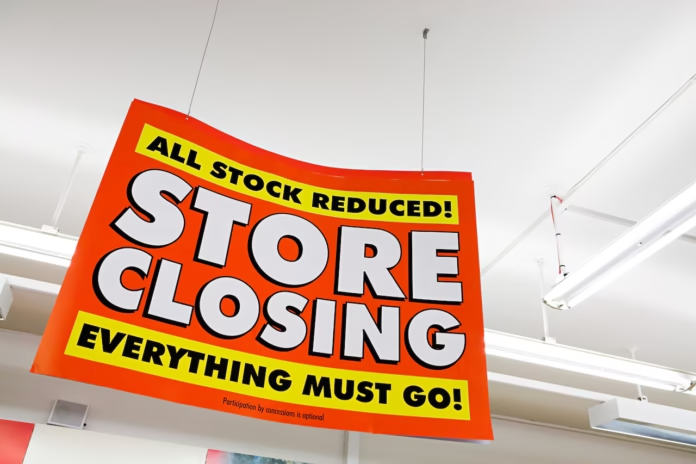

The discount chain closing stores trend has become one of the biggest retail stories of 2026, leaving shoppers wondering whether familiar neighborhood bargain stores will continue serving their communities. While headlines about store closures often create the impression that discount retailers are in serious trouble, the reality is far more nuanced. Across the United States, major value-focused chains are trimming underperforming locations, relocating stores, investing in new markets, and adapting to changing consumer behavior in an effort to remain competitive.
Rather than signaling the decline of discount retail, many of these decisions reflect a broader transformation taking place throughout the industry. Companies are responding to economic pressures, evolving shopping habits, and increased competition by building leaner, more efficient store networks designed for long-term growth.
The Retail Industry Is Undergoing a Major Shift
The American retail landscape has changed dramatically over the past decade. Consumers now expect greater convenience, competitive pricing, faster deliveries, and seamless shopping experiences whether they buy in-store or online.
While discount retailers remain popular among budget-conscious shoppers, they are not immune to these changes. Even businesses that continue generating billions of dollars in annual revenue regularly evaluate whether every individual location is worth keeping open.
Instead of expanding without limits, retailers have adopted a more strategic approach. They now examine each store’s financial performance, customer traffic, lease costs, staffing availability, and long-term growth potential before deciding whether it should remain open.
For shoppers, this means seeing occasional closures even as companies continue opening stores in stronger markets.
Why Discount Retailers Are Closing Certain Stores
Several economic and operational factors are influencing these decisions.
One of the biggest challenges remains rising operating costs. Labor expenses have increased across much of the country, while utilities, insurance, transportation, and building maintenance continue becoming more expensive. These higher costs can significantly reduce profitability, especially for smaller stores with limited sales volume.
Inflation has also affected shopping behavior. Although discount retailers often benefit when consumers seek lower prices, inflation has increased costs for both businesses and customers. Retailers must carefully balance competitive pricing with maintaining healthy profit margins.
Another factor is the changing way Americans shop. More consumers research products online before visiting stores, while others choose home delivery or curbside pickup whenever possible. Physical locations remain important, but retailers increasingly focus on stores that complement their digital operations rather than simply maximizing store counts.
Lease agreements also play an important role. When long-term leases expire, companies frequently reassess whether renewing them makes financial sense. In some cases, relocating to a nearby shopping center or opening a larger, more modern store offers a better investment than keeping an aging location.
Dollar Tree Continues Strategic Optimization
Dollar Tree remains one of the most closely watched companies in the discount retail sector.
During 2026, the retailer continues implementing plans to streamline its nationwide footprint by closing dozens of lower-performing stores while opening hundreds of new locations in communities where demand is stronger.
Company executives have repeatedly emphasized that these closures are part of an ongoing optimization strategy rather than a nationwide contraction.
Many newer stores feature updated layouts, expanded frozen food sections, improved checkout experiences, and broader merchandise selections. These investments reflect changing consumer expectations while allowing the retailer to compete more effectively with supermarkets, warehouse clubs, and online marketplaces.
For shoppers, the result may be fewer locations in some areas but larger and more modern stores elsewhere.
Family Dollar Continues Its Transition
The company has spent the past several years reviewing thousands of locations across the country, identifying stores that no longer fit its long-term strategy. Hundreds of locations have already closed, while additional stores continue being evaluated throughout 2026.
Many Family Dollar stores operate in smaller communities where local shopping options are limited. As a result, individual closures often receive significant attention from residents who rely on the retailer for affordable groceries, cleaning supplies, household products, and everyday essentials.
Even with ongoing restructuring, Family Dollar continues serving millions of customers nationwide through its remaining locations.
Other Retailers Are Making Similar Decisions
Discount retailers are not alone in reducing store counts.
Across multiple retail categories, companies are making similar adjustments based on market conditions and customer demand.
Pharmacy chains continue reviewing thousands of locations after years of rapid expansion. Grocery companies are consolidating operations in highly competitive markets. Convenience store operators are modernizing their networks by replacing older stores with larger locations offering expanded food services.
Department stores have also continued reducing physical footprints while investing more heavily in digital shopping experiences.
The common goal is efficiency rather than simple expansion.
Changing Consumer Habits Are Driving Retail Strategy
Consumer expectations today differ significantly from those of just a decade ago.
Many shoppers now prioritize convenience above almost everything else. They expect products to be available immediately, inventory information to be accurate online, and checkout experiences to be fast.
Retailers increasingly rely on customer data to understand shopping patterns. They analyze purchasing trends, seasonal demand, traffic flow, and local demographics before making decisions about individual locations.
Stores located in neighborhoods experiencing population growth often receive additional investment, while those in declining markets may eventually close.
These decisions are driven less by short-term sales fluctuations and more by long-term forecasts about community growth and customer demand.
The Growing Importance of Omnichannel Retail
Modern retailers no longer view physical stores and online shopping as separate businesses.
Instead, stores increasingly serve multiple purposes beyond traditional retail sales.
Many locations now support online order pickups, local deliveries, inventory distribution, product returns, and same-day fulfillment.
As retailers redesign their operations, some older stores simply lack the space or infrastructure needed for these expanded roles. Closing smaller locations while opening larger, more versatile stores allows companies to improve efficiency across both physical and digital channels.
This strategy has become increasingly common among national retailers seeking to strengthen profitability without sacrificing customer convenience.
Economic Pressures Continue Affecting Retail Operations
Although inflation has moderated compared to earlier peaks, retailers continue facing significant financial pressures.
Transportation costs remain elevated compared to historical averages. Warehousing expenses have increased, and supply chain disruptions continue affecting certain product categories.
Retail theft has also become an ongoing concern for many companies, leading to increased investments in security technology, employee training, and loss prevention programs.
Meanwhile, higher interest rates have increased borrowing costs for businesses investing in renovations, distribution centers, and technology upgrades.
These combined pressures encourage companies to focus resources on their strongest-performing stores rather than maintaining every existing location.
What Store Closures Mean for Local Communities
When a discount retailer closes a location, the effects often extend beyond the company itself.
Employees may lose jobs or be offered transfers to nearby stores. Shopping centers can experience reduced customer traffic, affecting neighboring businesses that depend on shared visitors.
For residents, especially in smaller towns or underserved urban neighborhoods, closures may reduce convenient access to affordable household goods and groceries.
Some communities become “retail deserts,” forcing shoppers to travel farther for everyday necessities.
Local governments and economic development organizations frequently work with property owners to attract replacement tenants, although filling large retail spaces can sometimes take months or even years.
Not Every Closure Indicates Financial Trouble
One of the biggest misconceptions surrounding retail news is that every store closure signals corporate distress.
In reality, healthy companies routinely close locations that fail to meet performance expectations.
Businesses continually adjust their real estate portfolios based on evolving demographics, competition, and customer demand. A location that once thrived may eventually struggle because nearby neighborhoods have changed or competing retailers have entered the market.
Conversely, rapidly growing suburbs may receive entirely new stores as retailers follow population growth.
This ongoing process is considered standard business practice across much of the retail industry.
Will More Discount Stores Close This Year?
Industry analysts expect additional announcements throughout the remainder of 2026.
Retailers continuously review store performance, particularly after holiday seasons, lease renewals, and quarterly financial results.
Rather than announcing one massive nationwide closure plan, companies increasingly make incremental decisions throughout the year.
This approach allows businesses to respond more quickly to changing market conditions while minimizing disruption for employees and customers.
Although some locations will undoubtedly close, others will open or undergo renovations as retailers rebalance their investments.
What Shoppers Should Do
Customers concerned about their favorite store should avoid assuming that national headlines apply to every location.
Individual stores are evaluated independently, meaning one community may lose a location while another gains a newly renovated store only a few miles away.
Before making a special shopping trip, checking local operating hours and store status can help avoid inconvenience.
Many retailers also continue introducing new product categories, expanded grocery selections, seasonal merchandise, and upgraded store formats designed to improve the overall shopping experience.
Looking Ahead for Discount Retail
The future of value-focused retail remains promising despite ongoing restructuring.
Economic uncertainty continues encouraging consumers to seek affordable products, making discount stores an important part of household shopping routines.
At the same time, retailers are investing heavily in technology, supply chain improvements, inventory management, and enhanced customer experiences.
The discount chain closing stores story is ultimately less about widespread decline and more about adaptation. Companies are making strategic decisions intended to improve long-term financial performance while serving customers more efficiently in an increasingly competitive retail environment.
As consumer preferences continue evolving, discount retailers are expected to keep refining their store networks, balancing physical locations with digital capabilities and focusing investment where demand is strongest. While some familiar storefronts may disappear, the overall discount retail sector is likely to remain a vital part of American shopping for years to come.
Retail continues to evolve every year. Share your thoughts on recent store closures and stay updated as more developments shape the future of discount shopping.