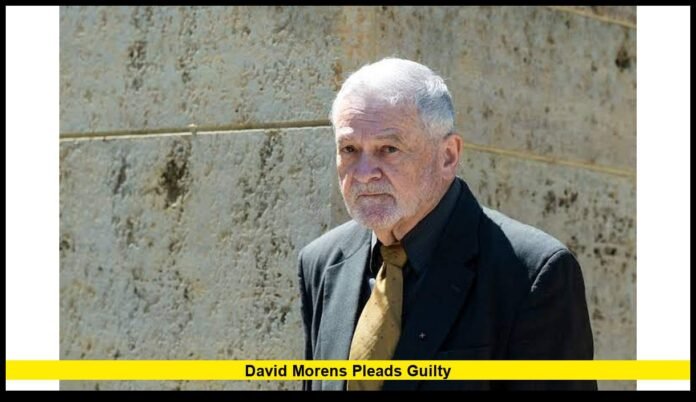

David Morens pleads guilty to a federal conspiracy charge after admitting that he helped conceal government communications and worked to avoid public records requirements during the COVID-19 pandemic. The 78-year-old former senior adviser at the National Institute of Allergy and Infectious Diseases entered his plea on Aug. 18, 2026, in federal court in Greenbelt, Maryland. He is scheduled to be sentenced on Nov. 12 and faces a maximum of five years in prison.
The case centers on Morens’ use of a personal email account for communications involving government business. Federal prosecutors said the arrangement was designed to keep certain messages away from government systems and outside the reach of public records requests.
The guilty plea represents the latest and most significant development in a case that began with congressional scrutiny of pandemic-era communications. It also brings a criminal resolution to one of the most closely watched records disputes involving a former senior federal health official.
What Happened in the Latest Court Update
Morens entered a guilty plea to one count of conspiracy to commit offenses and defraud the United States. The charge is a felony and carries a maximum possible sentence of five years in federal prison.
The plea was entered in Maryland before U.S. District Judge Paula Xinis. The court has scheduled sentencing for Nov. 12, 2026.
Morens had previously faced a five-count federal indictment. Prosecutors accused him of participating in a scheme involving federal records, public disclosure requirements and communications connected to COVID-19 research funding.
His guilty plea means he has accepted responsibility for the conspiracy charge rather than proceeding to trial on that count.
Morens’ attorney, Timothy Belevetz, said his client had taken responsibility for his actions and would continue to do so.
The actual sentence has not yet been determined. The five-year figure represents the statutory maximum, not a prediction of what the judge will impose.
Why the Case Focuses on Personal Email
A central issue in the case is Morens’ decision to use a personal Gmail account while handling matters connected to his federal work.
Prosecutors said Morens and others deliberately communicated through personal accounts rather than official government systems. The purpose, they alleged, was to make the communications more difficult to locate in response to public records requests.
The issue became especially significant because the messages involved subjects connected to COVID-19 research and federal grant funding.
Government employees must follow rules governing federal records. Communications involving official government business can be subject to recordkeeping requirements even when an employee uses a personal account.
The prosecution argued that Morens knew this distinction and intentionally used a private account to keep certain communications away from official records systems.
That allegation became a major part of the congressional investigation that preceded the criminal case.
The Federal Records Questions
The dispute did not begin with the criminal indictment.
Congressional investigators had already been examining Morens’ communications after discovering emails that raised questions about his use of personal email for government-related discussions.
Investigators wanted to know whether Morens had intentionally avoided government systems to reduce the likelihood that his communications would be produced through Freedom of Information Act requests.
The issue became more serious as lawmakers obtained additional correspondence.
Some of the messages suggested that Morens and other individuals were aware that communications conducted through official government accounts could potentially become public.
Prosecutors later built a federal case around those communications.
The criminal allegations went beyond simply using Gmail. Prosecutors said Morens conspired with others to obstruct the lawful functions of federal agencies responsible for handling public records and federal records.
His guilty plea now provides a formal criminal resolution to that conspiracy allegation.
The COVID-19 Research Connection
The case is also tied to federal coronavirus research funding.
Prosecutors said one of the people involved in the alleged conspiracy had connections to a New York-based nonprofit that received a federal grant in 2014 titled “Understanding the Risk of Bat Coronavirus Emergence.”
A subaward connected to the grant went to the Wuhan Institute of Virology, according to court documents.
The National Institutes of Health terminated the grant in April 2020 after controversy surrounding allegations about the possible origins of COVID-19.
The grant later became a major subject of congressional scrutiny.
Investigators examined communications involving Morens, researchers and individuals associated with the grant. They were particularly interested in whether Morens used his government position to influence decisions surrounding the funding.
The federal case does not establish the origin of COVID-19. It also does not resolve the scientific debate over whether the virus emerged through natural transmission or from a laboratory-related incident.
Instead, the criminal case concerns the handling of federal records and the alleged effort to avoid public disclosure requirements.
The Role of Other Individuals
Prosecutors said Morens worked with two other people in the alleged conspiracy.
The charging documents did not publicly identify those individuals by name.
However, congressional records and publicly released emails have identified one person described in the case as the president and chief executive of a New York-based nonprofit. Public reporting has connected that description to Peter Daszak, the former head of EcoHealth Alliance.
Daszak has not been charged with a crime in the case.
The second individual was described as a physician, scientist and professor who worked at an academic institution that received federal grants.
The government alleged that Morens and the other individuals communicated about COVID-19, research funding and other matters through personal email.
The arrangement was allegedly intended to prevent the messages from being captured through government records systems.
What Morens Admitted
The guilty plea is important because it moves the case beyond the earlier stage of allegations.
Morens initially faced several charges after federal prosecutors accused him of participating in a broader scheme to conceal records.
Under the plea agreement, he admitted guilt to the conspiracy offense.
The factual allegations surrounding the agreement describe communications involving COVID-19 research and federal grant funding. They also describe efforts to keep certain messages outside government systems.
The case therefore involves more than an isolated decision to send an email from a private account.
Prosecutors alleged that the use of personal email formed part of an intentional arrangement designed to prevent government records from being disclosed.
Morens’ guilty plea establishes his responsibility for the conspiracy charge to which he admitted guilt.
His Previous Role in Federal Health Policy
Morens spent many years working at NIAID.
He served as a senior adviser in the agency’s Office of the Director from 2006 through 2022. His career included work involving infectious disease research, scientific policy and federal health matters.
During the COVID-19 pandemic, his position placed him close to senior federal health officials.
Morens also worked closely with Anthony Fauci, who led NIAID for decades.
That connection helped make Morens a focus of congressional investigations into pandemic decision-making and government communications.
However, the criminal case against Morens should not be confused with a criminal case against Fauci.
Fauci has not been charged in Morens’ federal case.
Why Congressional Investigators Examined Morens
The House Select Subcommittee on the Coronavirus Pandemic played a major role in bringing Morens’ email practices into public view.
Lawmakers questioned him about communications sent through his personal Gmail account. They also sought access to additional records during their investigation.
The congressional inquiry focused partly on the origins of COVID-19 and partly on the federal government’s handling of pandemic-related information.
Investigators argued that some of Morens’ communications indicated an effort to avoid federal transparency requirements.
Morens previously disputed the characterization that he intentionally used personal email to evade public records laws.
His position changed significantly with the federal guilty plea.
The plea confirms his responsibility for the conspiracy offense described in the criminal case.
The Grant and the Fight Over Its Termination
The research grant became another important element of the controversy.
The federal government had funded coronavirus research through grants administered by agencies within the U.S. health system. One grant later became controversial because of its connection to research involving the Wuhan Institute of Virology.
The government terminated the award in 2020.
Prosecutors later alleged that Morens and others discussed efforts connected to the funding and sought to influence government decisions.
Communications involving the grant became relevant to congressional investigations into the origins of COVID-19.
The federal prosecution, however, does not accuse Morens of causing the pandemic or of proving a particular theory about its origin.
Its focus is the alleged concealment of federal records and the conspiracy to interfere with government functions.
The Freedom of Information Act Issue
The Freedom of Information Act is a major reason the email issue became so important.
Federal agencies receive public requests for records under the law. Government records can be subject to disclosure unless a legal exemption applies.
Using a personal account does not automatically transform government business into private correspondence.
The allegations against Morens center on the claim that he and others deliberately used personal email to prevent certain government-related communications from being captured and disclosed.
That distinction is critical.
The case is not simply about whether Morens had a personal email address. It concerns what he used that account for and whether the conduct was part of a deliberate effort to frustrate federal records obligations.
His guilty plea provides a criminal resolution to that question for the conspiracy charge.
The Alleged Benefits Involved in the Case
Federal prosecutors also described benefits exchanged in connection with the alleged relationship.
Court documents referenced wine provided to Morens and discussions involving meals at expensive restaurants.
The government’s allegations connected those benefits to the broader relationship surrounding the research and grant issues.
These details contributed to the prosecution’s argument that the communications were not merely informal exchanges between colleagues.
Still, the guilty plea itself is to the conspiracy charge.
The sentencing court will determine the consequences of that conviction.
What the Case Does Not Prove
The case has generated significant discussion about the origins of COVID-19, but the guilty plea does not settle that scientific question.
The criminal proceeding is about records and government functions.
It does not establish that COVID-19 originated in a laboratory.
It also does not establish that the virus emerged through natural transmission.
Those questions remain separate from the legal issue addressed by Morens’ guilty plea.
The distinction matters because public discussion of the case has frequently connected the records dispute to the larger debate about the pandemic’s origins.
Morens’ conviction concerns his own conduct involving government records and communications.
Anthony Fauci Was Not Charged
Fauci’s connection to Morens has attracted considerable attention since the guilty plea became public.
Morens worked under Fauci at NIAID, and his communications were examined during congressional investigations into the agency’s pandemic-era activities.
But Fauci was not charged in the federal case against Morens.
That remains an important distinction when discussing the latest development.
Separate congressional disputes involving Fauci have continued in 2026. Those matters are not part of Morens’ criminal conviction.
The guilty plea should therefore not be presented as proof that Fauci committed a crime.
What Happens Before Sentencing
Morens’ case is not completely finished.
His guilty plea resolves the criminal charge, but sentencing remains ahead.
Judge Paula Xinis is scheduled to sentence him on Nov. 12 in Greenbelt, Maryland.
Morens faces a maximum prison sentence of five years on the conspiracy charge. The court will determine the actual punishment.
A statutory maximum does not guarantee that a defendant will receive the maximum sentence.
Federal sentencing involves consideration of the offense, applicable sentencing rules and other relevant factors.
The November hearing will therefore be the next major milestone in the case.
Until then, Morens remains a convicted defendant awaiting sentencing.
Why the Guilty Plea Is Significant
The case is significant because it combines federal records law, government transparency and pandemic-era research controversies.
Morens was not an ordinary outside researcher. He previously held a senior position within NIAID and worked closely with senior federal health officials.
Prosecutors said he used that position while communicating with people outside the government about sensitive research and funding issues.
The government’s case alleged that personal email was used intentionally to keep communications away from official records systems.
His guilty plea now confirms his criminal responsibility for the conspiracy offense.
The development also closes an important chapter in the congressional investigation that helped expose the communications at issue.
Current Status of the Case
As of Aug. 19, 2026, the key facts are clear.
Morens is 78 and previously served as a senior adviser at NIAID. He pleaded guilty on Aug. 18 to one federal conspiracy charge.
The offense carries a maximum sentence of five years in prison.
His sentencing hearing is scheduled for Nov. 12 before Judge Paula Xinis in Maryland.
The case involved allegations that Morens and others used personal email to conceal government-related communications and avoid public records requirements.
The communications included discussions related to COVID-19 research and a controversial coronavirus research grant.
Morens initially faced five counts but has now pleaded guilty to the conspiracy charge under a federal agreement.
The case does not charge Fauci, and Morens’ plea does not determine the origin of COVID-19.
The next major development will come when the federal court determines Morens’ sentence.
What to Watch Next
The November sentencing hearing will be closely watched because it will establish the actual punishment Morens receives.
The case also remains relevant to continuing debates about federal transparency and the preservation of government records.
For Morens, however, the central legal question has already changed. He is no longer preparing to contest the conspiracy charge at trial.
He has admitted guilt and is waiting for the court to impose a sentence.
The case therefore moves into a new phase, with attention shifting from whether prosecutors could prove the conspiracy to what consequences Morens will face.
Stay with this story as the next confirmed developments emerge, and share your thoughts on the case in the comments below.