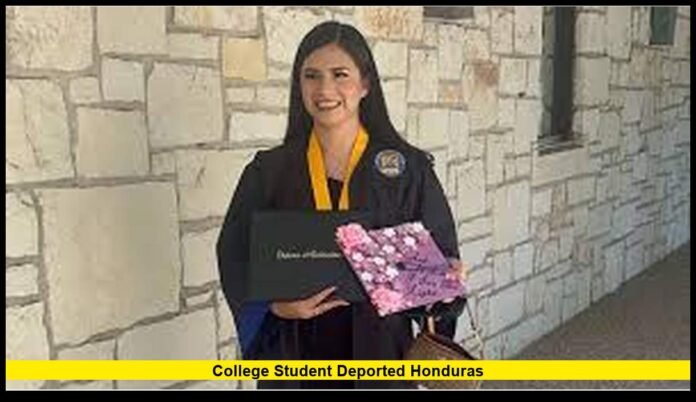

The case of a college student deported honduras has drawn widespread attention across the United States after a 19-year-old Babson College freshman was removed from the country following a sudden detention at Boston Logan International Airport. The incident unfolded over the Thanksgiving travel period and has raised numerous questions about communication, oversight, immigration records, and the speed at which enforcement actions can move. For many across the country, the case illustrates how quickly long-standing immigration issues can resurface, even when individuals believe their records were resolved during childhood.
The student was headed to Texas for the holiday break when she was unexpectedly stopped and taken into custody. Within days she found herself on a plane to Honduras, separated from her education, her support network, and the life she had built in the United States. Her removal has prompted discussion about the accuracy of immigration files, the rights of young people with old cases, and the responsibilities of enforcement agencies when emergency court actions are filed.
Detention at Boston Logan and the Start of the Ordeal
The situation began when the student attempted to board a domestic flight from Boston Logan International Airport. Airline staff flagged an issue with her boarding paperwork, prompting additional screening. Federal officers reviewed her documents and, during the process, located an unresolved immigration order issued when she was a minor. The order described her as subject to removal, despite the student and her family believing the matter had been settled years earlier.
After being detained, the young woman was transported to an immigration facility for processing. What happened next unfolded rapidly, with little time for her or her attorney to gather information or understand the details of the case. She later described the experience as confusing and frightening, made worse by the fact that she had no memory of the original proceeding that resulted in the old order.
Emergency Legal Action and the Judge’s Temporary Order
As soon as the student’s attorney learned she had been detained, emergency filings were made in federal court. The attorney requested time to review the removal order and argue for her continued presence in the United States while the court examined the facts. A judge issued a temporary order instructing authorities not to remove the student from the state or the country until the court could review the situation fully.
Despite that directive, the student was moved out of Massachusetts and then transferred to Texas on an early flight. When her attorney later learned she had been taken out of state, he attempted further legal action, but by that time she was already en route to Honduras.
This sequence has now become a central point of scrutiny. Legal experts note that emergency court orders exist precisely to prevent unexpected removals while questions are sorted out. Whether the order was received, miscommunicated, or overlooked has become one of the core issues at the heart of the case.
Student’s Background and Life in the United States
The student came to the United States as a child and grew up primarily in Texas. She graduated from high school, participated in community activities, and eventually earned acceptance into Babson College in Massachusetts, where she began her studies earlier this fall. Friends and relatives describe her as academically focused, caring, and involved in campus life.
She says she had no idea an old removal order still existed. Many children who arrive in the United States undergo immigration proceedings without full understanding of the process, and documents may never be explained clearly to them. Families can also misunderstand outcomes if communication from immigration offices is confusing or sporadic.
From her perspective, her immigration history was long resolved. She had lived openly for years, enrolled in college, and traveled by air before without issue. Her sudden detention at Logan left her shocked and struggling to understand why this happened during what she expected to be a simple holiday trip.
Transport to Texas and Flight to Honduras
After being moved out of Massachusetts, she was taken to a facility in Texas. There, she was placed on a flight to Honduras, a country she had not lived in since early childhood. She traveled alone, with no family waiting at the airport, and no clear sense of what life would look like now that her education and U.S. residency had been abruptly disrupted.
Once in Honduras, she was taken in by relatives, but she has said the transition has been emotionally difficult. Her future plans—educational, personal, and professional—have been placed on hold. She had hoped to return to Babson after Thanksgiving to finish the semester. Instead, she is now thousands of miles away, unsure when or whether she will be able to return to the United States.
Legal Team Preparing Next Steps
Her attorney has stated publicly that he intends to pursue additional court filings. These potential actions may include requests to challenge the deportation itself, motions to re-open the underlying case, or appeals to allow the student to return to the U.S. while the issue is reviewed. Immigration cases involving minors can be especially complex, often requiring attorneys to investigate records that span multiple states, agencies, and court jurisdictions.
Legal pathways may exist, but they take time. The coming weeks will likely involve careful review of old documents, communication with immigration officials, and further hearings in federal court. Whether these steps will ultimately allow the student back into the country is unclear, but the case is far from over.
College Community Reacts
The student’s removal has also affected her college community. Several students and staff members have expressed concern about the sudden nature of the deportation and the impact on her academic progress. Colleges across the United States regularly enroll students who arrived as children and may not have full knowledge of their immigration histories. Situations like this highlight the importance of clarity and support for young people navigating higher education while dealing with complex legal backgrounds.
Babson College has not commented publicly on the details of her case, but classmates have voiced support and concern, noting that she worked hard in class and was building connections on campus before the incident.
Broader Implications for Young Immigrants in America
This case reflects a broader reality faced by many young people who entered the country as minors. Some have old immigration cases that were never clearly resolved or communicated. Others may believe their status is stable when, in fact, older orders remain technically active. As students reach adulthood and begin building their lives, these unresolved cases can reappear unexpectedly—often during travel, employment checks, or routine verification processes.
The case has prompted renewed discussion across communities and immigration advocates who argue that minors should not face long-term consequences from proceedings they may not have understood. The sudden enforcement of old cases raises concerns about fairness, communication, and the ability of individuals to meaningfully respond when their legal status is unclear.
Key Questions Emerging from the Case
This situation raises several important questions:
- Was the emergency court order communicated effectively to all involved parties?
- Why was the student not aware of the old removal order?
- Should minors be held to the same standards as adults when removal orders are issued?
- Should there be clearer notification procedures for families when cases remain active?
- What options should students have to correct old records tied to childhood proceedings?
These questions are now part of a national conversation about how immigration enforcement intersects with education, travel, and the lives of young people who have spent most of their lives in the United States.
Student’s Current Status in Honduras
At present, the student is staying with family members in Honduras while she awaits updates from her legal team. She has expressed sadness over being separated from her college, friends, and daily life in the U.S. She has also shared that she remains hopeful her legal team will find a path forward that allows her to continue her education.
Her future depends on the pace of legal filings and potential court rulings. For now, she remains in limbo, watching developments from afar as attorneys prepare the next phase of the fight.
Final Thoughts
The story of the college student deported honduras continues to develop and remains a powerful example of how immigration systems can disrupt the lives of students who believed their status was secure. The events have raised important questions about communication, enforcement practices, and the rights of young adults with childhood immigration histories. Many across the United States will be watching closely to see how the next chapter unfolds.
Share your thoughts below on how you believe situations like this should be handled and what protections should exist for young immigrants navigating school and legal systems.