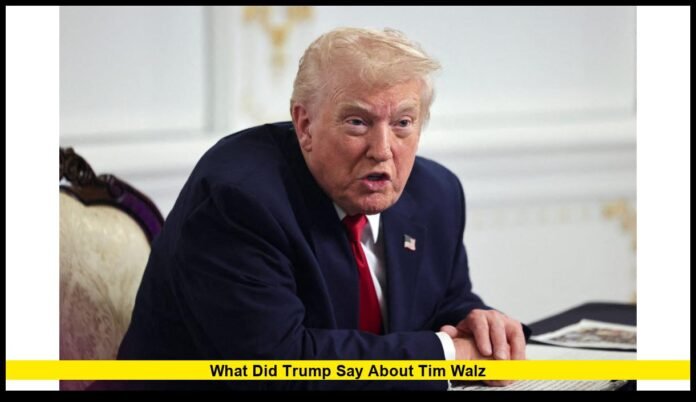

On Thanksgiving night 2025, former President Donald Trump unleashed a scathing social-media post that targeted Tim Walz — stirring national outrage and igniting fierce debate. The post included a derogatory slur directed at Walz, accompanied by sweeping, harsh criticism of Minnesota’s Somali immigrant community. What followed was a sharp, loaded response from Walz — and a wave of backlash across political lines.
🔥 The Thanksgiving Post Heard Around the Country
In a lengthy post on his platform, Trump launched an aggressive attack on immigration, Somali refugees in Minnesota, and Gov. Walz. His message included a widely condemned ableist slur — calling Walz “the seriously retarded Governor of Minnesota.” He added that Walz was doing “nothing, either through fear, incompetence, or both” in response to what Trump claimed was a surge of Somali refugees and rising crime.
He went further, claiming that “Somalian gangs are roving the streets,” allegedly preying on citizens, and argued that immigrant communities were responsible for broad social dysfunction. The post concluded with a call to “permanently pause migration” from poor countries — a sweeping proposal his supporters saw as law-and-order tough talk, and his critics viewed as xenophobic and inflammatory.
🧭 Context: Why The Timing and Tone Matter
This salvo from Trump did not come in a vacuum. It followed a recent shooting near the White House involving an Afghan refugee, which the administration used to justify stricter immigration measures. In that context, the post struck a chord among many voters — while also triggering alarm among immigrant-rights groups, civil-rights activists, and disability advocates.
Minnesota has one of the largest Somali-American populations in the U.S. Trump’s framing — alleging mass immigration and gang violence — stoked fears among some residents. Others saw it as blatant scapegoating. The slur against Gov. Walz added a personal, deeply offensive dimension, transforming the post from a policy argument into a deeply divisive attack on identity and state leadership.
🗣️ Walz’s Response: Four Words — “Release the MRI Results.”
Rather than respond with a long statement, Gov. Walz opted for a sharp, calculated reply on the social platform X: “Release the MRI results.”
The jab referenced Trump’s October medical visit, during which the president disclosed that he had undergone an MRI scan. The White House described the scan as part of a routine preventive health exam and said his lab work was “exceptional,” but did not provide details on what the MRI was for or which part of the body it addressed. Trump had told reporters the scan was “perfect,” but gave no further information.
Walz’s retort thus carried heavy implications: it questioned Trump’s transparency, his mental and physical health, and his right to criticize others — especially using a disability slur. In four simple words, Walz turned the spotlight back on Trump.
🌐 Reactions — Shock, Condemnation, Debate
The fallout was immediate:
- Disability-rights advocates condemned the slur as not only offensive but dangerous — a normalization of ableist language that dehumanizes people with intellectual disabilities.
- Immigrant-rights groups and many Minnesotans denounced the framing of Somali refugees as criminals. They warned the post could stoke xenophobia and even inspire harassment or violence against immigrant communities.
- Across the political spectrum, some lawmakers and public figures criticized the tone and content of the post. A few Republicans voiced discomfort — even condemnation — at the use of such derogatory language.
- Others defended Trump’s right to speak frankly about immigration and public safety. For them, the post was less about personal attack and more about calling for stricter immigration controls.
Meanwhile, Walz’s response gained traction online. Many praised the governor for refusing to engage personally with the insult — instead redirecting attention to Trump’s own lack of transparency.
📌 What Is Known — And What Remains Ambiguous
Clear facts:
- Trump publicly used a derogatory slur against Gov. Walz, calling him “seriously retarded.”
- The post chastised Minnesota’s Somali community, claiming refugees were responsible for crime, social strife, and alleged “takeover” of the state.
- Gov. Walz responded with “Release the MRI results,” referring to Trump’s undisclosed October scan.
- The White House had confirmed the MRI but provided no details about its purpose or findings.
What remains unknown or unverified:
- No evidence has been shown that Somali immigrants are behind any widespread gang violence or criminal wave in Minnesota.
- The actual results of Trump’s MRI scan, including which part(s) of his body were imaged and why, remain undisclosed publicly.
- It’s unclear whether the post will directly influence immigration policy outcomes, or whether it will remain a symbolic flashpoint in public discourse.
- The long-term political effects — on Trump’s standing among immigrants, Minnesotans, or voters who value decorum — remain to be seen.
🧑⚖️ What This Episode Says About American Political Discourse in 2025
This clash between Trump and Walz reveals much about today’s political environment: it’s personal, rapid-fire, and often unfiltered.
- Identity and rhetoric are now central. This isn’t just about immigration policy or crime statistics. It’s about who gets to belong — and who doesn’t. Criticism of policy has morphed into attacks on identity, community, and state leadership.
- Leaders face increasing pressure to show transparency about their own fitness. Walz’s call for Trump to release his MRI results shows growing public concern about leaders’ health and cognitive state, especially at advanced ages.
- Political division is amplifying social fault lines. Immigrants, refugees, disability communities — they are often drawn into broader battles about national identity and values. How this affects social cohesion remains uncertain.
- Digital platforms accelerate controversy. A single late-night post triggered nationwide headlines in hours. Social media amplifies both outrage and support, often without room for nuance.
Whether this episode becomes a moment of reckoning — for how public figures speak, for immigrant communities, for standards in political discourse — depends on what follows: policy responses, community reactions, and how leaders choose to engage or step back.
One thing is clear: what happened between Trump and Walz isn’t just chatter over Thanksgiving. It may shape how Americans talk about immigration, leadership, and respect in public life for years to come.