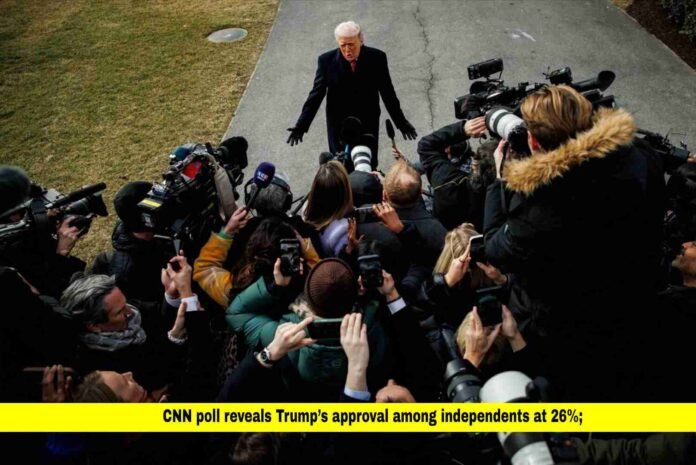

A major polling update released this week shows that CNN poll reveals Trump’s approval among independents at 26%, marking a substantial drop in confidence among one of the most pivotal voter groups in modern American politics. This stark figure arrives just days ahead of a high-stakes State of the Union address from the president, underscoring growing concerns about public sentiment on leadership, economic priorities, and national direction.
Across the United States, political analysts, party strategists, and everyday voters are closely watching how these numbers play into broader discussions on the presidency and the nation’s future. With independents historically swinging close elections and shaping the middle ground of the electorate, a 26 percent approval rating among this group is drawing fresh scrutiny.
The following comprehensive article examines the new poll data, explores what it reveals about current voter attitudes, considers the implications for this year’s political calendar, and breaks down key trends shaping the national conversation.
Sharp Drop in Independent Approval
The most recent poll shows that just 26 percent of independent voters approve of the president’s job performance. This figure represents a significant decline compared with the same period last year, when independent approval was much higher.
Independents play a critical role in U.S. elections, often acting as the deciders in closely contested races. Their views are considered especially telling in midterm elections and other moments when party loyalties are tested. A slump in independent confidence reflects a broader challenge for any sitting president seeking to maintain momentum midway through a term.
Pollsters note that this shift among independents coincides with broader dissatisfaction across demographic groups, adding pressure to the administration’s political strategy.
Overall Job Approval Has Also Fallen
Alongside weak independent numbers, the president’s overall job approval rating remains below the midpoint among all adults. In the latest survey, approval stands in the mid-30s when all adults are included, while a clear majority disapproves of the job performance.
This broader context shows that beyond independents, many voters across the political spectrum are expressing unease about current leadership — even while core supporters continue to back the administration.
These overall figures reflect a continuing trend of public skepticism that has persisted over the past several months, as various policy debates and economic concerns have dominated headlines.
Public Perception of Priorities and Direction
The poll also highlights that a large share of respondents feel the president has not focused sufficiently on the nation’s most pressing issues. When asked whether the president has had the right priorities, only a minority agreed.
Voters consistently cited economic concerns — especially cost of living and affordability — as top priorities they wanted addressed in upcoming political speeches and agendas.
Public perception of national direction also remains pessimistic for many. A large portion of those surveyed said they believe the country is headed in the wrong direction, signaling widespread uncertainty and dissatisfaction with how current challenges are being handled.
Latino and Young Voters Show Steeper Declines
While independent voters showed a sharp drop in approval, other demographic groups also demonstrated significant shifts. Younger voters — especially those under forty — indicated lower approval ratings than in previous years.
Latino voters similarly reported marked decreases in approval, with support slipping significantly compared with a year earlier. These shifts suggest that once-reliable or persuadable groups are reassessing their views based on recent political developments and policy outcomes.
Across age ranges and cultural groups, the common thread appears to be concern over everyday issues such as affordability and the economy, which closely influence voter priorities.
Economic Issues Resonate Strongly With Voters
One of the dominant themes emerging from polling data is that Americans are focused on affordability and daily financial pressures. A majority of respondents identified rising costs of living, healthcare expenses, and inflation as major concerns they want addressed by national leadership.
Economic uncertainty often has ripple effects on public opinion, shaping how people evaluate presidential performance and policy agendas. Poll respondents indicated that discussions about economic security and cost relief would be more meaningful and impactful in major political speeches and debates than other topics.
This focus on economic well-being illustrates how voters align immediate personal concerns with their broader political judgments.
Pessimism About National Direction
Beyond approval ratings, another striking element of recent data is that many Americans feel the nation is heading in the wrong direction. When asked about the general trajectory of the country, a majority selected the negative option.
This collective pessimism touches on a variety of issues — from economic challenges to global concerns — and points to a growing divide between public sentiment and political leadership narratives.
When many voters view national direction pessimistically, trust in government institutions and elected officials often takes a hit as well, adding complexity to political strategy on both sides of the aisle.
What the Poll Says About Disapproval Intensity
While approval numbers are important, the intensity of disapproval carries extra significance. The latest poll reveals that many who disapprove of current leadership do so strongly, rather than tepidly.
This means that not only are more people saying they disapprove, but they are doing so with conviction. Strong disapproval can have implications for voter turnout, grassroots enthusiasm, and general political engagement.
A community that feels strongly about its dissatisfaction is more likely to express that through voting behavior, public demonstrations, or social commentary.
Independent Voters and the Midterm Factor
Independent voters have long been viewed as key players in midterm elections, where turnout can fluctuate and party loyalty is not always guaranteed. A low approval rating among this group signals potential obstacles for the party in power as it gears up for critical House and Senate races.
Political strategists often consider independent sentiment as a barometer of broader electoral trends. When independents show persistent disapproval, it can suggest tightening races, increased volatility, and greater opportunity for opposition gains.
As political campaigns intensify throughout the year, independent voters will remain a key focus for both parties.
How Leadership Speeches Are Being Shaped
In response to polling trends showing voter concern about economic issues, White House officials have emphasized that upcoming presidential speeches will spotlight affordability and stories of everyday Americans.
These addresses aim to connect with public priorities by highlighting initiatives intended to alleviate financial burdens and by framing national achievements in ways that resonate with everyday life.
Speeches that align with voter concerns may help address approval gaps, especially if they speak directly to cost pressures and quality-of-life issues.
The 250th Anniversary as a Thematic Focus
One major theme set to feature in upcoming political messaging is the United States’ 250th anniversary. Officials intend to weave stories of national heritage and historical achievement into broader policy messages.
This narrative seeks to tap into patriotic sentiment while also contextualizing current policy efforts within a long tradition of national progress.
By blending historical celebration with contemporary concerns, advisors hope to build a narrative that resonates across generations and appeals to a diverse audience.
Political Tension Surrounding Major Speeches
In addition to shifts in approval metrics, political tension is rising as major speeches approach. Some lawmakers plan to offer responses or counterarguments that present alternative frameworks and priorities.
These dynamics highlight how public speeches during the political season serve not just as informational events but as strategic moments in shaping voter perception and political narratives.
Competing addresses emphasize contrasting visions for the nation’s future, giving voters a spectrum of perspectives to consider.
Voter Expectations Going Into Midterms
As the national political calendar advances, voters are paying close attention to issues that affect daily life, such as inflation, healthcare costs, and wages.
Many Americans expressed a desire for leaders to focus more on these affordability concerns rather than on partisan battles or symbolic gestures.
Expectations for meaningful policy proposals in areas that hit close to home will likely shape voting behavior and public discourse throughout the year.
Broader Implications for Political Strategy
For political parties and campaign teams, the latest polling underscores the need to refine messaging and prioritize issues most resonant with voters. Economic security and national direction consistently emerged as top concerns.
Responding to voter dissatisfaction and demonstrating tangible policy achievements in those areas may be crucial for building trust and support.
This focus will influence debates, campaign stops, advertising strategies, and legislative priorities as the year unfolds.
Looking at Long-Term Trends
Over time, approval ratings tend to ebb and flow with current events, economic conditions, and major policy decisions. For a sitting president, maintaining stable approval requires ongoing engagement with key voter groups and responsiveness to pressing concerns.
The steady decline in independent approval illustrates one of the challenges of governing in a polarized environment while addressing broad demographic needs.
Observers and strategists will be analyzing these trends closely as the political landscape continues to develop.
What Comes Next
With approval ratings fluctuating and voter concerns intensifying, the next months will likely shape how the political narrative unfolds in the run-up to major elections.
Political leaders, strategists, and everyday citizens will be watching how speeches, policy proposals, and public engagements respond to the issues voters care about most.
With independents showing lower approval levels than seen in previous periods, efforts to reconnect with this influential group may become a central focus for both parties.
We invite you to share your perspective in the comments or stay tuned as the national conversation continues to evolve.