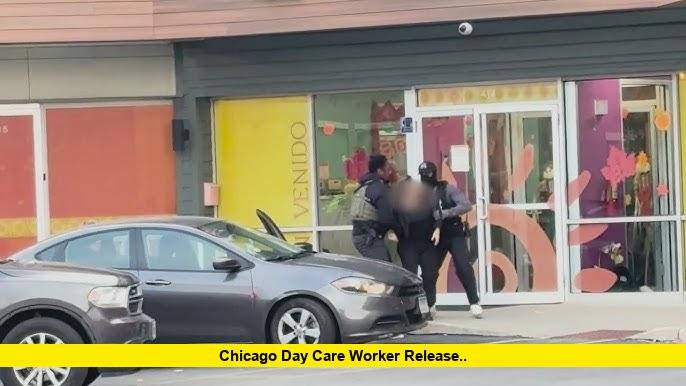

A Chicago day care worker released from federal immigration detention this week is at the center of one of the city’s most widely discussed enforcement cases of the year. The case involves 29-year-old Diana Santillana Galeano, an employee at Rayito de Sol Spanish Immersion Early Learning Center, who was taken into custody on November 5 during the morning drop-off period. Families and staff witnessed the arrest, prompting immediate concern and a rapid public response. Her legal team confirmed her release from a detention facility on November 12, marking a major development in a situation that captured the attention of parents, advocates, and city officials.
Background of the Detention
On the morning of November 5, Santillana Galeano arrived at Rayito de Sol for her regular shift. Shortly after she entered the building, several federal immigration agents approached her, leading to a confrontation inside the entry area. Witnesses described armed officers in tactical gear entering the space as families dropped off their children. According to staff who saw the event unfold, children began crying and teachers rushed to move them into classrooms away from the commotion.
Santillana Galeano, originally from Colombia, had been working legally at the center and had the required employment authorization. Federal officials stated that she had originally entered the United States without authorization in mid-2023 before later obtaining valid work permission. Her attorneys argued that she held fully compliant documentation at the time of her arrest and did not pose any threat or public-safety concern. Her lack of a criminal record further intensified questions about why federal agents chose to conduct the arrest in a child-care setting during operating hours.
She was taken to an immigration detention facility in Indiana, where she remained for a week before being released.
Why the Incident Sparked Widespread Outcry
The detention triggered immediate public backlash and city-wide concern for several key reasons.
A Sensitive Setting
The arrest took place at a day-care center during one of the busiest times of the morning. Parents described the scene as chaotic and frightening for the young children present. The idea of armed officers entering a child-care facility alarmed many in the community who felt such operations should occur away from settings involving small children.
Questions About Legal Status
The fact that Santillana Galeano had valid work authorization raised questions about the necessity and timing of the arrest. Community members argued that an enforcement action involving a worker employed at a licensed center should not have required such a public and disruptive intervention.
Broader Enforcement Climate
Her arrest occurred during a period of intensified immigration enforcement in Chicago. This broader context contributed to fears that enforcement actions were expanding into locations that were historically avoided, such as schools, day-care centers, and other family-oriented environments.
Community Mobilization and Legal Action
Within hours of the arrest, parents, community leaders, advocacy groups, and elected officials began rallying around the case.
Parents and Educators Respond
Parents whose children attend Rayito de Sol immediately organized, sharing their firsthand accounts and demanding clarity. Many said their children remained anxious after witnessing the commotion. Teachers also spoke out, urging authorities to reconsider the use of force in child-care settings and expressing concern for the emotional impact on young students.
Legal Challenges
Her legal team argued that she had been detained without a timely bond hearing, raising due-process concerns. In the days following her detention, attorneys filed motions challenging her confinement and demanding her immediate release. A federal judge later ruled that her detention without a bond hearing was unlawful and required the government to schedule one.
Public Pressure Builds
Elected officials, including city and congressional leaders, released statements calling for transparency and demanding an explanation for the choice of location and timing for the arrest. Community-based immigrant-rights organizations began circulating petitions and organizing public rallies, urging federal agencies to review and reform their enforcement tactics.
The growing pressure added urgency to the case, helping accelerate the push for her release.
Key Timeline of the Case
To understand the progression of events, here is a clear breakdown of the major moments:
| Date | Event |
|---|---|
| November 5 | Santillana Galeano is arrested inside the day-care facility during morning drop-off. Staff and families witness the incident. |
| November 6–10 | Community rallies, legal filings begin, and the case gains significant public attention. |
| November 12 | A federal judge rules her detention unlawful without a bond hearing. She is released from the Indiana detention facility later that day. |
| After November 12 | She returns to Chicago and reconnects with her workplace and support network while continuing her immigration case. |
Conflicting Accounts: What Officials Say vs. What Witnesses Report
The incident led to conflicting narratives between federal authorities and those who were present.
Government Perspective
Officials stated that the enforcement action was linked to an ongoing investigation and that the day-care center was not the intended target. They characterized the incident as the result of an attempted traffic stop involving the worker’s vehicle. They also said questions remained regarding her prior entry into the United States and her travel history.
Witness and Community Accounts
Witnesses at the day-care offered a very different account. Parents and staff reported that agents entered multiple rooms, spoke with another staff member, and carried out the arrest in full view of children. They disputed claims that the center was not involved, pointing out that the presence of armed agents inside the facility had an immediate psychological impact on the children present.
Families emphasized that Rayito de Sol is a licensed facility with strict staffing requirements, and staff undergo background checks and employment authorization verification. The event shook their confidence in the safety and security of the environment.
What the Release Means for the Worker
Following her release, Santillana Galeano returned to Chicago, where she reunited with her coworkers and supporters. Her legal team said she planned to continue working on her immigration case while rebuilding stability in her daily life.
Although she is no longer in detention, her case remains active. She is required to attend upcoming hearings, including a scheduled bond hearing. Her attorneys plan to present evidence of her strong community ties, her valid work authorization, and her positive role at the day-care center.
Impact on Parents and Day-Care Staff
The emotional and psychological effects on children and staff remain a central concern.
Parents reported that their children asked questions for days after the arrest, expressing confusion about why “police” were in their school. Teachers described the experience as traumatic not only for the children but also for staff who felt unprepared for such an event.
The center has since worked to reassure families, strengthen communication protocols, and provide additional support to help children regain a sense of stability in the classroom.
Broader Implications for Immigration Enforcement
This incident carries implications that extend beyond one facility or one worker.
Sensitive Locations in Question
Historically, day-care centers, schools, and religious institutions have been treated as sensitive locations where enforcement actions are minimized. The decision to carry out an arrest in such a location has raised alarms among advocates who fear a shift in policy or practice.
Increased Judicial Oversight
The federal judge’s ruling in this case reflects a broader trend of courts scrutinizing detention procedures more closely, especially in operations involving large numbers of arrests.
Community Trust at Risk
Community leaders worry that incidents like this erode trust in both local institutions and federal agencies. Parents may question whether child-care centers remain safe spaces, while immigrant families may fear increased vulnerability during routine daily activities.
Questions Moving Forward
Several unresolved questions remain at the forefront of public discussion:
- Will there be an internal review of the enforcement tactics used?
- Are clearer guidelines needed to restrict arrests in child-care facilities?
- How will this case influence broader operations happening across Chicago?
- What legal avenues will Santillana Galeano pursue as her immigration case continues?
- How can families and schools be better protected from traumatizing enforcement actions?
The ongoing debate highlights the need for clear communication, transparency, and balanced enforcement approaches that protect both community safety and individual rights.
Why the Case Resonates Beyond Chicago
This incident reflects national conversations about immigration, public safety, and the rights of workers. It also underscores the profound human impact of enforcement actions, particularly when they occur in spaces designed to be nurturing and protective.
Communities across the country are watching closely, as the case raises concerns about how far enforcement actions may reach and what safeguards exist for families and children in environments like day-care centers.
The story of this Chicago day care worker released after community support has become a symbol of both the challenges and the resilience present in immigrant communities navigating complex systems.
As this situation continues to evolve, share your thoughts below and stay connected for further updates.