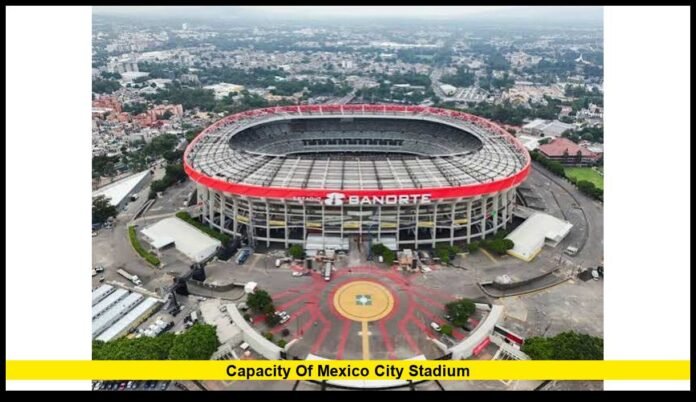

The capacity of Mexico City stadium continues to attract global attention as football fans prepare for the 2026 FIFA World Cup. The iconic venue, officially known as Estadio Banorte following a naming rights agreement, has been one of the world’s most celebrated football stadiums for decades. Located in the heart of Mexico City, it combines a rich sporting legacy with modern upgrades designed to meet international standards. After its ongoing renovation project is completed, the stadium is expected to have an official seating capacity of approximately 87,523 spectators, making it one of the largest football stadiums in North America.
Its impressive size, remarkable history, and role in multiple FIFA World Cups have made it one of the most recognizable sports venues anywhere in the world. As Mexico prepares to welcome fans once again for football’s biggest tournament, interest in the stadium’s capacity, facilities, and history continues to grow.
Introduction
For nearly 60 years, Estadio Banorte has stood as a symbol of Mexican football. Originally opened as Estadio Azteca in 1966, the stadium has hosted unforgettable matches, championship celebrations, and international sporting events that have shaped football history.
Today, the venue is entering another important chapter. Extensive renovations are preparing the stadium to host matches during the 2026 FIFA World Cup, which Mexico will co-host with the United States and Canada. These improvements are designed to enhance the fan experience while preserving the character that has made the stadium famous across generations.
The capacity of Mexico City stadium remains one of its defining features, allowing tens of thousands of supporters to experience world-class football in one of the sport’s most historic settings.
The History Behind the Stadium
Construction of the stadium began in the early 1960s under the direction of renowned Mexican architects Pedro Ramírez Vázquez and Rafael Mijares Alcérreca. Their vision was ambitious: create a stadium capable of hosting the largest international sporting events while reflecting Mexico’s growing importance on the global stage.
The stadium officially opened on May 29, 1966, immediately becoming one of the largest football venues in the world.
Unlike many stadiums that have been replaced over time, this venue has remained at the center of Mexican football for decades. Its combination of size, atmosphere, and historic importance has allowed it to remain relevant through multiple generations of players and supporters.
Over the years, it has welcomed millions of spectators and hosted events watched by billions of television viewers worldwide.
Capacity of Mexico City Stadium Today
One of the most common questions asked by football fans concerns the stadium’s current seating capacity.
Following its modernization project, Estadio Banorte is expected to officially accommodate approximately 87,523 spectators.
This figure reflects a modern all-seater design that emphasizes comfort, accessibility, and safety while still maintaining one of the largest capacities on the continent.
The updated stadium includes:
- Approximately 87,523 permanent seats
- Improved sightlines throughout the venue
- Larger concourses for easier movement
- Additional premium hospitality areas
- Enhanced accessibility for visitors with disabilities
- Modern media and broadcasting facilities
- Updated emergency and security systems
Although the official capacity is lower than some historical attendance figures, today’s configuration offers a significantly better experience for spectators.
Why the Capacity Has Changed
When the stadium first opened, attendance often exceeded 100,000 spectators. Those remarkable figures reflected the standards of the era rather than the modern expectations of international sporting events.
Several factors have contributed to the change in capacity.
Transition to Individual Seating
Many older stadiums originally included bench seating or standing sections that allowed significantly larger crowds.
Over time, international football organizations introduced stricter seating requirements, leading to individual seats throughout the venue.
While this reduced the maximum number of spectators, it greatly improved comfort and safety.
Enhanced Safety Standards
Modern stadium regulations require:
- Wider stairways
- Larger evacuation routes
- Additional emergency exits
- Improved crowd management systems
- Dedicated accessible seating
- Better spacing between seating rows
Each of these improvements contributes to a safer experience while naturally reducing overall seating capacity.
Premium Hospitality Areas
Today’s world-class stadiums include:
- VIP lounges
- Executive suites
- Hospitality clubs
- Premium viewing sections
These facilities occupy space that previously held traditional seating, resulting in a slightly smaller but more modern venue.
Renovations Ahead of the 2026 FIFA World Cup
The current renovation project represents one of the largest upgrades in the stadium’s history.
Rather than constructing a completely new stadium, organizers chose to modernize the existing structure while preserving its architectural identity.
Major improvements include:
- Completely renovated seating sections
- New hospitality suites
- Expanded concession areas
- Improved player facilities
- Modern locker rooms
- Updated media workspaces
- Advanced lighting systems
- Enhanced digital infrastructure
- Improved public accessibility
- Better spectator circulation throughout the stadium
These upgrades ensure that the venue meets FIFA’s latest tournament requirements while maintaining the atmosphere that has made it famous.
Read also – Mexico City Stadium: A Complete Look at Its History, 2026 World Cup Role, and Lasting Football Legacy
One of Football’s Most Historic Stadiums
Few stadiums anywhere can match the football heritage of Estadio Banorte.
Throughout its history, it has hosted some of the sport’s greatest players and most memorable matches.
Among its most significant achievements is becoming one of the very few stadiums ever selected to host two FIFA World Cup finals.
Those finals took place in:
- 1970
- 1986
Both tournaments produced moments that remain central to football history.
Legendary World Cup Moments
The 1970 FIFA World Cup
The 1970 tournament is often regarded as one of the greatest World Cups ever played.
The final featured Brazil defeating Italy to secure its third world championship.
Brazil’s legendary squad, led by Pelé, produced one of the finest performances ever seen on football’s biggest stage.
Many football historians still consider that Brazilian team among the greatest in history.
The 1986 FIFA World Cup
Sixteen years later, the stadium again welcomed the World Cup Final.
Argentina defeated West Germany to claim the championship behind the brilliance of Diego Maradona.
Earlier in the tournament, Maradona produced two unforgettable goals against England during the quarterfinals.
One became known worldwide as the “Hand of God.”
The other, in which he dribbled past multiple defenders before scoring, is frequently described as one of the greatest goals in football history.
These moments permanently linked the stadium with some of the sport’s most iconic memories.
Home of Mexican Football
Beyond international tournaments, Estadio Banorte has long served as one of the country’s most important football venues.
It regularly hosts:
- Club América home matches
- Mexico men’s national team fixtures
- Liga MX championship games
- CONCACAF competitions
- International friendlies
Its large capacity creates an atmosphere that few stadiums can match, particularly during major domestic and international matches.
Concerts and Major Events
Although football remains its primary purpose, the stadium has also welcomed many of the world’s biggest entertainers.
Large-scale concerts have filled the venue with tens of thousands of fans over the years, demonstrating its versatility beyond sports.
The stadium has additionally hosted:
- Cultural celebrations
- Religious gatherings
- National ceremonies
- Community events
Its size allows organizers to stage events that few other venues in Mexico can accommodate.
Architecture and Design
One reason the stadium remains so recognizable is its distinctive architectural design.
Built into the natural landscape, much of the seating bowl sits below ground level.
This approach created several advantages:
- Improved structural stability
- Better viewing angles
- Enhanced acoustics
- A more intimate atmosphere despite the enormous capacity
The stadium’s design has influenced later sports venues throughout Latin America.
Fan Experience After Renovation
Modern football fans expect far more than simply watching a match.
The renovated stadium aims to provide an upgraded experience from arrival through departure.
Visitors can expect:
- More comfortable seating
- Better restroom facilities
- Expanded food and beverage choices
- Faster entry systems
- Improved accessibility
- Better wayfinding throughout the venue
- Enhanced lighting and digital displays
These improvements reflect current international standards while preserving the character supporters have appreciated for decades.
Comparing the Stadium With Other Large Venues
Even after modernization, Estadio Banorte remains among North America’s largest stadiums.
Its seating capacity places it alongside several iconic American college football venues, although those facilities primarily host American football rather than soccer.
Among stadiums built mainly for association football, Estadio Banorte continues to rank among the largest on the continent.
Its combination of size, history, and international significance makes it unique.
Role in the 2026 FIFA World Cup
The stadium will once again become the center of worldwide attention during the 2026 FIFA World Cup.
Mexico is making history by becoming the first nation to host matches across three separate FIFA World Cup tournaments.
Those tournaments are:
- 1970
- 1986
- 2026
The stadium is expected to host multiple World Cup matches, including one of the tournament’s highest-profile fixtures.
Its modernized facilities will allow organizers to welcome supporters from around the world while meeting FIFA’s latest operational standards.
Why Interest Continues to Grow
Search activity surrounding the capacity of Mexico City stadium has increased significantly as football fans prepare for the World Cup.
People frequently look for information about:
- Official seating capacity
- Renovation progress
- Matchday experience
- Accessibility
- Historic events
- Stadium tours
- Transportation options
- Future tournaments
Because the venue has played such a central role in football history, new generations of supporters continue discovering its remarkable legacy.
The Stadium’s Lasting Legacy
Very few sports venues remain internationally relevant after nearly six decades.
Estadio Banorte has achieved that distinction by consistently adapting to changing standards while preserving the qualities that made it famous.
Generations of football legends have competed on its pitch.
Millions of supporters have celebrated unforgettable victories inside its stands.
Now, with another FIFA World Cup approaching, the stadium is preparing to create new memories for fans from every corner of the globe.
Its history stretches across multiple eras of football, yet its future remains just as exciting.
Final Thoughts
The capacity of Mexico City stadium reflects more than just the number of available seats. It represents the evolution of one of football’s greatest venues as it balances tradition with modern expectations. With an expected post-renovation capacity of approximately 87,523 spectators, Estadio Banorte remains among the world’s most important football stadiums.
Its remarkable history, ongoing modernization, and prominent role in the 2026 FIFA World Cup ensure that it will continue attracting football fans, travelers, and sports enthusiasts for years to come. Whether visitors come to witness a major international match, support Club América, or simply experience one of football’s most legendary venues, the stadium remains an essential destination in the global sports landscape.
Enjoyed reading this article? Share your thoughts in the comments and stay connected for more football news, stadium updates, and major sporting event coverage.