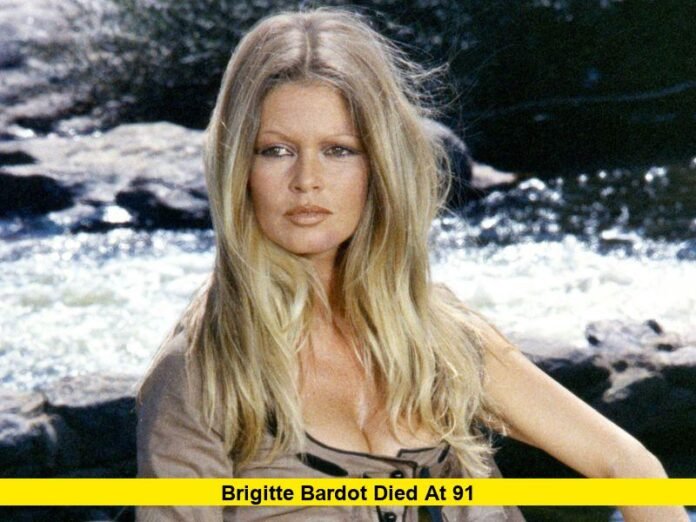

Brigitte Bardot Died at the age of 91, closing the final chapter on a life that reshaped cinema, celebrity, and activism across continents. Her passing has resonated deeply in the United States and around the world, not only because she was a defining screen presence of the 20th century, but because her life represented constant transformation, controversy, and conviction. Few public figures have left behind a legacy as layered, influential, and debated as Bardot’s.
Her death marks the end of an era that blended film artistry, cultural rebellion, and later, uncompromising advocacy.
Early Years and the Making of a Star
Born in Paris on September 28, 1934, Brigitte Bardot grew up in a disciplined household that emphasized structure and refinement. As a child, she studied classical ballet, an experience that shaped her posture, movement, and physical expressiveness long before she appeared on screen. While ballet did not become her lifelong profession, it gave her a visual confidence that later defined her cinematic presence.
Her entry into modeling during her teenage years introduced her to the fashion world, where photographers quickly recognized her distinctive look. This exposure led directly to film opportunities at a time when French cinema was on the cusp of creative transformation.
The Breakthrough That Changed Film Culture
Bardot’s rise to international fame occurred in the mid-1950s, when she starred in a film that altered how women were portrayed on screen. Her performance captured a new kind of femininity — self-directed, emotionally honest, and unapologetically modern. Audiences in Europe and the United States reacted with fascination, and the film industry took notice.
Almost overnight, Bardot became a symbol of liberation and individuality. Unlike many stars of her time, she did not present herself as distant or untouchable. Instead, her appeal came from her authenticity and vulnerability, qualities that resonated strongly with postwar audiences seeking change.
A Defining Career in European Cinema
Over more than twenty years, Bardot appeared in dozens of films that ranged from romantic dramas to socially reflective works. She collaborated with influential directors and participated in projects that pushed artistic boundaries. Her performances balanced emotional depth with an effortless screen magnetism that few actors could replicate.
During this period, Bardot helped redefine the role of women in cinema. Her characters often rejected traditional expectations, choosing independence over convention. These portrayals contributed to shifting attitudes about gender, autonomy, and identity, especially during a time of rapid cultural change.
Despite global recognition, she remained primarily rooted in European filmmaking. While Hollywood expressed repeated interest, Bardot preferred to maintain creative independence rather than conform to studio-driven expectations.
Fashion, Media, and Cultural Impact
Beyond film, Bardot’s influence extended into fashion and popular culture. Her hairstyles, clothing choices, and natural aesthetic became international trends. The “Bardot look” inspired designers, photographers, and everyday consumers, turning her personal style into a global reference point.
She appeared on magazine covers across the world, not as a carefully curated image, but as a reflection of changing values. Bardot represented a break from rigid beauty standards, favoring authenticity over polish. This approach further cemented her status as a cultural icon rather than merely an actress.
Walking Away from Fame
At a time when her popularity remained strong, Bardot made a decision that stunned the entertainment world. In 1973, she retired from acting entirely, choosing to step away from the spotlight at just 39 years old.
The pressures of fame, invasive media attention, and emotional exhaustion influenced her decision. Rather than slowly fading from public view, Bardot chose a clean break. This departure reinforced her reputation as someone who valued personal freedom above professional expectation.
Her exit from cinema did not signal withdrawal from public life, but rather a redirection of purpose.
A New Mission: Defending Animals
After leaving film, Bardot dedicated herself to animal welfare, transforming her public platform into a vehicle for advocacy. In the mid-1980s, she established an organization devoted to the protection of animals, a cause she pursued relentlessly for decades.
She spoke out against practices she viewed as cruel, including hunting methods, industrial farming, and animal testing. Her activism was direct, emotional, and often confrontational. Bardot did not hesitate to challenge governments or institutions, believing moral urgency outweighed diplomacy.
Through this work, she became one of the most recognizable animal rights advocates in the world. Her efforts influenced public awareness and helped push animal welfare into mainstream conversation.
Later Life and Health Challenges
In her later years, Bardot lived quietly in southern France, avoiding public appearances and interviews whenever possible. She remained involved in advocacy from a distance, continuing to support causes aligned with her beliefs.
As she aged, health challenges naturally emerged, prompting occasional concern among admirers. Despite false rumors circulating at various points, she remained outspoken and dismissive of speculation while alive.
Brigitte Bardot Died peacefully in late 2025, surrounded by privacy rather than spectacle. Her passing was confirmed officially, bringing closure to a life that had long been the subject of global attention.
Personal Relationships and Emotional Honesty
Bardot’s personal life unfolded under intense public scrutiny. She experienced multiple marriages and had one son, relationships that often became tabloid topics rather than private matters.
She spoke candidly about loneliness, emotional struggles, and the psychological cost of fame. Long before such conversations were common, Bardot acknowledged the toll of constant visibility and expectation. This openness contributed to her enduring relatability, even as it exposed her to criticism.
Controversy and Divided Opinion
In her later decades, Bardot became a polarizing figure due to outspoken views on social and political issues. Some of her public statements resulted in legal consequences and widespread backlash, particularly in France.
These controversies complicated her legacy, forcing observers to reconcile her artistic contributions and humanitarian work with views many found offensive. Bardot never retreated from her positions, insisting on her right to speak freely regardless of consequence.
Her life ultimately reflected the tension between personal conviction and public responsibility, a debate that continues long after her death.
Reaction and Reflection
The news of Bardot’s passing prompted widespread reaction across cultural, political, and activist communities. Many acknowledged her profound influence on film history, while others emphasized her long-standing commitment to animal protection.
In the United States, she is remembered as a figure who challenged Hollywood norms without fully participating in the system. Film scholars continue to analyze her work as a turning point in cinematic representation and celebrity culture.
A Legacy That Defies Simplicity
Brigitte Bardot’s legacy cannot be confined to admiration or criticism alone. She was a catalyst for change, a subject of debate, and a woman who lived according to her own rules. Her career reshaped cinema, her style influenced generations, and her activism gave voice to causes often ignored.
Her story remains relevant because it reflects the complexity of public life itself — the power of influence, the cost of conviction, and the enduring impact of authenticity.
Brigitte Bardot Died, but the conversations sparked by her life, choices, and contradictions will continue for years to come.
How do you think history will ultimately remember Brigitte Bardot? Join the discussion and stay connected for continued coverage of cultural icons and their lasting influence.