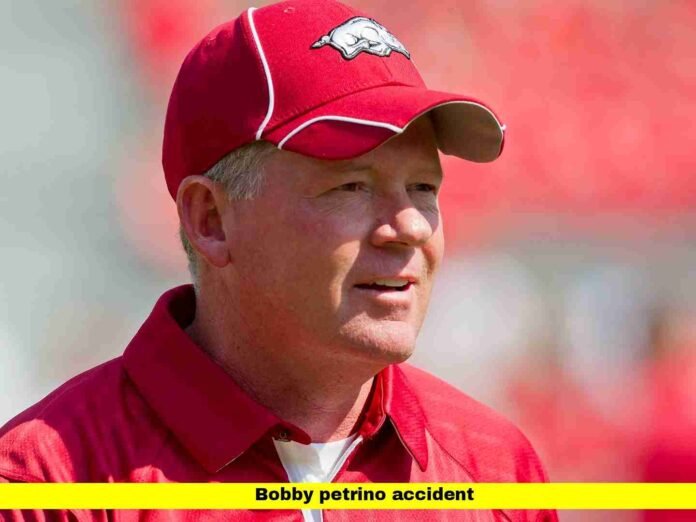

The Bobby Petrino accident remains one of the most infamous stories in college football history. What started as a motorcycle crash on a quiet Arkansas highway in 2012 soon spiraled into a scandal that shook the Razorbacks program and continues to shadow Petrino’s career to this day.
The Motorcycle Crash That Sparked a Scandal
On April 1, 2012, Bobby Petrino, then head coach of the Arkansas Razorbacks, was involved in a motorcycle crash on Highway 16 near Crosses, Arkansas. At first, the story seemed straightforward—Petrino had lost control of his bike, suffered multiple injuries including four broken ribs and a fractured vertebra, and was taken to the hospital for treatment.
But within days, the truth about the Bobby Petrino accident began to emerge, and it was far more complicated than a simple road mishap.
The Hidden Passenger: Jessica Dorrell
When the accident was first reported, Petrino claimed he had been riding alone. However, a police report revealed that he was accompanied by Jessica Dorrell, a former Arkansas volleyball player whom Petrino had recently hired as the student-athlete development coordinator.
The revelation that he had concealed Dorrell’s presence and their inappropriate relationship set off alarms inside the university. Soon it came to light that Petrino had given her a $20,000 gift and failed to disclose it.
The Fallout at Arkansas
Arkansas Athletic Director Jeff Long faced immense pressure as details poured out. On April 10, 2012, Long announced that Petrino was being fired with cause, citing deception, ethical violations, and a breakdown of trust.
In his own statement, Petrino admitted to the relationship and expressed remorse, acknowledging that his decisions had caused significant harm. Despite his impressive coaching record, his integrity and transparency came under heavy fire.
Why the Bobby Petrino Accident Still Matters
More than a decade later, the Bobby Petrino accident is still discussed for the lessons it offers in leadership, accountability, and public trust. The scandal remains a case study for athletic programs nationwide on how to handle crises involving high-profile figures.
Key Reasons It Still Resonates:
- Ethics Over Success – Winning records could not shield Petrino from the consequences of dishonesty.
- The Redemption Debate – While Petrino has since coached at other programs, every career move revives debate about whether he deserves a second chance at Arkansas.
- Institutional Oversight – The handling of the incident is still referenced in discussions about transparency in sports organizations.
A Timeline of Events
- March 28, 2012 – Petrino hires Jessica Dorrell for a football staff position.
- April 1, 2012 – Motorcycle accident occurs; Petrino hospitalized with serious injuries.
- April 3–5, 2012 – Initial reports claim he was riding alone, later disproven.
- April 6, 2012 – Full police report confirms Dorrell’s presence.
- April 10, 2012 – Petrino is officially fired by Arkansas with cause.
Petrino’s Career After the Crash
Following his firing, Petrino’s reputation took a significant hit, but he did find coaching opportunities elsewhere. He returned to Louisville in 2014 for a second stint, later worked at Missouri State, and eventually found himself back in discussions about a return to Arkansas in an assistant role.
Yet, each time his name surfaces, the Bobby Petrino accident resurfaces too, serving as a reminder that personal decisions can permanently shape public legacy.
Lessons from the Scandal
- Transparency is non-negotiable for leaders in public positions.
- Personal conduct impacts professional credibility—especially in college athletics.
- Scandals leave lasting legacies that no amount of on-field success can fully erase.
The Bobby Petrino accident remains a cautionary tale, not only about reckless decisions off the field but also about the importance of honesty and accountability in positions of leadership. What do you think—should a coach’s personal mistakes overshadow their professional abilities? Share your thoughts below.