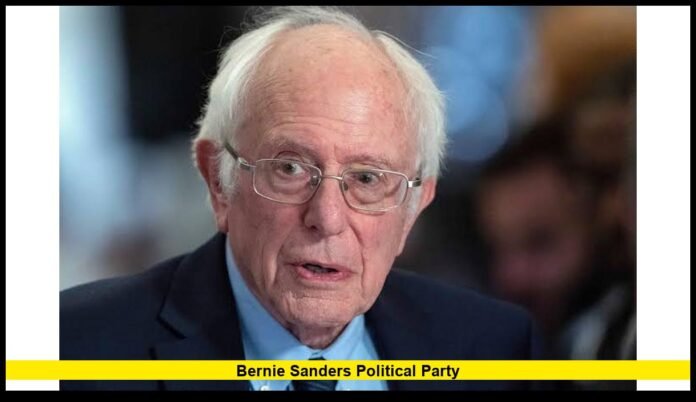

Bernie Sanders political party is a topic that continues to generate interest across the United States. Although Bernie Sanders has twice sought the Democratic presidential nomination and regularly works with Senate Democrats, he is not a Democrat by party registration. As of 2026, Sanders serves as an Independent in the U.S. Senate, representing Vermont while caucusing with Democrats to participate in committee work and Senate leadership. His decision to remain independent has shaped his political identity for decades and continues to distinguish him from nearly every other member of Congress.
What Is Bernie Sanders’ Political Party?
The simplest answer is that Bernie Sanders belongs to no major political party. He is officially registered as an Independent, making him one of the few senators who does not identify as either a Democrat or a Republican.
This distinction often surprises people because Sanders is frequently associated with Democratic politicians. He campaigns alongside Democratic candidates, supports many Democratic legislative priorities, and participates in the Senate Democratic Caucus. However, his official political affiliation has remained unchanged throughout his Senate career.
His independent status is not symbolic. It reflects a political philosophy he has maintained for decades, emphasizing that elected officials should answer first to voters rather than party organizations.
Why Does Bernie Sanders Remain an Independent?
Bernie Sanders has consistently argued that remaining outside the two-party system allows him to advocate more freely for policies he believes benefit working Americans.
Throughout his career, he has criticized both Republicans and Democrats when he believed they favored wealthy interests or large corporations over ordinary citizens. Remaining an Independent enables him to maintain that position without formally joining either party.
According to Sanders, political independence gives him the freedom to:
- Support legislation based on policy rather than party loyalty.
- Criticize Democratic and Republican leaders alike.
- Focus on economic inequality and workers’ rights.
- Advocate for campaign finance reform.
- Promote progressive ideas without changing his party affiliation.
His approach has earned support from many voters who appreciate politicians willing to challenge the traditional party structure.
How Does Bernie Sanders Work With Democrats?
Although Sanders is an Independent, he caucuses with Senate Democrats.
Many people confuse caucusing with party membership, but the two are different.
A Senate caucus is an organizational group that helps determine committee assignments, leadership positions, legislative priorities, and procedural matters. By caucusing with Democrats, Sanders receives committee assignments and plays an active role in shaping legislation while still maintaining his Independent status.
This arrangement allows him to:
- Serve on influential Senate committees.
- Participate in Democratic strategy meetings.
- Vote on leadership matters within the caucus.
- Work directly with Democratic senators on legislation.
At the same time, Sanders remains free to criticize Democratic policies whenever he believes they fall short of his goals.
Has Bernie Sanders Always Been an Independent?
Yes. Bernie Sanders has spent nearly his entire political career serving as an Independent.
Unlike many politicians who change party affiliation over time, Sanders has remained remarkably consistent.
His political career includes:
- Mayor of Burlington, Vermont
- Member of the U.S. House of Representatives
- United States Senator from Vermont
Across each of those positions, he built a reputation as an Independent focused on economic fairness, labor rights, and expanding access to public services.
That consistency has become one of the defining characteristics of his public image.
Why Did Bernie Sanders Run for the Democratic Presidential Nomination?
Some voters wonder why Sanders entered Democratic presidential primaries if he is not a Democrat.
The answer largely involves the structure of American presidential elections.
The United States political system strongly favors candidates nominated by one of the two major parties. Running within Democratic primaries gave Sanders an opportunity to compete nationally while presenting his ideas to millions of voters.
He sought the Democratic nomination in:
- 2016, finishing behind Hillary Clinton.
- 2020, finishing behind Joe Biden.
After both campaigns ended, Sanders returned to serving as an Independent senator.
His presidential campaigns did not change his official party affiliation.
What Political Ideology Does Bernie Sanders Follow?
While party affiliation refers to political membership, ideology describes a person’s political beliefs.
Bernie Sanders identifies as a democratic socialist.
Democratic socialism, as Sanders describes it, supports democratic government while advocating stronger public investment in healthcare, education, labor protections, and social programs.
His legislative priorities have consistently included:
- Universal healthcare
- Lower prescription drug prices
- Affordable higher education
- Expanded Social Security benefits
- Strong labor unions
- Higher wages
- Climate action
- Tax policies targeting wealthy individuals and large corporations
These positions have made Sanders one of the most recognizable progressive leaders in the country.
Read More- Does Bernie Sanders Have a Private Jet? Here’s What We Know
Does Bernie Sanders Vote Like a Democrat?
On many issues, yes.
Sanders frequently votes alongside Democratic senators, particularly on legislation involving healthcare, labor protections, education, environmental policy, and social spending.
However, he does not automatically support every Democratic proposal.
Throughout his Senate career, Sanders has criticized Democratic administrations when he believed they were too cautious or insufficiently progressive.
That willingness to oppose members of the Democratic Party reinforces his independent identity.
Has Bernie Sanders Ever Been a Republican?
No.
Bernie Sanders has never been affiliated with the Republican Party.
His political career has consistently focused on progressive economic policies, expanding public programs, and addressing income inequality.
These positions have remained largely unchanged throughout decades of public service.
How Bernie Sanders Built His Political Career
Sanders first gained national attention long before entering the Senate.
His political journey began in Burlington, Vermont, where he served as mayor during the 1980s.
His administration focused on neighborhood development, affordable housing, and public investment. His success at the local level helped establish a reputation for independent leadership.
Later, Sanders won election to the U.S. House of Representatives, serving Vermont for 16 years before moving to the Senate in 2007.
His ability to win statewide elections without belonging to either major political party remains unusual in American politics.
What Does Caucusing Mean in the Senate?
Understanding the Senate caucus system helps explain why Sanders is often mistaken for a Democrat.
Caucusing allows senators to organize themselves for legislative work.
Members of the caucus generally cooperate on:
- Committee assignments
- Senate leadership elections
- Budget negotiations
- Legislative scheduling
- Policy priorities
Because Sanders caucuses with Democrats, he receives committee positions that would otherwise be difficult for an Independent senator to obtain.
Yet caucusing does not require changing party registration.
This distinction explains why Sanders can remain politically independent while working closely with Democratic colleagues.
Bernie Sanders’ Role in the Senate Today
As Vermont’s senior senator, Sanders continues to focus on national issues involving workers, healthcare, veterans, and economic inequality.
His Senate work regularly includes proposals addressing:
- Healthcare affordability
- Prescription drug costs
- Retirement security
- Union organizing
- Consumer protections
- Climate investments
- Tax fairness
- Housing affordability
While not every proposal becomes law, Sanders remains an influential voice within Congress because of his long experience and national recognition.
Why Many Americans Think Bernie Sanders Is a Democrat
Public confusion about Bernie Sanders political party often comes from several factors.
He Campaigned for the Democratic Presidential Nomination
Millions first learned about Sanders during the Democratic presidential primaries.
He Works Closely With Democrats
His Senate responsibilities place him alongside Democratic lawmakers almost every day.
He Supports Many Democratic Policies
His voting record frequently aligns with Democratic priorities, especially on economic and social legislation.
He Campaigns for Democratic Candidates
During election years, Sanders often endorses Democratic candidates whose policy positions closely match his own.
Together, these factors lead many Americans to assume Sanders officially belongs to the Democratic Party even though he does not.
How Bernie Sanders Differs From Traditional Democrats
Although Sanders frequently agrees with Democrats, several differences remain.
He often advocates policies that extend beyond the Democratic Party’s mainstream platform.
For example, Sanders has consistently supported:
- A nationwide Medicare for All program.
- Tuition-free public colleges.
- Larger increases in the federal minimum wage.
- Stronger taxation of billionaires.
- More aggressive labor protections.
- Greater restrictions on corporate influence in politics.
These positions have helped define the progressive movement within modern American politics.
Has Bernie Sanders Ever Changed His Party Registration?
No.
One of the most notable aspects of Sanders’ career is his consistency.
He has remained an Independent despite:
- Running for president.
- Serving in Congress for decades.
- Working closely with Democratic leadership.
- Becoming one of the country’s best-known politicians.
His decision reflects a long-held belief that elected officials should remain accountable primarily to their constituents rather than party organizations.
How Independent Is Bernie Sanders?
Although Sanders cooperates extensively with Democrats, he maintains an independent approach in several ways.
He regularly introduces legislation reflecting his own priorities.
He openly criticizes Democratic leaders when he disagrees with their decisions.
He continues identifying himself as an Independent during campaigns and official Senate service.
That balance between cooperation and independence has become one of the defining features of his political career.
Frequently Asked Questions
Is Bernie Sanders a Democrat?
No. Bernie Sanders serves as an Independent senator from Vermont.
Why does Bernie Sanders caucus with Democrats?
Caucusing gives him committee assignments, legislative opportunities, and participation in Senate leadership while allowing him to remain an Independent.
Did Bernie Sanders run for president as a Democrat?
Yes. He sought the Democratic presidential nomination in both 2016 and 2020.
Has Bernie Sanders ever joined the Democratic Party?
No. His official party affiliation has remained Independent throughout his congressional career.
What political ideology is Bernie Sanders known for?
He identifies as a democratic socialist and supports progressive economic and social policies.
Does Bernie Sanders vote with Democrats?
On many major issues, yes. However, he also opposes Democratic proposals when they conflict with his policy priorities.
Final Thoughts
Understanding Bernie Sanders political party requires separating party affiliation from political cooperation. Sanders remains one of the few Independent members of the U.S. Senate, yet he works closely with Democrats through the Senate caucus while preserving his independent political identity. His decades-long commitment to remaining outside the traditional two-party structure continues to shape his role in Congress and influence national political discussions.
What do you think about Bernie Sanders remaining an Independent while working closely with Democrats? Share your thoughts in the comments and check back for more updates on U.S. politics.